E-Waste A–Z: What Goes Where?
Not sure if something counts as e-waste, or how to get rid of it? Search the list below for advice on more than 45 common items: whether it is hazardous, whether it may hold personal data, whether it has scrap or resale value, and which recycling service handles it. Anything with a plug, a battery or a circuit board belongs with e-waste.
46 items
| Item | Hazardous? | Data? | Value | What to do |
|---|---|---|---|---|
| Air conditioner Appliances | Refrigerant gas | No | Medium | Have the gas recovered by a registered technician before the unit is scrapped. Appliance Recycling |
| Alkaline batteries (AA, AAA) Batteries | No | No | None | Collect in a plastic tub and drop off in bulk; never burn them. Battery Recycling |
| Cables and chargers IT & office | No | No | Medium | Keep cable separate from other e-waste: it is paid on copper content. Cable & Copper Recycling |
| Car battery Batteries | Lead and acid | No | Medium | Keep it upright and don't drain the acid; scrap dealers pay per kg. Battery Recycling |
| Cellphone Phones & tablets | No | Yes | Medium | Sign out of iCloud or Google, factory reset and remove SIM and memory cards. Cellphone Recycling |
| CFL or energy-saver bulb Lighting | Mercury | No | None | Store unbroken in its box; many hardware stores accept them. Hazardous E-Waste Disposal |
| Circuit boards IT & office | No | No | High | Separate high-grade boards (motherboards, phone boards) from power supply boards. E-Waste for Cash |
| Copier or multifunction printer IT & office | No | Yes | Low | Most office copiers have a hard drive with scanned documents: wipe or remove it. Printer & Cartridge Recycling |
| CRT monitor or TV Screens | Leaded glass | No | None | Expect a handling fee. Don't break the tube. TV & Monitor Recycling |
| Desktop computer IT & office | No | Yes | Medium | Remove or wipe the hard drive, or ask for certified destruction. Computer Recycling |
| Dishwasher Appliances | No | No | Low | Mostly steel; usually collected free with other appliances. Appliance Recycling |
| E-bike or scooter battery Batteries | Lithium (fire risk) | No | None | Don't charge a damaged pack; store it outside in a metal container until collected. Lithium Battery Recycling |
| Electric fence energiser Appliances | No | No | Low | Remove the backup battery and recycle it separately. E-Waste Recycling |
| Fluorescent tubes Lighting | Mercury | No | None | Keep them whole in the original boxes or a tube container. Hazardous E-Waste Disposal |
| Fridge or freezer Appliances | Refrigerant gas | No | Low | Don't cut the pipes: the gas must be recovered. Appliance Recycling |
| Gaming console IT & office | No | Yes | Medium | Working consoles have resale value; sign out of your account first. E-Waste for Cash |
| Hard drives IT & office | No | Yes | Low | Ask for shredding with a certificate listing serial numbers. Data Destruction |
| Hearing aids and medical monitors Medical | No | Yes | Low | Patient-data devices need certified data destruction. Medical E-Waste |
| Inverter Solar | No | No | Medium | Copper and aluminium heatsinks give inverters scrap value. Solar Panel Recycling |
| Ink and toner cartridges IT & office | No | No | Low | Bag loose toner cartridges to stop powder spilling. Printer & Cartridge Recycling |
| Kettle, toaster or iron Appliances | No | No | Low | Bundle small appliances in a box for collection. Appliance Recycling |
| Keyboard and mouse IT & office | No | No | Low | Send with computers; remove AA batteries from wireless ones. Computer Recycling |
| Laptop IT & office | No | Yes | High | Working laptops under about six years old often have resale value. Computer Recycling |
| Lead-acid UPS battery Batteries | Lead and acid | No | Medium | Swap-outs from UPS units are paid per kg. Battery Recycling |
| LED bulbs Lighting | No | No | None | LEDs contain electronics, so they belong with e-waste, not glass. E-Waste Recycling |
| Lithium-ion battery (loose) Batteries | Lithium (fire risk) | No | None | Tape the terminals and keep loose cells in a non-metal container. Lithium Battery Recycling |
| Medical equipment Medical | No | Yes | Low | Decontaminate first and include the asset register. Medical E-Waste |
| Microwave oven Appliances | No | No | Low | The transformer contains copper; the capacitor can hold a charge, so don't open it. Appliance Recycling |
| Monitor (flat screen) Screens | No | No | Low | Working monitors 22" and up can often be resold. TV & Monitor Recycling |
| Network switches and routers IT & office | No | No | Medium | Reset configurations so passwords and network maps aren't exposed. IT Asset Disposal |
| Point-of-sale terminals IT & office | No | Yes | Low | Card terminals may hold transaction data; ask for certified wiping. IT Asset Disposal |
| Power tools Appliances | No | No | Low | Remove lithium battery packs and recycle them separately. E-Waste Recycling |
| Printer IT & office | No | No | Low | Remove cartridges and paper before collection. Printer & Cartridge Recycling |
| Projector IT & office | No | No | Low | Older projector lamps can contain mercury; keep the lamp in place. E-Waste Recycling |
| Remote controls IT & office | No | No | None | Take out the batteries first. E-Waste Recycling |
| Server IT & office | No | Yes | High | Record serial numbers of every drive before it leaves the data centre. IT Asset Disposal |
| Smartwatch or fitness tracker Phones & tablets | No | Yes | Low | Unpair from your phone and reset before recycling. Cellphone Recycling |
| Smoke detector Appliances | Some contain a radioactive source | No | None | Ionisation detectors need special handling; check the label. Hazardous E-Waste Disposal |
| Solar battery (lithium) Solar | Lithium (fire risk) | No | Low | Have a technician disconnect and discharge it before collection. Lithium Battery Recycling |
| Solar panel Solar | No | No | Low | Stack panels glass-to-glass on a pallet with cardboard between them. Solar Panel Recycling |
| Tablet Phones & tablets | No | Yes | Medium | Remove the account lock, otherwise it can only be scrapped. Cellphone Recycling |
| Telephone (desk phone) IT & office | No | No | Low | VoIP phones may store call logs; reset them. E-Waste Recycling |
| TV (flat screen) Screens | No | No | Low | Transport upright to stop the panel cracking. TV & Monitor Recycling |
| USB drives and memory cards IT & office | No | Yes | None | Flash memory is hard to wipe reliably; shredding is safest. Data Destruction |
| Vacuum cleaner Appliances | No | No | Low | Remove the battery from cordless models. Appliance Recycling |
| Washing machine Appliances | No | No | Low | Mostly steel and a copper motor; often collected free in bulk. Appliance Recycling |
No match. Anything with a plug, battery or circuit board is e-waste: request a general e-waste recycling quote.
What counts as e-waste?
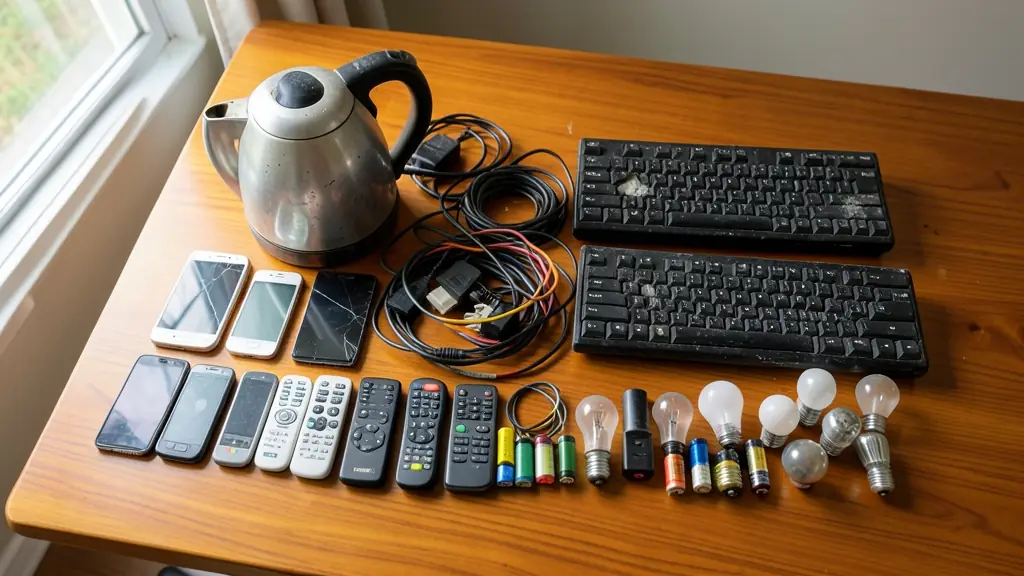
E-waste, also called waste electrical and electronic equipment (WEEE), is any item that needs electricity or a battery to work and has reached the end of its life. In South Africa it includes large and small household appliances, IT and telecoms equipment, screens, lighting, electrical tools, toys, medical devices, solar panels and batteries. If it has a plug, a battery or a circuit board, keep it out of the bin.
Hazardous items
Some e-waste contains substances that are dangerous if the item is broken, burnt or dumped: lead in CRT glass and batteries, mercury in fluorescent tubes and energy-saver bulbs, refrigerant gases in fridges and air conditioners, and lithium batteries that can catch fire. These items must go to a recycler licensed to handle hazardous waste, and usually carry a handling fee.
Items that hold data
Computers, phones, tablets, copiers, servers, card terminals and even smartwatches can hold personal information. Sign out of accounts, reset the device and, for businesses, ask for certified data destruction so you meet your POPIA obligations.
Frequently asked questions
- Can I put e-waste in my household bin?
- No. E-waste should not go to landfill. Hazardous parts can leak into soil and water, and lithium batteries cause fires in waste trucks. Use a drop-off point or a collection service.
- Are light bulbs e-waste?
- LED bulbs and fluorescent tubes or CFLs are e-waste. Fluorescent lighting contains mercury and must be handled as hazardous waste.
- Is a phone charger e-waste?
- Yes. Chargers and cables are e-waste and contain copper, so they are worth recycling with the rest of your electronics.