Medical E-Waste Recycling and Disposal
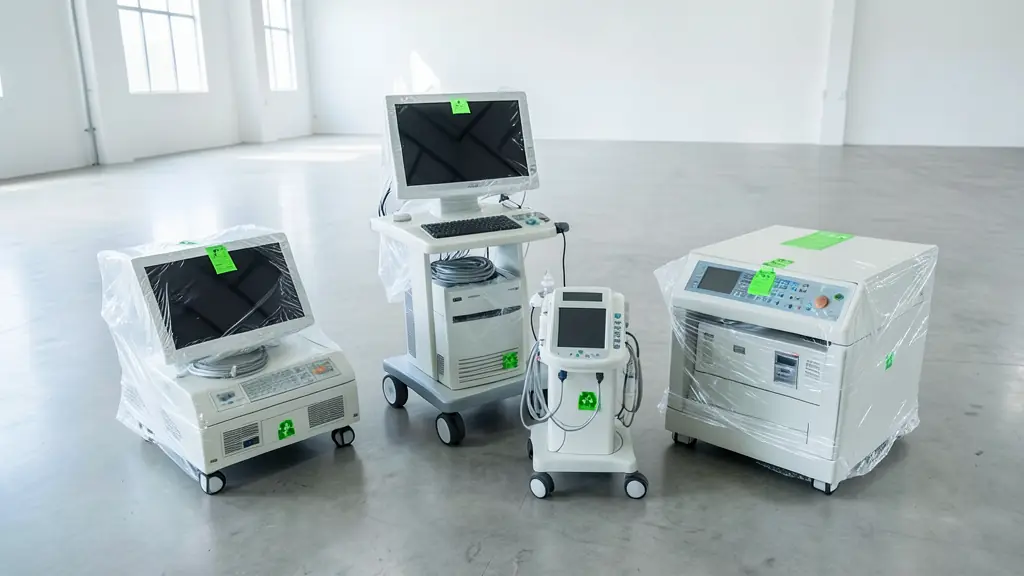
Hospitals, clinics and laboratories replace electronic equipment regularly, and old units fill storerooms quickly. Tell us what you need to clear and an independent recycler in your area will quote to collect and recycle your medical e waste, from patient monitors and infusion pumps to imaging equipment and hospital IT.
What counts as medical e waste
Medical e-waste is decommissioned electronic equipment from healthcare settings, such as:
- Patient monitors, ECG machines and defibrillators
- Ultrasound, X-ray and other imaging equipment
- Laboratory analysers, centrifuges and fridges
- Infusion pumps, ventilators and dental equipment
- Hospital computers, servers, printers and phones
It does not include health care risk waste. Sharps, infectious waste, pathological waste and pharmaceuticals must go to a licensed medical waste contractor, not an e-waste recycler.
Decontamination and safe collection
Equipment that has been in clinical use should be cleaned and decontaminated under your facility's infection control procedures before collection, with a note confirming this. Imaging equipment may contain heavy components, lead shielding or parts that need specialist handling, so share model details. Recyclers may ask for photos and an equipment list before quoting, and can resell working units where that is allowed. Large items such as X-ray units may need to be dismantled on site, so mention room access, lifts and any equipment that is still mounted to walls or ceilings.
Patient data, POPIA and asset registers
Many devices store patient information: ultrasound and imaging machines, monitors with history, lab analysers and every hospital PC or server. Under POPIA that data must be protected until it is destroyed, so ask for data wiping or drive shredding with a certificate. Hospitals should also match collected items to their asset register, and ask the recycler for a serial-numbered list and a certificate of recycling. Recognised standards such as ISO 14001 or R2 are worth asking about.
How to choose a recycler for medical e-waste
The lowest price is not always the best deal when it comes to e-waste. When you receive your quote, check:
- Compliance – ask whether the recycler is registered with a producer responsibility scheme, holds the waste licences its operations need, and can name ISO 14001 or similar certifications.
- Paperwork – make sure you will receive a certificate of recycling or safe disposal, and a certificate of data destruction listing serial numbers where data is involved.
- Downstream – find out where materials go after collection, and that nothing ends up in landfill or illegal export.
- Total cost or value – compare collection, handling and any rebate for items with value, not only the headline rate.
Our service matches your request with a recycler who serves your area, so you can check these points before you commit. It costs nothing and you are under no obligation to accept the quote.
Request a medical e-waste quote
To get an accurate quote quickly, include:
- An equipment list with makes, models and quantities
- Confirmation that items have been decontaminated
- Which devices store patient data and need data destruction
- Whether you need serial-numbered certificates for your asset register
Frequently asked questions
- Can an e-waste recycler take sharps or infectious waste?
- No. Health care risk waste must go to a licensed medical waste contractor. E-waste recyclers handle decontaminated electronic equipment only.
- Can we get a certificate for audit purposes?
- Yes. Ask for a certificate of recycling and, where devices held patient data, a data destruction certificate listing serial numbers.
Medical E-Waste by province
- Medical E-Waste Gauteng
- Medical E-Waste Western Cape
- Medical E-Waste KwaZulu-Natal
- Medical E-Waste Eastern Cape
- Medical E-Waste Free State
- Medical E-Waste Limpopo
- Medical E-Waste Mpumalanga
- Medical E-Waste North West
- Medical E-Waste Northern Cape
Medical E-Waste by city
- Medical E-Waste in Johannesburg
- Medical E-Waste in Pretoria
- Medical E-Waste in Centurion
- Medical E-Waste in Midrand
- Medical E-Waste in Boksburg
- Medical E-Waste in Kempton Park
- Medical E-Waste in Germiston
- Medical E-Waste in Benoni
- Medical E-Waste in Krugersdorp
- Medical E-Waste in Vereeniging
- Medical E-Waste in Vanderbijlpark
- Medical E-Waste in Cape Town
- Medical E-Waste in George
- Medical E-Waste in Durban
- Medical E-Waste in Pinetown
- Medical E-Waste in Pietermaritzburg
- Medical E-Waste in Richards Bay
- Medical E-Waste in Port Elizabeth (Gqeberha)
- Medical E-Waste in East London
- Medical E-Waste in Bloemfontein
- Medical E-Waste in Welkom
- Medical E-Waste in Polokwane
- Medical E-Waste in Nelspruit (Mbombela)
- Medical E-Waste in Witbank (eMalahleni)
- Medical E-Waste in Middelburg
- Medical E-Waste in Rustenburg
- Medical E-Waste in Klerksdorp
- Medical E-Waste in Potchefstroom
- Medical E-Waste in Kimberley