Appliance Recycling and Old Fridge Disposal
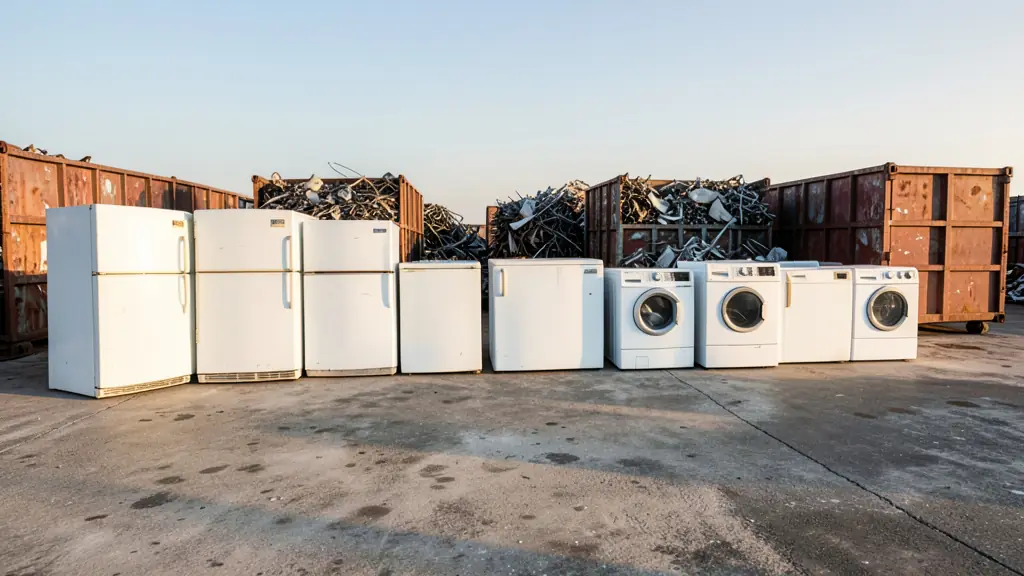
Large household and commercial appliances are some of the heaviest items in the e-waste stream, and some of the most awkward to get rid of. Through our free quote service, a request for appliance recycling goes to an independent recycler or collector in your area, who quotes to collect your old fridge, washing machine, microwave, stove, geyser or air conditioner. Where items still have value, the quote may be an offer to buy them instead.
Old fridge disposal and refrigerant gas
Fridges, freezers, air conditioners and water coolers contain refrigerant gas in a sealed system. Older units may hold ozone-depleting gases, and newer ones often use gases with a high global warming effect. That gas must be recovered by a qualified, registered refrigeration practitioner before the unit is crushed or cut up. Venting it is illegal and harmful. When you search for fridge disposal near me, ask whoever quotes how the gas is recovered and whether they will confirm it in writing. Insulation foam in older fridges also needs proper handling.
Appliance recycling: what can be collected
Collectors handle bulky items as well as small appliances in the same load:
- Fridges, freezers, bar fridges and chest freezers
- Washing machines, tumble dryers and dishwashers
- Stoves, ovens, hobs and microwaves
- Geysers, heat pumps and air conditioner units
- Kettles, toasters, irons, vacuum cleaners and other small appliances
Mention stairs, narrow access or units that are built in, so the collector sends enough people and the right vehicle.
Where to take an old fridge for cash
Appliances are mostly steel, with copper in motors, compressors and wiring, and some aluminium. That scrap value is why some recyclers will pay for larger loads or collect for free, while a single unit in a remote area may carry a collection fee. Scrap value follows the metals market, so offers change. Under the National Environmental Management: Waste Act and the Extended Producer Responsibility regulations for electrical and electronic equipment, appliances should go to proper recycling rather than landfill.
How to choose a recycler for appliance recycling
The lowest price is not always the best deal when it comes to e-waste. When you receive your quote, check:
- Compliance – ask whether the recycler is registered with a producer responsibility scheme, holds the waste licences its operations need, and can name ISO 14001 or similar certifications.
- Paperwork – make sure you will receive a certificate of recycling or safe disposal, and a certificate of data destruction listing serial numbers where data is involved.
- Downstream – find out where materials go after collection, and that nothing ends up in landfill or illegal export.
- Total cost or value – compare collection, handling and any rebate for items with value, not only the headline rate.
Our service matches your request with a recycler who serves your area, so you can check these points before you commit. It costs nothing and you are under no obligation to accept the quote.
Request a appliance recycling quote
To get an accurate quote quickly, include:
- A list of appliances with approximate age and whether they still work
- Photos of the items and where they are (garage, upstairs, built in)
- Whether you want them collected, recycled with a certificate or bought
- Collection address and the dates that suit you
Frequently asked questions
- Will someone pay me for my old fridge?
- Sometimes. It depends on the number of units, their condition and the distance to collect. Include photos and quantities in your request and the recycler will tell you whether they buy, collect free or charge a fee.
- Can a working appliance be reused?
- Yes. Some collectors refurbish or resell working appliances. Say if your items still work so the quote can reflect that.
Appliance Recycling by province
- Appliance Recycling Gauteng
- Appliance Recycling Western Cape
- Appliance Recycling KwaZulu-Natal
- Appliance Recycling Eastern Cape
- Appliance Recycling Free State
- Appliance Recycling Limpopo
- Appliance Recycling Mpumalanga
- Appliance Recycling North West
- Appliance Recycling Northern Cape
Appliance Recycling by city
- Appliance Recycling in Johannesburg
- Appliance Recycling in Pretoria
- Appliance Recycling in Centurion
- Appliance Recycling in Midrand
- Appliance Recycling in Boksburg
- Appliance Recycling in Kempton Park
- Appliance Recycling in Germiston
- Appliance Recycling in Benoni
- Appliance Recycling in Krugersdorp
- Appliance Recycling in Vereeniging
- Appliance Recycling in Vanderbijlpark
- Appliance Recycling in Cape Town
- Appliance Recycling in George
- Appliance Recycling in Durban
- Appliance Recycling in Pinetown
- Appliance Recycling in Pietermaritzburg
- Appliance Recycling in Richards Bay
- Appliance Recycling in Port Elizabeth (Gqeberha)
- Appliance Recycling in East London
- Appliance Recycling in Bloemfontein
- Appliance Recycling in Welkom
- Appliance Recycling in Polokwane
- Appliance Recycling in Nelspruit (Mbombela)
- Appliance Recycling in Witbank (eMalahleni)
- Appliance Recycling in Middelburg
- Appliance Recycling in Rustenburg
- Appliance Recycling in Klerksdorp
- Appliance Recycling in Potchefstroom
- Appliance Recycling in Kimberley