Unpacking the Acronym
The Full Meaning of E-Waste
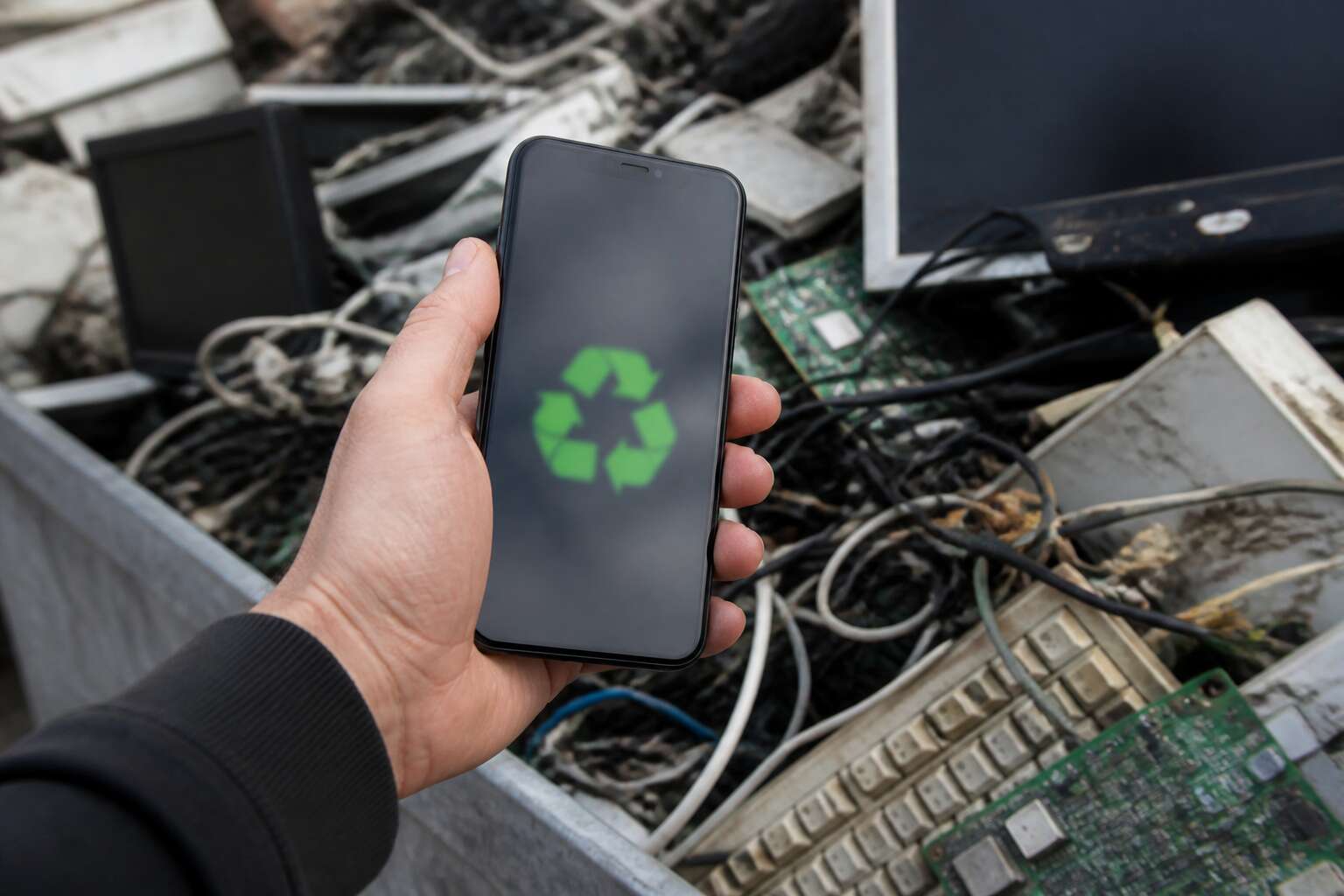
The term “e-waste” sounds rather sterile, doesn’t it? Like a mild inconvenience, something you might sweep under a rug. In reality, it is the world’s fastest growing rubbish pile, and calling it just ‘waste’ is a stretch. So, what does e waste stand for? It is a shorthand that strips away the complexity, but the full meaning of e-waste is far more specific. It refers to discarded electrical or electronic devices. That is the strict definition, the technical one.
However, that technical definition misses the soul of the problem. This isn’t merely about old junk. It is about the untapped value and the lurking dangers inside those sleek gadgets. When we ask what does e waste stand for, we are really asking about the consequence of our obsession with the newest upgrade. That old smartphone in your drawer? The broken kettle in the cupboard? That is a tangible asset and a hazard, all rolled into one. It is the physical residue of our digital lives.
To give you a clearer picture, the official parameters usually cover anything with a plug or a battery, including:
- Home appliances like fridges and washing machines.
- IT gear such as laptops, monitors, and keyboards.
- Consumer electronics including TVs, speakers, and cameras.
- Solar panels and power tools.
The sheer volume of this category makes the real question even more urgent. The term is often used loosely, but the implications are surprisingly heavy. The distinction matters more than you think because what does e waste stand for, at its core, involves toxic materials like lead and mercury. It demonstrates that our convenience often comes with a hidden environmental price tag that is rarely visible on the shelf. The challenge lies in managing this material stream responsibly, before it becomes an even larger problem.
Why ‘Electronic’ and ‘Waste’ Are Combined
Consider the word itself. “Electronic” paired with “waste” feels like a contradiction. One suggests innovation, the other decay. Yet they are inseparable in our era of relentless upgrades. When someone asks what does e waste stand for, they are confronting this contradiction. The term binds the circuit board to the landfill, acknowledging that devices carry an expiration date from the moment they leave the factory.
This combination is deliberate. It signals that a device has lost its value, but its physical body remains. The “waste” label is a warning about what we discard. In South Africa, where e-waste volume grows alongside tech adoption, the phrase carries weight. We rarely pause to consider the journey, but the acronym itself forces the connection. That is what does e waste stand for in practice, the point where utility meets responsibility.
Other Acronyms in the Industry: WEEE, RAEE
Beyond the basic phrase, the industry speaks in acronyms. WEEE stands for Waste Electrical and Electronic Equipment, a term born from European Union directives. RAEE, its Spanish and Italian counterpart, means Residuos de Aparatos Eléctricos y Electrónicos. These labels matter because they shape regulations. In South Africa, as e-waste volumes climb, these frameworks guide how we classify discarded tech.
When someone asks what does e waste stand for, they often encounter WEEE in policy documents. It is a functional definition, not a poetic one. RAEE appears in global trade discussions. Both acronyms share practical goals:
- Reducing hazardous materials
- Promoting responsible recycling
- Tracking device lifecycles
These terms are not interchangeable. They reflect regional legal systems. Yet they all point to the same question of accountability.
Types of E-Waste and How to Identify Them
Large Household Appliances
South Africa generated 430,000 tonnes of e-waste in 2019, and a significant share came from large household appliances. These are the white goods sitting in your kitchen or scrapyard, and they represent the most visible side of what does e waste stand for. Refrigerators, washing machines, tumble dryers, ovens, and dishwashers all qualify.
Identifying them requires attention to three features. I’ve found these clues almost fail-proof:
- A thick power cable
- A compressor or sealed unit
- Metal casing with plastic panels
That combination signals an appliance built for heavy electrical loads and refrigerants. In South Africa, these items often get stripped for copper, leaving the rest to leak harmful chemicals. A punctured fridge releases ozone-depleting chlorofluorocarbons, while a crushed dryer spills residual oils. Recognizing these bulky hazards is the first step toward accountable disposal, and it captures what does e waste stand for in everyday life.
Small Consumer Electronics
Small consumer electronics hide in plain sight. Think phones, laptops, headphones, and the graveyard of chargers in every South African drawer. These devices answer what does e waste stand for with a quieter menace than a busted fridge. They lack thick cables and compressors. Instead, look for lithium batteries, glass screens, and flimsy casings that crack within months.
- Old smartphones and tablets
- Laptop chargers and power banks
- Bluetooth speakers and earbuds
- Gaming controllers and cameras
Each one contains metals like cobalt and gold, but also flame retardants that leach into soil when dumped. They are small, so they slip into general waste bins. That makes them a major stream in what does e waste stand for, because the volume overwhelms formal recycling systems in Gauteng and the Western Cape.
IT and Telecommunications Equipment
IT and telecommunications equipment forms a separate category in the e waste stream. In South Africa, this means the hardware that powers offices and networks, not the phones in your pocket. Think of server rooms, wiring closets, and reception desks. These items answer what does e waste stand for with a focus on connectivity and data.
You can identify them by their physical features. Racks of servers have dense port arrays and loud cooling fans. Routers and switches show blinking LEDs. Telephone systems include handsets, base units, and cable bundles. Look for metal casings and thick insulation.
- Network switches and routers
- Private branch exchange (PBX) units
- Servers and storage arrays
- Modems and fibre optic terminals
When upgrades happen, these devices leave in bulk. Handling them properly is key in a commercial context.
Lighting and Display Devices
Lighting and display devices are the most visually obvious members of the e waste stream. When someone asks what does e waste stand for, a row of dead fluorescent tubes or cracked LED panels provides the clearest answer. These items rely on phosphor coatings and semiconductor chips. In South African offices and shopping centres, they fail in large numbers.
Fluorescent tubes contain mercury vapour. Flat screens use liquid crystal displays with backlighting. Projectors hold ultra high pressure lamps. Each requires specific handling.
- Fluorescent and compact fluorescent lamps
- LED tubes and panels
- Computer monitors and television sets
- Digital signage and display screens
The physical clues are straightforward. Look for glass surfaces, plastic bezels, and reflective backing. The word waste in this context signals environmental risk. Knowing what does e waste stand for helps you sort these items correctly before they reach landfill sites.
Batteries and Power Storage
Batteries and power storage units play a silent role. While a cracked monitor draws attention, a dead lithium cell sits unnoticed in a drawer. Yet that small cell contains more reactive chemistry than any screen. So when someone asks what does e waste stand for, remind them it includes power sources too.
The types vary widely:
- Lead-acid batteries from vehicle starters and solar backups
- Lithium-ion cells from phones, laptops, and e-bikes
- Nickel-cadmium packs from old cordless drills
Damaged cells swell, leak, or ignite. In South African landfills, crushed batteries start fires that burn for days. That hidden danger defines what does e waste stand for: discarded energy that refuses to die quietly.
The Environmental and Health Impacts of E-Waste
Toxic Substances in E-Waste
Asking what does e waste stand for leads to a hidden reality. In South Africa, informal recyclers handle old phones and fridges without protective gear. These devices contain lead, mercury, and cadmium. Exposure can damage kidneys, lungs, and the nervous system. Children are especially vulnerable because their bodies are still developing. A single circuit board can pollute a small water supply. The soil near informal dumping sites shows high contamination. Communities breathe toxic fumes when cables are burned for copper. This is not abstract policy! It is a daily reality for thousands. Toxic substances in e-waste include:
– Lead, which affects brain development
– Mercury, which harms the digestive system
– Brominated flame retardants, which disrupt hormones
Every discarded gadget adds to the contamination. Understanding this term means confronting these impacts. The phrase hides the urgency behind old electronics.
Soil and Water Contamination
The environmental and health impacts of e waste soil and water contamination begin at the moment a device is torn open or left to weather. Heavy metals leak from broken boards and slip downward, past the topsoil, into the groundwater beneath. Boreholes and backyard gardens become silent collection points for that residue.
- Rain flushes dissolved metals out of crushed components into the soil.
- Corroding batteries release acids that speed up the leakage of toxic elements.
- Dust from shredding drifts onto open land and open water.
Asking what does e waste stand for leads to a field where nothing looks wrong and nothing grows as it should. The phrase names contamination that accumulates beneath South African communities.
Health Risks for Recycling Workers
Asking what does e waste stand for takes on a sharper edge when the people handling it are the ones paying the physical price. Recycling workers in South Africa rarely have the luxury of protective gear. They sort, strip, and smash devices with their bare hands, inhaling whatever those broken parts decide to release.
The risks are not abstract. Workers develop respiratory conditions from breathing in fine metallic dust. Skin absorbs lead and cadmium through repeated contact. The long term effects include neurological damage and reproductive issues, yet the work continues because the income is necessary.
- Burning wires to extract copper sends toxic fumes straight into the lungs.
- Acid baths used to recover precious metals burn skin and contaminate nearby air.
- Crushing cathode ray tubes releases phosphor dust that scars lung tissue.
These hazards land unevenly. Informal recyclers, often operating without oversight, face the greatest exposure. The phrase itself, what does e waste stand for, becomes a question about who absorbs the cost of discarded technology.
The Global E-Waste Crisis by the Numbers
E-waste is now the fastest growing waste stream. Global generation reached 62 million tonnes in 2022, with only 22.3 percent formally documented for recycling. The remainder disappears into landfills, unregulated scrapyards, or open burning sites that release persistent toxins.
These toxins travel beyond their origin. Mercury vapor contaminates the atmosphere, while flame retardants and heavy metals bind to dust particles that drift for kilometres. Agricultural land and drinking water sources absorb the residue, creating exposure pathways that reach people far removed from any dump site. Studies in communities near e-waste processing hubs show elevated blood lead levels among children.
The numbers are stark!
- Annual e-waste generation climbs by roughly 2.6 million tonnes.
- Over 4 billion people lack access to regulated e-waste collection.
- Less than 1 percent of rare earth elements are recovered from waste streams.
Asking what does e waste stand for now carries environmental weight beyond the device itself.
How E-Waste Is Managed and Recycled
Collection and Sorting Processes
Most people assume a recycling fairy magically fixes their old laptops. I have news: the fairy is a hydraulic press, and its workshop smells like burnt toast.
After collection bins fill up with forgotten gadgets, the chaos becomes choreographed. Sorting facilities use a blend of human hands and industrial magnets, each step designed to tame the electronic beast.
- Workers manually strip batteries, cables, and other hazards.
- Shredders crunch the rest into palm-sized fragments.
- Magnetic separators and eddy currents fish out copper, gold, and steel.
So, what does e waste stand for? It stands for a second chance at valuable resources, if we manage the madness properly.
Material Recovery and Refurbishment
Once sorted, the recovery phase begins. Material recovery grinds what remains into dust, then smelts it to reclaim copper, gold, and palladium. A single tonne of circuit boards can yield more gold than a tonne of mined ore. The process is exacting:
- Shredded fragments are melted in high-temperature furnaces.
- Base metals separate from precious ones through electrolysis.
- Plastics are converted into fuel or aggregate.
Not every device deserves the crusher though. Refurbishment extends the usefulness of working smartphones and monitors. Technicians test, repair, and re-certify units that still hold value. Others are dismantled for working components, which feed the repair market and keep functional parts in circulation longer than expected.
So, what does e waste stand for in this context? It stands for hidden value. South African recyclers increasingly specialise in this work, keeping precious metals out of landfills and back into production loops. The answer shifts depending on where you stand in the chain, but the potential remains constant.
Responsible Recycling Certifications
Certifications verify that e-waste is processed ethically, not just for profit. When a facility holds international accreditation, it proves that data destruction, worker safety, and environmental compliance are non negotiable. This matters deeply in South Africa, where informal recycling still exists.
- R2 (Responsible Recycling)
- e-Stewards
- ISO 14001 for environmental management
These certifications answer what does e waste stand for in practice. They transform it from ambiguous waste into a governed resource. For South African consumers and businesses, choosing a certified recycler means their old devices will not end up in unregulated dumpsites or harm informal workers. The certification itself carries weight because it is audited, renewed, and tied to real consequences.
Data Security and Hard Drive Destruction
When a hard drive reaches the end of its life, the data on it does not vanish. This is where e-waste management begins. In South Africa, secure data destruction is the first step. Physical shredding, degaussing, and verified wiping are standard methods. Each ensures that information cannot be recovered.
After data destruction, materials enter a careful chain of custody. Components are dismantled, and valuable metals are extracted through mechanical processes. The goal is to return materials to the manufacturing cycle. This is what does e waste stand for in its most practical sense, where waste becomes a resource again.
Consider what happens to a single device:
- Hard drives are shredded into fragments.
- Plastics are sorted and recycled.
- Circuit boards go for metal recovery.
Every step is documented. Without it, e-waste is just trash. With it, the device becomes a resource. I have seen data leaks from skipped destruction. The cost always outweighs the recycling fee.
Recycling vs. Landfill: The True Cost
The true cost of landfilling e-waste never appears on the disposal ticket. A discarded motherboard holds recoverable copper, gold, and palladium. In a landfill, those metals are lost, and toxic residue migrates into the soil. Recycling captures that value before it disappears.
South African recyclers measure the economics carefully. Shredding and smelting cost money. Landfill fees look cheaper in the short term, but the long term price includes contaminated aquifers and depleted raw materials. The question of what does e waste stand for becomes practical here: a resource or a liability depending on the choice made.
- Copper from wiring feeds new cable production
- Gold from circuit boards returns to electronics manufacturing
- Plastics become secondary raw materials
I have seen facilities skip proper disposal to save a few rand. The cleanup bill always exceeded the savings!
Legislation, Corporate Responsibility, and What You Can Do
Global E-Waste Regulations and Treaties
Governments are catching up to the reality that what does e waste stand for matters beyond semantics. The Basel Convention restricts hazardous electronic shipments across borders, while the South African National Environmental Management: Waste Act mandates producer responsibility.
Corporate players now face compliance costs, forcing them to design repairable devices. For individuals, the registry of e-waste recyclers offers a starting point. Consider these actions!
- Locate a registered recycler near you.
- Demand transparency from brands about take-back programs.
Global treaties evolve slowly, yet local bylaws are tightening. Your engagement shifts the market. Each discarded circuit board ends up either in a compliant refinery or a contaminated waterway.
Producer Responsibility Schemes
South Africa’s Extended Producer Responsibility regulations answer the question of what does e waste stand for by assigning clear obligations. Producers must finance take-back systems, so the cost of managing discarded electronics no longer falls solely on municipalities. This legislative shift creates measurable accountability.
Corporations now design for recyclability because compliance demands tangible results. They register their products, report tonnages, and fund recovery infrastructure. In practice, your old phone has a defined route back into material streams, verified by annual audits.
Household engagement still drives the system. Check if your neighbourhood has a registered drop-off point. Ask retailers about their obligations. Verify that recyclers hold valid permits.
- Locate your nearest collection site via municipal directories.
- Refuse informal scrap dealers who burn cables.
- Return batteries to designated bins at supermarkets.
Consumer Tips for Reducing and Donating E-Waste
South African legislation has moved beyond the basic question of what does e waste stand for. The National Environmental Management: Waste Act now forces producers to answer for every stage of a product’s life. Municipalities no longer carry the burden alone.
Corporate responsibility has matured accordingly. Annual reports now list recovery figures. Companies fund drop-off points and train staff in proper handling. Some electronics makers have built refurbishment lines that extend the usefulness of returned devices.
- Repair before you replace, a simple battery swap can revive an old phone.
- Donate working monitors, printers and laptops to registered charities.
- Ask your employer what happens to retired office equipment.
I find real value in this chain. When you hand over an old device through a formal channel, you complete the recovery cycle. The meaning behind what does e waste stand for becomes less abstract every time someone chooses the registered route.
Future Innovations in E-Waste Management
The question of what does e waste stand for now shapes boardroom agendas. South Africa’s Waste Act amendments introduced extended producer responsibility regulations that demand concrete recovery targets from electronics importers. Non-compliance carries penalties that make landfill disposal the expensive option.
Manufacturers have responded with take-back programmes, refurbishment hubs, and audited recycling partnerships. Some automakers recover precious metals from circuit boards in their own components. The circular economy is no longer abstract policy language. It shows up in audited monthly collection figures!
- Recovery targets are verified by the Producer Responsibility Organisation
- Annual compliance reports must be published
- Municipal drop-off sites hand directly to registered recyclers
Future innovations point toward urban mining technologies that extract lithium and cobalt from dead batteries with higher efficiency than traditional smelting. South African researchers are testing bioleaching methods where bacteria separate metals. These developments answer what does e waste stand for with practical engineering.

0 Comments