Unlocking Revenue Streams in Electronics Recycling
Evaluating the True Market Value of Recovered Materials
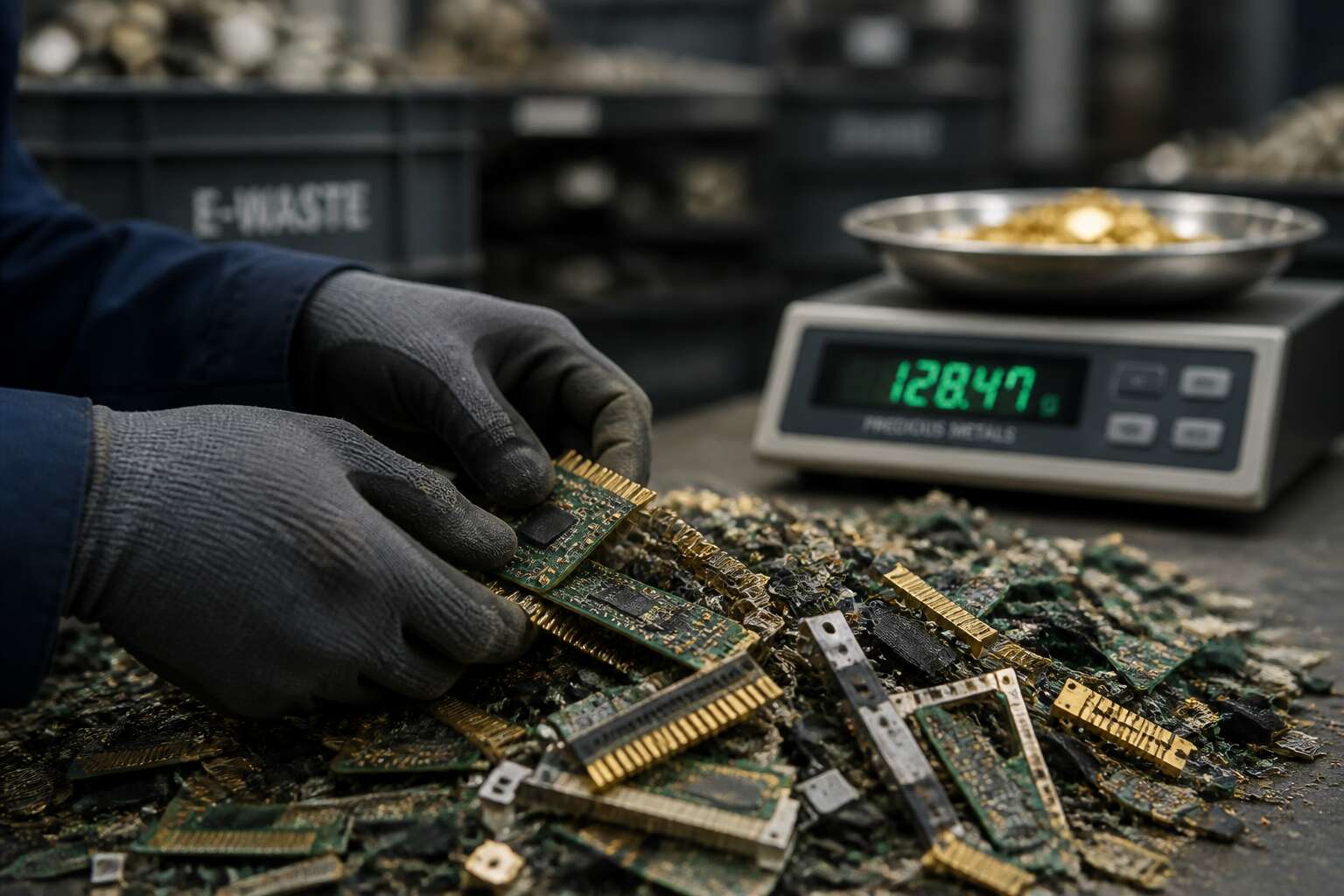
South Africa’s landfills are a rich estate of forgotten treasures, though most people see only dust and decay. The immediate profit in e waste recycling lies not in the bulky casings, but in the precious metals hidden within. Gold, palladium, and copper command real value on the open market, and a savvy business must weigh its holdings accordingly.
The true metric of worth, however, comes from a rigorous assessment of the recovered materials. Scrap value fluctuates with global commodity prices, a fact that demands constant attention from the astute recycler. I have seen operators fail simply because they treated their stockpile as a static asset, rather than a dynamic portfolio. The savvy operator tracks market trends with the same dedication one would give a favourite share on the Johannesburg Stock Exchange.
An honest appraisal of your recovered goods involves a detailed breakdown, which is best done in the open.
– Separate circuit boards from their housings to maximise grade.
– Analyse gold plating on connectors for purity.
– Weigh copper wiring after stripping any insulation.
– Test memory modules for rare earth elements.
The margin between a careless discard and a lucrative sale is often found in these small, methodical steps. The profit in e waste recycling depends on this kind of disciplined accounting; otherwise, you are simply moving rubbish from one pile to another, a polite form of charity, not a business.
The Hidden Treasure Trove Within Circuit Boards and Processors
Circuit boards and processors hold a value that rust and dust cannot erase. The profit in e waste recycling often hides inside these components, where gold bonding wires and palladium capacitors wait for the right hands!
Processors, those black ceramic chips, contain more gold per gram than many mined ores. I have watched old server CPUs yield startling returns when handled correctly.
- Pry processors from their heat sinks to expose the gold plated contacts.
- Separate ceramic and fibre board chips for accurate grading.
- Collect capacitors and pins for their palladium content.
Each piece adds to the bottom line. Neglect these streams and the margin slips away.
Precious Metals Recovery: Gold, Silver, Palladium, and Copper
Silver collects on the contact points of relays and switches, while palladium sits inside multilayer ceramic capacitors. Copper winds through every power cable and heat exchanger. These metals stay hidden inside forgotten devices, accumulating until someone decides to recover them.
The profit in e waste recycling builds when you treat every component as a separate stream instead of a single heap. Sorting by metal type changes the yield dramatically. Mixed scrap sells for a fraction of what separated material commands.
Consider what hides inside a typical desktop!
- Gold plated connector pins on RAM modules
- Silver solder joints on circuit boards
- Copper windings in power supply transformers
- Palladium in ceramic capacitors
Each of these streams carries its own market dynamics. A recovery operation that ignores them forfeits real returns. The true profit in e waste recycling emerges when you know exactly what each component contains and where to sell it.
Plastics and Glass: Secondary Markets You Might Be Overlooking
A single desktop tower carries close to six kilograms of engineering plastic, yet most recovery operations discard these casings without thought. That erodes the profit in e waste recycling, because electronics plastics are not botties or bags. They contain flame retardants and glass fillers, properties injection moulders pay for.
Glass adds another dimension. Cathode ray tube funnels from older monitors hold lead and cannot enter municipal recycling. Specialized reclaimers still pay for the leaded glass, because it replaces virgin material in new tube manufacturing, while panel glass becomes tiles and abrasives.
In South Africa, these secondary markets remain fragmented. Fractions that command value share a pattern:
- Plastics sorted by resin type, such as ABS or HIPS, sell for twice the mixed scrap price.
- Clean, separated glass cullet attracts steady buyers in building materials.
Operations that ignore these streams forfeit margins. The profit in e waste recycling consolidates when every fraction is treated as an asset, not an afterthought.
Strategic Partnerships with Manufacturers and Refineries
Refinery partnerships function as the quiet axis of the entire recovery economy. A smelter in Gauteng that understands complex solder alloys can extract value where a general processor sees only residue. Original equipment manufacturers hold composition data that no lab test reveals. The profit in e waste recycling often hinges on these proprietary relationships, not on the visible price of copper or gold.
Refineries want consistent tonnage to keep furnaces viable. Manufacturers want traceability to meet environmental regulations. A recycler who negotiates both sides holds a stable position.
- Direct refinery contracts eliminate broker margins
- Manufacturer buy-back schemes for defective units stabilise intake
- Shared sampling protocols reduce dispute risk
In South Africa, where formal e-waste legislation is tightening, these alliances are becoming the difference between survival and stagnation.
Cost Structures That Determine Your Bottom Line
Logistics and Collection: The Largest Variable Expense
Rising fuel prices and sprawling urban layouts mean that the cost of simply reaching the source of scrap often exceeds the value of the material itself. Collection is a balancing act between volume and distance. A single trip to a remote industrial site might yield tonnes of material, but the diesel and driver wages can consume the entire margin. This is where the true battle for profit in e waste recycling begins, long before any shredder starts turning.
Security presents another significant layer of expense. High-value boards and processors are attractive targets for theft, so operations often require guarded storage and tamper proof transport. Insuring these assets during transit also adds a fixed cost that fluctuates with crime statistics in specific regions. For smaller operators in South Africa, this overhead can be crippling.
The variable nature of these expenses demands constant logistical tuning. Consider the following factors that directly impact your bottom line:
- Fuel price volatility and route optimization software
- Security escorts or armed response fees for high value hauls
- Weighbridge fees and access charges at disposal facilities
- Reverse logistics costs for broken or contaminated loads
Labor for sorting and initial dismantling also falls under this umbrella. Unlike automated processes, manual separation is slow and requires skilled eyes to identify valuable components quickly. Paying for that expertise is necessary, but managing idle time between deliveries is crucial. A truck sitting at the dock waiting to unload is burning money, so scheduling becomes a strategic function rather than a clerical task.
Ultimately, the margin lives in the gap between what you pay to gather the material and what you get for the refined output. Controlling the collection network, with its unpredictable fuel spikes and security threats, is the most direct lever you can pull to safeguard your profit in e waste recycling. Operators who master this chaotic front end position themselves to thrive, while those who ignore it watch their potential disappear into the exhaust pipe.
Sorting and Dismantling: Labour Versus Automation Efficiency
Sorting and dismantling costs fluctuate sharply depending on your workforce strategy. Manual labour dominates in South Africa because wages remain competitive, but speed suffers. A skilled sorter identifies value in seconds; an untrained eye costs you material. Automation removes human error but demands massive capital upfront. The real profit in e waste recycling depends on the daily balance between these two extremes.
Consider the cost variables:
- Hourly wages for sorters versus machinery maintenance
- Error rates in manual identification
- Downtime when equipment fails
- Training time for new staff
Smaller operations lose money when they over-invest in machinery. Larger operators lose money when they understaff. The balance shifts with every Rand, and that shift dictates your profit in e waste recycling. I have watched operators ignore this balance until the numbers turn against them.
Compliance and Certification Costs: E-Stewards, R2, and Local Regulations
The quiet cost of legitimacy often dwarfs the visible expenses of shredders and conveyor belts. Certification through programmes like E-Stewards or R2 is not a simple badge; it is a financial commitment that reshapes your entire operational budget. These audits demand rigorous record keeping, secure data destruction protocols, and verified downstream vendors, each step carrying a price tag that many newcomers fail to forecast.
Local South African regulations add another layer of complexity. Municipal licences, waste manifest filings, and transport permits for hazardous components all contribute to the fixed overhead. The paperwork alone consumes hours that could otherwise be spent on recovery processes. For the uninitiated, these fees appear as administrative nuisances; for the seasoned operator, they are the price of market access.
– Annual audit fees for certification bodies
– Legal consultation for compliance updates
– Security upgrades for data bearing materials
– Employee background checks and vetting
Ignoring these costs does not eliminate them. It simply converts them into penalties, fines, or a sudden loss of contracts when a client demands proof of responsible disposal. The profit in e waste recycling is often determined by how gracefully you absorb these mandatory expenses without letting them erode your margins. The operators who thrive treat compliance as a fixed line item, not an afterthought.
Shredding and Separation Technology Investments
Nothing drains capital faster than a shredder that mangles boards into dust. The profit in e waste recycling depends on matching separation technology to your material stream. A hammer mill costing R2 million can destroy value if it over shreds. An eddy current separator only earns its keep when your intake has enough non ferrous metals.
Shredding reduces volume but creates fines that lose value. Air classifiers and granulators handle different fractions. Some operators prefer shear shredders for whole units, others need dual stage systems to liberate components. Wrong technology selection is worse than buying nothing.
Before you sign financing, inspect these variables:
- Feedstock consistency and contamination levels
- Energy consumption per tonne processed
- Maintenance intervals for blades and screens
A shiny automated line tours well, but profit in e waste recycling emerges when recovery rates outpace your loan interest.
Hidden Costs of Data Destruction and Security Protocols
One forgotten hard drive can erase an entire quarter’s margin. Data destruction is not a technicality; it is a cost centre that demands attention. In South Africa, POPIA compliance forces operators to document every byte they destroy. I have seen facilities treat these expenses as optional. That is a mistake.
Your bottom line has fixed costs, variable costs, and hidden costs. The hidden ones shift without warning. They include calibration for degaussing equipment, secure transport logs, and staff incident response training.
Each of these eats into profit in e waste recycling operations that are already thin. Expansion budgets often omit these costs.
Warehousing and Inventory Management Strategies
Warehouse space is a ledger of its own. Every pallet of motherboards, every drum of shredded cable, occupies square meters that demand rent, security, and fire suppression. I have watched operators pay for storage twice: once for the physical space, once for the capital tied up in material that sits too long.
Inventory velocity determines profit in e waste recycling. Material held for ninety days loses value as commodity prices shift and financing costs accrue. Hold too little and you cannot fulfill refinery contracts. Hold too much and margin evaporates into floor space.
Segregation by grade and destination works well:
- Processed fractions awaiting refining contracts
- Whole units pending data destruction or testing
- Residue destined for downstream disposal
Each stream needs its own tracking system. A bin tag can protect the bottom line better than any spreadsheet. The facility that knows exactly what sits where, and for how long, avoids costly surprises at month end.
Scaling Operations for Maximum Profitability
Finding the Right Volume Threshold for Sustainable Margins
Most operators chase volume without calculating the breaking point where margins actually hold. In South Africa, the difference between a viable facility and a costly one often sits at a specific tonnage per month. Below that, fixed costs consume every gain from recovered materials. Above it, storage and processing bottlenecks erase the advantage.
The real profit in e waste recycling emerges when you match intake to your downstream contracts and labour capacity. I have seen operations double their throughput yet halve their margins because sorting lagged behind.
- Map monthly fixed costs across rent, security, and equipment leases.
- Calculate variable costs per ton for collection, shredding, and data destruction.
- Identify the volume where total cost per ton drops below market recovery value.
That is your threshold. Scale only when you can hold that line steadily.
Building a Consistent Supply Chain with Business-to-Business Collection
Scaling a recovery operation in South Africa demands a supply chain that arrives with rhythm. Business-to-business collection agreements turn unpredictable drop-offs into scheduled feedstock. When you sign a corporate client to a monthly pickup cycle, you remove the guesswork from your intake planning.
Your facility can then align labour shifts and shredding runs to known tonnage. That consistency is where the profit in e waste recycling actually compounds. One-off loads create surges that overwhelm sorting tables, while steady B2B volumes let every station operate at capacity.
- Negotiate fixed pickup dates with electronics retailers and office parks.
- Offer data destruction as part of the collection contract.
- Set minimum volumes per pickup to stabilise processing loads.
Each contract adds predictability to your balance sheet. This steady intake is the quiet engine of profit in e waste recycling, driven by the certainty of what arrives each week rather than the weight alone.
Municipal Contracts and Community Drop-Off Programs
Municipal contracts represent a different beast entirely. They demand patience through tender processes and compliance paperwork, yet they reward operators with almost unassailable feedstock security. A single city agreement for old fridges and circuit boards can anchor your entire month. The profit in e waste recycling emerges when you layer these public relationships atop private B2B streams, smoothing out the seasonal valleys that plague scrap markets. Municipalities pay on schedule, which gives your cash flow a bureaucratic but dependable spine.
Community drop-off programs act as the opportunistic complement. They capture the individual loads that corporations miss. Partner with schools and shopping centres for weekend collections, then process those small contributions in bulk. The interplay matters more than either channel alone. Fixed municipal tonnage covers overheads. Spontaneous public drop-offs, though erratic, often produce surprising yields of high grade motherboards and power supplies.
The real leverage comes from cross promotion. Municipal collection days generate public visibility. That visibility attracts corporate clients who want an environmentally conscious partner. Each channel feeds the other. Operators who manage both tend to see steadier margins, because they no longer depend on any single source for survival.
Diversifying Service Offerings: Refurbishment, Resale, and Parts Harvesting
With that feedstock secured, the real profit in e waste recycling emerges from what you do with each unit before it reaches the shredder. A refurbishment bench turns dead laptops into resaleable machines. Parts harvesting pulls components into a separate inventory that commands retail prices rather than scrap rates:
- Working motherboards sell to repair specialists.
- RAM and solid state drives move fast on resale platforms.
- Power supplies and cooling fans sell locally in volume.
These activities change your cost structure. Labour spent testing and cleaning adds value at every step, while the residual carcass still flows to the recycler. The key is grading discipline. Sort by function and condition, then match each bin to the market that pays for those specific qualities. Standardising those workflows is where the profit in e waste recycling compounds, since throughput rises without new machinery.
Navigating the Global E-Waste Market Landscape
Urban Mining: How Global Commodity Prices Drive Local Profits
When copper prices spike in London, a small recovery facility in Johannesburg adjusts its quotes within hours. The global e-waste market links scrap bins directly to smelters. Urban mining converts discarded phones and motherboards into a material source that follows the London Metal Exchange. I have watched operators change their entire buying strategy based on a morning price alert!
For local operators, this means the profit in e waste recycling is never fixed. It varies with global commodity prices, exchange rates, and logistics costs. A recycler who pays attention to these signals can buy more aggressively when palladium dips, or hold inventory when steel falls. The same pile of boards yields different margins each month.
Export Regulations and the International Flow of E-Scrap
One customs official with a grudge can hold your e-scrap for thirty days. The profit in e waste recycling hinges on export regulations that shift with political decisions, not just smelter prices. Move boards through the wrong port and you face re-import fees, storage penalties, or a returned container.
South African operators must track the Basel Convention, EU waste shipment rules, and Asian import license quirks. Some destinations require pre-notification of every shipment. Others demand a clean bill from an accredited lab. What to watch includes:
- Restrictions on mixed versus sorted e-scrap
- Bans on whole appliances versus shredded material
- Countries that suddenly change their import policies mid-quarter
That last one is a classic. The international flow of e-scrap shifts with every new restriction. Adapt or watch your profit in e waste recycling become someone else’s bargain.
The Role of Original Equipment Manufacturers in Reverse Logistics
In 2022, global e-waste reached 62 million tonnes, but less than a quarter was formally collected. The global market landscape rewards operators who understand the tension between regional demand and producer responsibility. Original equipment manufacturers are no longer passive observers. Their reverse logistics programs determine which recyclers survive. When a brand commits to take-back, it creates predictable inbound streams, a critical buffer against commodity price swings. Profit in e waste recycling depends on that predictability.
OEMs also influence material quality. Design choices, from solder to battery adhesives, affect recovery rates. Close partnerships let you feed specifications back to engineers, improving future yields. The landscape itself is shifting.
- Extended producer responsibility laws are tightening across Europe and Asia
- Brands face carbon disclosure requirements tied to recycled content
- Logistics networks for returns are becoming more standardized
This convergence means profit in e waste recycling flows to those who align with OEM timelines, not just spot buyers.
Emerging Technologies Shaping the Future of Recovery Efficiency
Two hundred million tonnes of e-waste are projected by 2050. That figure alone explains why the global market is not waiting for permission to evolve. It is reorganising around data, automation, and the physical chemistry of recovery. For South African operators, the immediate landscape is defined by informal collection networks and erratic municipal power supply. Yet the same forces that destabilise local logistics are sharpening the tools used elsewhere.
Emerging technologies are rewriting the economics of recovery. Artificial intelligence driven sorters now identify component types at speeds no human hand can match. Optical sensors separate brominated plastics from their safer cousins in milliseconds. These machines are expensive, but their throughput changes the break even point for entire facilities. Profit in e waste recycling increasingly depends on the yield per tonne, not the volume of tonnes processed.
– Robotics for precision dismantling of printed circuit boards
– Pyrometallurgical and hydrometallurgical processes that recover metals from low grade residue
– Blockchain ledgers that verify material provenance for international buyers
The most significant shift is the move from batch processing to continuous flow. Old systems stopped for manual sorting and quality checks. New systems monitor material streams in real time, adjusting separation parameters while the line runs. That continuity reduces labour hours and energy consumption per kilogram. In a country where electricity costs are volatile, this efficiency is not a luxury. It is the difference between a margin and a loss. South African recyclers who adopt these technologies now will define the market’s next decade. Those who wait will service the leftovers.
Risk Management: Market Volatility, Commodity Prices, and Buyer Reliability
The global market for recovered materials shifts without warning. Copper prices swing on exchange news. Palladium demand follows industrial cycles. For South African recyclers, this volatility changes the profit in e waste recycling equation overnight.
I have seen operators lock in a buyer at a good rate, only to watch the same buyer renegotiate when commodity prices drop. Reliability matters as much as price. A refinery that pays 5% less but settles within seven days beats a premium offer that drags for months.
Consider these risks when contracting:
- Payment terms that extend beyond 30 days
- Buyers who demand exclusivity without volume guarantees
- Price adjustments tied to opaque indices
A diversified buyer base protects your margins. So does hedging contracts when possible. The real profit in e waste recycling comes from managing risk, not chasing the highest quote.
Marketing Tactics That Attract High-Margin E-Waste Sources
Positioning Your Refining Process as an Environmental Win
In South Africa, where load shedding turns data centres into potential scrap heaps, most recyclers still chase the same low margin motherboard piles. The real profit in e waste recycling hides in specialised B2B streams, but only if you market yourself as the cleaner, smarter option. One tax consultant told me her company stopped using a cheap collector after discovering their “recycling” meant exporting to a landfill in Mozambique. That is your opening.
Attract high margin sources by targeting firms with compliance pressure, like banks and hospitals. They pay premium rates for accountability.
- Publish your downstream refinery contracts openly.
- Offer on site data destruction with video proof.
- Highlight certification audits in your sales material.
Position your refining process as a certified environmental win. Your furnace recovers palladium from SIM cards, while competitors burn them for scrap value. That gap changes the conversation from price per kilogram to responsible stewardship.
Transparent Pricing Models That Build Trust with Corporate Clients
Corporate clients in Johannesburg are not buying recovery services. They are buying certainty. Transparent pricing models do more than list figures. They show how the profit in e waste recycling flows through each stage, from collection to refinery settlement. That clarity converts compliance officers into long term partners.
Publish your per kilogram rates for each material grade. Then show what happens after the scale. One way is to issue a quarterly breakdown that reconciles projected yields against actual payouts. For example:
- Palladium recovery from telecom scrap
- Gold plating from server boards
- Copper from network cabling
Attract high margin sources by offering these audits automatically. Banks and hospitals will pay premium rates for accountability. They will also refer you to other regulated industries.
Leveraging Data Security Certifications as a Premium Sales Pitch
The data breach at a Johannesburg hospital in 2023 reportedly cost the institution millions in fines and lost contracts. That is why data security certifications are not a compliance checkbox. They are your sharpest sales tool. When you walk into a corporate boardroom, the conversation should start with risk, not recovery rates. Show them your R2 certification or your ISO 27001 protocols and you shift the focus from what you charge to what you protect. I have seen recyclers win tenders simply by proving their hard drive shredding process produces a certificate of destruction that stands up in court.
This approach directly boosts the profit in e waste recycling because it lets you charge a premium for accountability. Clients will pay more for a documented chain of custody than for a vague promise of recycling. The certification transforms your service into an insurance policy. You can offer tiered service levels to match different security needs. For example:
– Basic certification for general office e-scrap.
– Advanced chain of custody with serialized tracking for financial firms.
– Live video destruction feeds for high value data centers.
Each tier increases your margin. This positions you as the only safe option, filtering out competitors who compete solely on price. A bank will not shop around for a cheaper option when the alternative puts their client data at risk. The profit in e waste recycling grows because you have turned a regulatory burden into a strategic advantage.
Developing Recurring Revenue Through Secure Pickup Services
There is a quiet severity in the scheduled arrival of a secure collection vehicle. It arrives on the same day, at the same hour, and that regularity is the true product. Corporate clients do not fear the recycler who charges the most. They fear the one who disappears. A standing pickup contract converts a one time transaction into a monthly certainty.
The marketing tactic is understated. You do not advertise price. You advertise presence. Your route becomes a promise, a sequence of custody that begins with a locked bin and ends with a certificate. Recurring revenue changes the entire shape of your operation, because the profit in e waste recycling becomes a matter of arithmetic. You can forecast tonnage, labour, and revenue with a precision that unsettles your competitors.
- Locked consoles installed in server rooms.
- Automated reminders for scheduled collection.
- Digital manifests that update in real time.
That small list is the infrastructure of retention. I have watched competitors fade because they treated pickup as an afterthought. Retention, once secured, is the hardest asset to pry loose.
Educating Local Businesses on the True Cost of Improper Disposal
In South Africa, a discarded server can trigger a fine larger than its purchase price. Most business owners never learn that until it happens. That gap is your market.
The true cost of improper disposal includes data breaches, legal penalties, and lost recoverable metals. The profit in e waste recycling starts when you educate them on this arithmetic.
I bring a single motherboard to every first meeting. I show the gold contacts and the regulation sheet. Then I list their real exposure:
- Fines per tonne of hazardous waste
- Legal fees from a privacy violation
- Lost value of copper and palladium inside each unit
Once they see those numbers, your service is no longer a cost. It is a hedge. The profit in e waste recycling becomes a line item they can defend to their finance team.


0 Comments