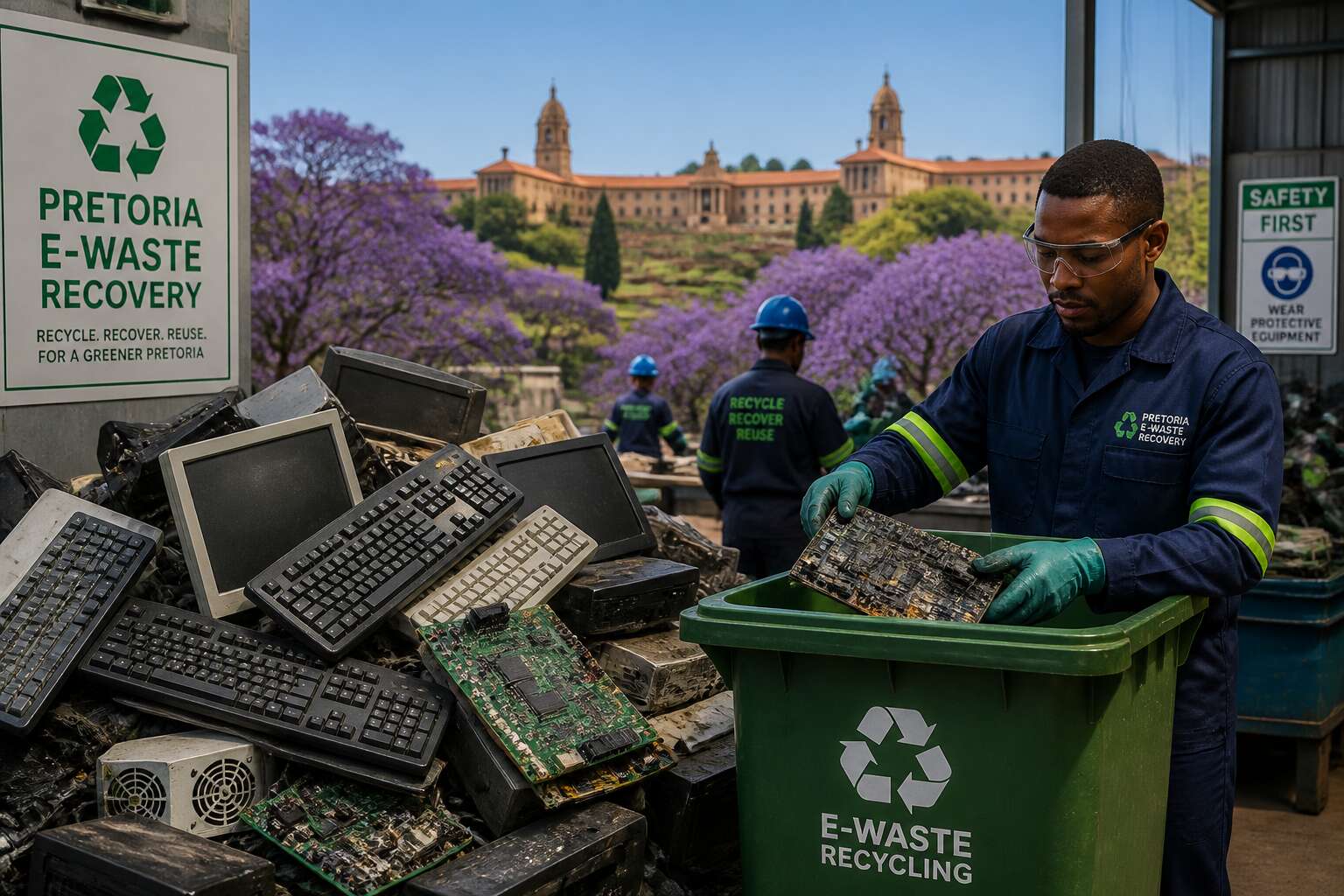
The Growing E-Waste Challenge in South Africa’s Capital
Why Pretoria’s Electronic Waste Problem is Escalating
South Africa generates over 360,000 tonnes of electronic waste each year, and Pretoria contributes a growing share. The city’s rapid digitisation and rising middle-class consumption have created a significant backlog of outdated devices. E waste disposal pretoria is no longer a niche concern; it is a municipal headache.
The escalation stems from several factors.
– Shorter product lifespans.
– Limited recycling infrastructure.
– Informal dismantling practices.
These pressures strain the city’s waste management systems. I have seen piles of discarded laptops in Tshwane’s industrial zones, leaking cobalt and lead into the soil. Without robust collection networks, the problem compounds yearly. Pretoria needs immediate action, and I hope residents demand better! The current trajectory is unsustainable.
Environmental Consequences of Improper Dumping
I can still smell the smouldering fibreglass near the industrial fringe of the city. It is the scent of informal burn sites, where desperate scavenging releases dioxins straight into the lungs of nearby residents. Rain percolates through fractured monitors, and the leachate carries heavy metals deep into the groundwater table. A single discarded television can contaminate hundreds of litres of water. The fallout from improper disposal is precise:
- Lead and barium from cathode ray tubes.
- Cadmium from rechargeable batteries.
- Mercury from flat screen backlights.
- Brominated flame retardants that persist for decades.
These elements do not decompose. They enter the food chain through vegetables grown on polluted turf. When proper e waste disposal pretoria procedures are ignored, these toxic residues become a permanent part of the local soil. The damage is silent, but it is absolutely real!
Health Risks Associated with Unsafe Handling
In Pretoria, the volume of discarded electronics grows faster than the city’s ability to process them. Each month, thousands of tonnes of obsolete devices enter the informal sector, where hands, not machinery, do the dismantling.
The health risks are immediate. Workers who break screens and circuit boards without protection absorb heavy metal dust. Symptoms arrive quietly:
- Persistent headaches and dizziness
- Respiratory infections from plastic fumes
- Neurological tremors from lead exposure
Their children play on contaminated ground. Informal recyclers often burn cables to extract copper, inhaling toxins that settle deep in the lungs. They do this because e waste disposal pretoria services remain inaccessible or unknown. Formal e waste disposal pretoria channels exist, yet the gap between what is generated and what is safely processed remains staggering. I have watched this cycle repeat for years, and it is not slowing down!
Current Recycling Rates and Regional Statistics
South Africa generates roughly 360,000 tonnes of electronic waste every year. Within Gauteng, the province that houses Pretoria, the density of discarded devices is highest. The city alone contributes a significant portion of the regional total, yet formal recovery channels handle only a fraction of it.
The official recycling rate hovers near 12 percent. The remainder moves through unregistered collectors, storage rooms, or landfills. Pretoria produces more e-waste per household than most other South African cities, but its infrastructure lags behind Johannesburg’s.
- Approximately 6.2 kilograms of e-waste per capita is generated annually.
- Gauteng accounts for over 55 percent of formal recycling capacity.
- Less than 20 percent of Pretoria’s e-waste reaches certified e waste disposal pretoria facilities.
That last number deserves attention. For every tonne of circuit boards that enters a licensed stream, several more disappear into the informal economy. The statistics are clear. e waste disposal pretoria is a problem of scale, not awareness.
Legal Framework and Compliance Requirements for Electronic Waste
National Environmental Management: Waste Act 59 of 2008
The National Environmental Management: Waste Act 59 of 2008 imposes fines up to R10 million for illegal e waste disposal pretoria. That figure gets attention! The Act shifts responsibility onto the waste generator. Businesses must prove their e waste reaches a registered facility. Without traceability, a company faces crippling liability.
For any e waste disposal pretoria operation, the Act mandates:
- Classify every electronic item as hazardous or general waste.
- Hand material only to registered transporters and recyclers.
- Retain disposal records for at least five years.
These requirements apply regardless of volume. Pretoria companies often overlook classification. That oversight triggers audits. The Department of Forestry, Fisheries and the Environment inspects landfill sites for stray e waste. Every unchecked monitor becomes evidence.
Extended Producer Responsibility Regulations Explained
The Extended Producer Responsibility Regulations impose a separate compliance burden on anyone arranging e waste disposal pretoria. Simply handing a monitor to a scrap dealer no longer counts as compliance. Producers must register, pay levies, and fund take back programs. Importers and manufacturers face the same duty. The regulations create an obligation to design for recyclability, which explains why your printer now arrives with a lecture about its component parts!
Compliance demands more than paperwork. Your company must:
- Register as a producer with the DFFE
- Pay annual e waste levies on all covered products
- Report tonnages collected and recycled each quarter
- Contract with approved PROs (producer responsibility organisations)
Auditors compare declared volumes against actual collection data. Mismatches trigger fines. E waste disposal pretoria now means proving every kilo found its way to a registered recycler, rather than describing the journey on a spreadsheet.
Penalties for Illegal Dumping and Unauthorised Export
Fines for noncompliance dwarf the cost of doing it right. In the first year of full enforcement, the DFFE audited over 200 producers in Gauteng, and nearly a quarter faced penalties for misreported tonnages. Those audits revealed a stark reality: many companies claimed compliance while their e waste disposal pretoria records showed nothing moving through registered facilities. The levies and reporting mechanisms now form a traceable chain from your loading dock to the recycler’s scale. Each kilogram demands a digital record; each record must match physical receipts. Illegal dumping carries fines up to R10 million or ten years imprisonment. Unauthorised export of e waste, even as donated equipment or scrap metal, triggers the same penalties. Here is the shift: pretending in Pretoria no longer protects you. Auditors now cross reference weighbridge tickets against municipal landfill data, and the mismatches appear quickly. One Thuja distributor discovered that its e waste disposal pretoria had been intercepted by an unregistered scrapping operation. The company paid nearly R2 million in penalties and legal costs. Another manufacturer, fined for shipping monitors to Asia, lost valuable government contracts. The regulations have transformed compliance from an administrative chore to a genuine licence to operate. For those who thought enforcement was performative, the shrinking bank balances tell a different story.
Certification and Licensing Requirements for Waste Handlers
Certification under the National Environmental Management: Waste Act is not a formality; it is forensic accounting of every circuit board. For e waste disposal pretoria, the requirements split into two streams: generator registration and handler licensing. Generators submit an annual waste information report, but handlers face deeper scrutiny.
The South African Bureau of Standards offers the SANS 10405 compliance mark for processors, while the DFFE issues a separate registration certificate for transporters. Without both, your e waste disposal pretoria operation invites regulatory action!
- Proof of environmental liability insurance
- A certified storage facility with impermeable flooring
- Weighbridge calibration certificates
- Monthly mass balance reports reconciled with municipal records
These documents form an audit trail auditors expect to see within minutes, not days. Companies treating licensing as a one-time event fail reinspection. Your certification remains valid only while every operational amendment receives an updated application.
How to Prepare Electronic Devices for Responsible Recycling
Data Destruction: Securing Your Personal Information
Just over a third of recovered hard drives still contain readable personal data. Deletion is not destruction. A file erased from a drive leaves recoverable fragments behind, and that reality makes preparation essential.
Before engaging any e waste disposal pretoria provider, the owner must strip the device of its digital residue. Storage media requires deliberate handling:
- Back up important files to an encrypted drive.
- Sign out of all accounts and deregister the device.
- Remove the SIM and any memory cards.
- Use certified erasure software that overwrites storage sectors multiple times.
For those seeking absolute certainty, physical destruction of the hard drive remains the most secure route. A responsible e waste disposal pretoria professional will provide a certificate of destruction confirming that personal information is now unrecoverable.
Sorting and Categorising Different Electronic Components
Before your old laptop or smartphone ever reaches a recycler, a little effort on your side makes a massive difference. Sorting starts at home. Separate batteries from devices, as lithium cells can cause fires. Remove cables and chargers, which contain copper. Group similar components together: circuit boards, plastic casings, glass screens.
A sensible approach is to set aside obvious categories:
- Intact devices that could be refurbished
- Broken parts with recoverable metals
- Pure plastic or glass pieces
- Batteries and power cords
Doing this upfront saves time and reduces contamination. Most reputable e waste disposal pretoria operators have specific streams for each material, so your preparation helps them process everything correctly. It also means you are not handing over a jumbled box that ends up in a landfill.
Safe Removal of Batteries and Hazardous Materials
Start with the battery. Lithium ion cells are the leading cause of fires at recycling facilities, so removal comes first. If a battery is swollen or damaged, handle it with gloves and place it in a non conductive container. Tape over the terminals to prevent short circuits.
Follow a simple sequence for hazardous items:
1. Remove batteries from every device before storage.
2. Extract mercury switches from older appliances carefully.
3. Seal leaking capacitors or printer toner in plastic bags.
4. Keep hazardous materials separate from general recyclables.
A reputable e waste disposal pretoria operator maintains dedicated containment streams for each category, but your preparation determines how effective those systems are. Proper handling on your side reduces fire risk and keeps toxic substances away from landfill sites.
The prep takes minutes, and it genuinely protects the people handling your waste downstream. That is a small effort with real consequences for the entire e waste disposal pretoria chain.
Cleaning and Packaging Guidelines for Transport
Most people overlook the simple act of wiping down a keyboard or monitor. That layer of grime complicates manual inspection at recovery centres. Use a microfiber cloth and isopropyl alcohol for stubborn marks. Dry everything thoroughly before packing.
- Place each device in its own anti static bag
- Cushion screens with recycled paper or bubble wrap
- Label boxes with the contents and date
Transport matters just as much. Loose cables and chargers can tangle and damage ports during transit. Bundle them separately with twist ties. A reliable e waste disposal pretoria provider will handle the rest, but your packing protects both the equipment and the workers unloading it. Secure lids firmly and avoid overloading cartons beyond 15 kilograms.
Drop-Off Facilities and Collection Points Across the City
Pretoria’s collection points are not dumping grounds. They are intake stations where old equipment meets its next life, but only if you arrive prepared. Many centres across the city require specific documentation, and a quick phone call can save you from standing at a locked gate with a boot full of monitors.
When you find the right facility, keep these steps in mind:
– Confirm they accept your specific device category.
– Request a weighbridge receipt or written confirmation.
– Note the facility’s permit or registration number.
These details matter. They turn a casual drop-off into a documented transaction. That paper trail is your only evidence that e waste disposal pretoria was handled lawfully, and it protects you if anything goes missing later. Never leave items outside the gate after hours. Opportunists scavenge for data-bearing hardware. The responsible act is to place your devices directly into the hands of a licensed operator, nothing less.
Scheduling Home or Office Pickup Services
Your grandmother’s CRT television may hold sentimental value, but the collection company sees a logistics problem. Preparation for pickup involves more than unplugging. An inventory, a designated staging area, and confirmation of the service’s route constraints make the difference. Most operators in Pretoria schedule collections within 48 hours, provided the volume and weight are specified in advance.
Booking a slot reveals access limitations. A narrow driveway can derail the entire operation. An accessible inventory sheet allows the driver to cross check every item. This is e waste disposal pretoria done properly. The resulting paper trail makes the whole affair verifiable.
What to Look For in an Electronic Waste Service Provider
Key Credentials and Industry Accreditations to Verify
The most dangerous thing you can do is assume a company that collects electronics knows what it’s doing. With e waste disposal pretoria, the difference between a professional operation and a fly-by-night collector shows up in the documents they provide.
Ask for these credentials:
- eWASA membership or similar industry body affiliation
- ISO 14001 certification for environmental management
- A documented downstream chain of custody
A reputable provider will happily explain each document and answer follow-up questions. Vague answers or refusals should send you elsewhere. Verify that the accreditations apply to the specific facility handling your material. Many companies claim credentials for one branch while a different site does the actual work. Also, check whether the accreditation body performs regular, unannounced audits. Passing these checks indicates a provider offers e waste disposal pretoria with accountability.
Auditing the Recycling Chain: Where Your Waste Actually Ends Up
Every electronic item handed over for recycling enters a logistical chain that few people ever trace. The true test of an e waste disposal pretoria provider lies in their willingness to open that chain for inspection. A professional operation can name the exact facilities that process their material, from the initial sorting floor to the final smelter. They track each batch with manifests and can produce records on demand. When a company hesitates to share these details, it often signals that their waste is being shipped to informal sectors or worse, exported illegally.
Ask direct questions about the end destination of your electronics. A responsible provider will explain their local processing steps first, because genuine recycling happens where you can see it. They should be able to show you:
– The name and location of the downstream processor
– Documentation proving material stays within legal jurisdictions
– A written commitment refusing third-party brokers without your consent
– Their policy for handling materials that cannot be recycled locally
The most revealing moments happen when you request an unannounced site visit. Trustworthy operators welcome the scrutiny. They understand that the value of their service depends on demonstrating where every component lands, and that transparency is the difference between a genuine recycler and a waste trafficker. For e waste disposal pretoria, this audit trail becomes your only guarantee that your old devices are transformed into resources rather than becoming another country’s pollution problem.
Comparing Cost Models: Free Collections vs. Fee-Based Services
Free collections carry no direct charge. The provider must still profit from your devices, often through resale or export to regions with weaker oversight. Fee-based services reflect the genuine expense of responsible handling. I have seen quotes where a small charge for e waste disposal pretoria includes verified shredding, certified data wiping, and legal documentation.
Compare the models carefully when choosing e waste disposal pretoria. Ask for a line item breakdown. Free services may promise convenience, but they rarely offer accountability. Fee structures that seem high might cover insurance, transport, and final smelting.
- Does the fee include a certificate of destruction?
- What happens to components that cannot be recycled locally?
- Can you audit the downstream chain without notice?
The cheapest option often creates losses beyond money. It damages your reputation and the environment.
Refurbishment vs. Recycling: Which Option Suits Your Devices
A reliable e waste disposal pretoria provider should separate refurbishment from recycling before you sign a contract. Refurbishment changes the product’s fate. A laptop with a cracked shell but a functional motherboard can be cleaned, tested, and resold locally. Recycling grinds everything down to raw materials. Both are valid, but they serve different needs.
During audits, look for clear diagnostic records. I once visited a facility where staff pulled hard drives from old servers before placing the units on a pallet. That order of operations matters. Data must be destroyed first, then components reused or melted.
- Ask whether they quote based on device grade.
- Ask whether resale markets are local or overseas.
- Ask whether equipment beyond repair goes to a certified smelter.
Choose the process that matches each device’s condition, not a one size fits all promise.
Conducting a Site Visit: Questions to Ask Potential Vendors
Walk the facility before you commit. A genuine e waste disposal pretoria operator will welcome scrutiny. I look for three things during a site visit: how workers handle components, where equipment is stored, and whether bins are labelled correctly. Ask about downstream buyers. Ask who signs off on each load. Ask for a tour of the loading bay, not just the reception area. If they hesitate, that’s your answer!
- Where does sorted residue go after the initial pick?
- Can I see weighbridge tickets from the past month?
- Who performs the final inspection before components leave the site?
Check ventilation in storage areas. Check whether hard drives are physically destroyed on site or shipped elsewhere. Check if staff wear protective gear. You want a vendor who treats every device as a liability, not a commodity. A good provider will show you transfer notes without being asked. Request those documents.
The Circular Economy and the Future of Electronic Waste in Pretoria
How Recovered Materials Re-Enter Local Manufacturing Chains
Every discarded motherboard in Pretoria contains copper, gold, and rare earth elements that could return to production lines within months. When e waste disposal pretoria is handled with precision, these materials become feedstock for local electronics manufacturers, not buried in landfills.
Recyclers in the city now sort components by material density and purity. This transforms obsolete devices into usable alloys, plastics, and glass! Some smelters in Gauteng already source recovered copper from Pretoria’s e waste streams, closing the loop between household upgrades and industrial output.
- Steel frames become reinforcement in construction products
- Plastic casings are refined into polymer pellets for injection moulding
- Precious metals are refined for circuit board fabrication
This circular chain depends on consistent collection and honest auditing. Without it, the loop breaks, and valuable resources drift away from the local economy.
Community Upliftment Through the Integration of Informal Collectors
Pretoria’s circular economy cannot function in isolation. The future depends on folding informal collectors into the regulated e waste disposal pretoria chain. These workers currently recover thousands of tons from landfills and township sites each year. Without them, material recovery falters. With them, the system gains reach, coverage, and resilience.
Formal recyclers in the city are beginning to offer safer tools, technical training, and buy-back guarantees to these independent operators. This is supply chain security, not charity. Informal networks access devices that official collection points never see.
1. Collectors identify viable electronics in high density areas.
2. They dismantle components using newly taught safety protocols.
3. They sell verified material fractions to licensed processors.
The result is a more complete loop and a workforce earning dignified income. E waste disposal pretoria becomes an economic lever rather than a municipal burden. Every routed motherboard keeps its value circulating among city residents.
Corporate Social Responsibility Opportunities for Businesses
Corporations in Pretoria now hold a unique position in the circular economy. Their procurement departments generate steady streams of obsolete hardware. For businesses, e waste disposal pretoria is no longer just a compliance checkbox. It is a visible commitment to sustainability that clients, investors, and employees increasingly scrutinise.
One meaningful approach involves partnering with accredited recyclers who provide detailed audit trails. Companies can publish transparent reports on their recovery volumes. This shifts the conversation from cost centres to value creation.
Other CSR opportunities include:
- Donating retired but functional devices to schools and NGOs
- Funding collection events in underserved areas
- Sponsoring training programmes for local recycling entrepreneurs
These actions reinforce a simple truth: responsible stewardship of technology strengthens both the brand and the city. Every monitor routed through legitimate e waste disposal pretoria channels becomes evidence of integrity.
Emerging Trends and Innovations in Electronic Waste Management
Pretoria’s obsolete hardware retains measurable value. The circular economy treats circuit boards as sources of recoverable gold, palladium and rare earths. Emerging micro-refineries now extract these elements locally, reducing reliance on foreign smelters.
Innovations are reshaping e waste disposal pretoria. Automated optical sorters identify components at scale. Blockchain trials tag each recovered kilo with a tamper proof ledger entry. Modular device designs make component harvesting far simpler than before.
- AI guided robotic dismantling for hard drives and screens
- Closed loop plastic recycling for printer housings
- Chemical free leaching processes for precious metals
I suspect the coming decade will see Pretoria’s recyclers acting as resource producers, feeding local manufacturing chains! That shift alters how the city values discarded technology.

0 Comments