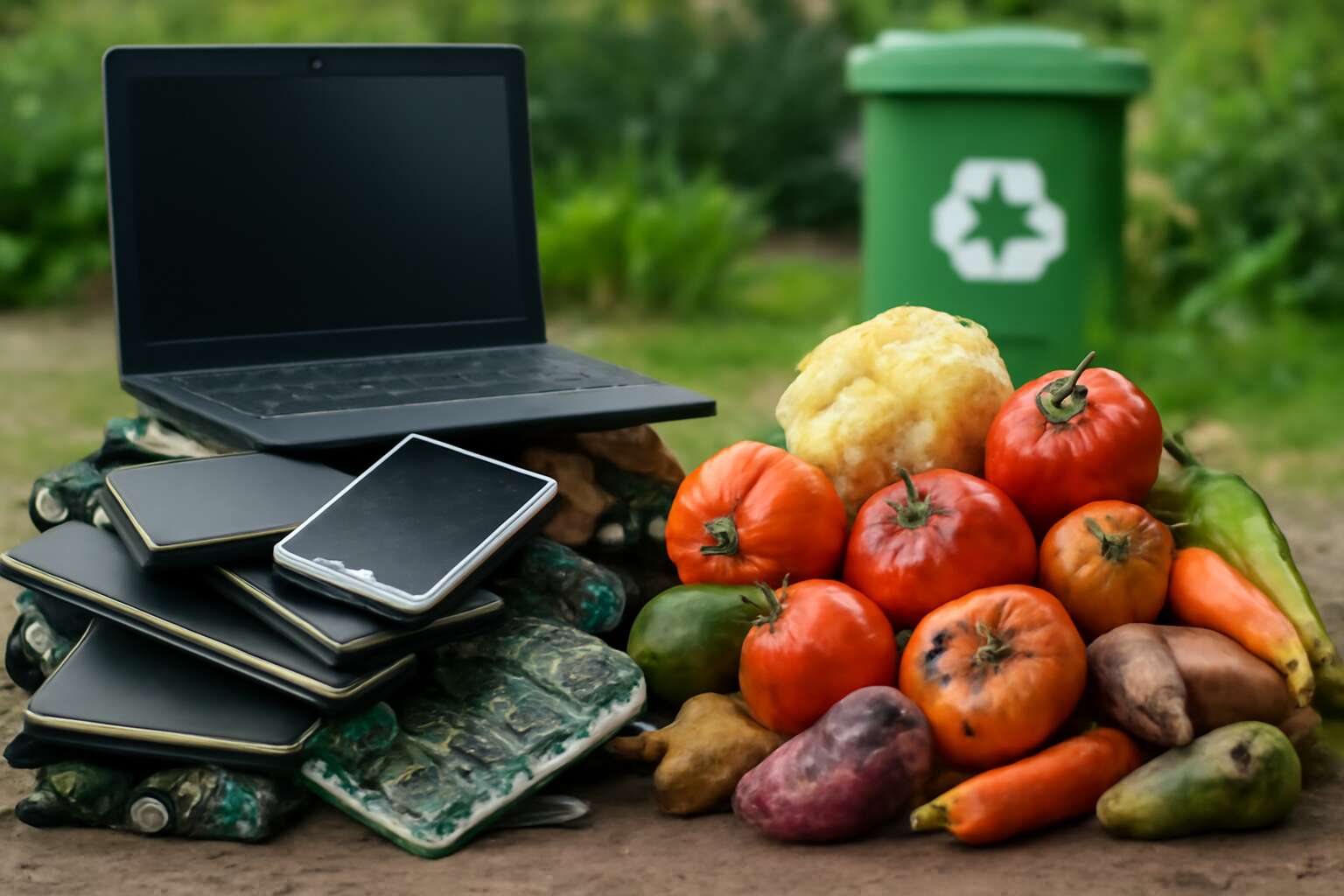
Understanding E-Waste and Food Waste
What is E-Waste? – Definition, common types of electronic waste, sources, and examples
Imagine a world where our discarded electronics outnumber the stars in the night sky—startling, isn’t it? E-waste, or electronic waste, has become an invisible menace lurking in our homes, offices, and landfills. It encompasses a range of items like outdated smartphones, broken laptops, and defunct appliances, which often contain hazardous materials such as lead, mercury, and cadmium. These toxic elements pose serious environmental and health risks when improperly discarded.
Understanding the e-waste vs food waste difference is crucial in addressing our mounting waste crisis. Food waste, on the other hand, refers to edible items thrown away, often due to spoilage or over-preparation. Common sources include spoiled vegetables, leftovers, and uneaten meals. While food waste is primarily organic and biodegradable, e-waste harbours complex chemicals that demand specialised disposal methods.
- Electronic devices like computers, televisions, and batteries
- Electrical appliances such as refrigerators and microwaves
- Small gadgets including cameras, chargers, and gaming consoles
Both types of waste contribute significantly to environmental degradation, but their treatment differs vastly. Recognising the e-waste vs food waste difference helps us make smarter choices, protect ecosystems, and reduce the burden on landfills—each with its own story and impact waiting to be uncovered.
What is Food Waste? – Definition, stages of food waste, major contributors, and examples
Food waste represents a staggering portion of global waste—nearly one-third of all food produced is discarded each year. It occurs at every stage of the food chain, from production and processing to retail and household consumption. This waste often results from over-purchasing, spoilage, or improper storage. Major contributors include supermarkets, restaurants, and households, where leftovers or spoiled produce are discarded without much thought.
Understanding the e waste vs food waste difference is vital. Food waste is organic, biodegradable, and primarily a resource lost, whereas e waste contains hazardous materials that can cause environmental harm if not disposed of properly. Food waste may seem less dangerous on the surface, but its sheer volume contributes significantly to greenhouse gas emissions. The stages of food waste highlight the importance of smarter consumption and better handling practices, which drastically reduce waste and its impact.
Sources and Causes of E-Waste and Food Waste
Sources of E-Waste – Electronic devices, appliances, manufacturing, discarded gadgets
In the intricate dance of modern existence, the sources and causes of e waste vs food waste difference reveal two contrasting yet intertwined tales. While e-waste arises from a relentless tide of electronic devices, appliances, and manufacturing residues, food waste stems from the decay of perishables, leftovers, and unsold goods. The relentless march of technological innovation leaves behind a trail of discarded gadgets—smartphones, laptops, and obsolete appliances—that often pile up in landfills, poisoning the earth with toxic substances.
Conversely, food waste is driven by the perishable nature of our sustenance, coupled with consumer habits and inefficient supply chains. Major contributors include households, restaurants, and supermarkets—each unwittingly complicit in the gradual loss of edible resources. To better understand the e waste vs food waste difference, consider the following:
- The rapid obsolescence of electronic devices fuels e-waste—an environmental storm waiting to happen.
- Food wastage results from spoilage, over-purchasing, and improper storage, draining both resources and hope.
Both forms of waste carry profound implications, yet their origins paint starkly different pictures—one of technological excess, the other of consumptive excess—highlighting the urgent need to address each with tailored solutions to preserve our fragile planet.
Causes of E-Waste – Obsolescence, technological upgrades, consumer behavior
The stark contrast between e waste vs food waste difference reveals profound insights into the complexities of modern consumption. While electronic waste is driven predominantly by rapid technological obsolescence, food waste stems from our perishable nature and inefficient supply chains. This divergence underscores how our obsession with innovation fuels an ever-growing mountain of discarded gadgets, whereas consumer habits and logistical failures lead to staggering amounts of edible resources going to waste.
Obsolescence remains a primary cause of e waste, with technological upgrades rendering devices obsolete in a matter of months or years. Consumer behaviour plays a pivotal role, as individuals often replace their gadgets not out of necessity but driven by trends or perceived status. This cycle of constant upgrading fuels the e waste vs food waste difference, highlighting the environmental toll of technological excess.
In contrast, food waste is mainly caused by spoilage, over-purchasing, and improper storage. Major contributors include households, restaurants, and supermarkets, each unwittingly contributing to the draining of resources. Interestingly, many of these issues could be mitigated through better planning and awareness, yet the scale of food wastage remains staggering. This juxtaposition of causes vividly illustrates how our choices—whether technological or consumptive—shape the landscape of waste we leave behind.
Sources of Food Waste – Households, restaurants, food production, retail
In the grand theatre of waste, the sources and causes of e waste vs food waste difference tell vastly different stories. E-waste primarily arises from the relentless march of technological innovation—every new gadget, smarter device, and upgraded appliance contributes to a mountain of discarded electronics. Think of it as a digital landfill where obsolete smartphones, broken tablets, and defunct computers are cast aside faster than you can say “latest model”.
Meanwhile, food waste’s roots are far more perishable—literally. It stems from households, restaurants, and food production systems that, through over-purchasing, improper storage, or spoilage, squander resources that could feed the hungry rather than landfills. To visualise, consider the 1.3 billion tonnes of food wasted annually—an astonishing amount that highlights how consumer behaviour and logistical inefficiencies play starring roles in food waste vs e waste difference. Interestingly, the causes of each type of waste are as contrasting as night and day, revealing the intricate ways our choices shape environmental impact.
Causes of Food Waste – Overproduction, spoilage, improper storage, aesthetic standards
The stark contrast between e waste vs food waste difference reveals much about our modern society’s priorities and pitfalls. While e-waste results from a relentless cycle of technological obsolescence, food waste stems from a complex web of consumer habits and systemic inefficiencies. E-waste accumulates rapidly as we chase the latest gadgets—smartphones, laptops, and household appliances become obsolete, often long before their functional lifespan ends. This digital landfill grows exponentially, driven by a culture of upgrades and disposability.
In stark contrast, food waste’s roots lie in overproduction, spoilage, and aesthetic standards that deem perfectly edible items unworthy of sale or consumption. Households and food retailers often discard food because it looks imperfect or expires before it can be utilised. The causes are manifold; improper storage and logistical inefficiencies exacerbate the problem. For instance, the global food system is riddled with inefficiencies, leading to an estimated 1.3 billion tonnes of food wasted annually. This colossal loss not only squanders resources but also underscores the divergent causes behind e waste vs food waste difference.
Environmental Impact of E-Waste and Food Waste
Environmental Impact of E-Waste – Toxic chemicals, groundwater contamination, hazardous disposal
The environmental impact of e waste vs food waste difference is stark, yet often overlooked in the chaos of daily life. E-waste, that electronic refuse from smartphones, laptops, and gadgets, harbours toxic chemicals such as lead, mercury, and cadmium. When improperly disposed of, these hazardous substances seep into the soil and groundwater, creating a silent threat to ecosystems and human health alike.
Unlike food waste, which decomposes relatively quickly, e waste presents a long-lasting environmental burden. Hazardous disposal methods, such as incineration or dumping in landfills, release pollutants into the air and water, jeopardising biodiversity and community health. The real kicker? The toxic chemicals don’t just vanish—they persist, transforming recycling into a complex puzzle of environmental and health hazards.
Understanding the e waste vs food waste difference is crucial. While food waste contributes to methane emissions—a potent greenhouse gas—e waste’s toxic chemicals pose a more insidious threat, contaminating groundwater and soil. Both, however, demand attention, as their environmental impacts underscore the urgent need for smarter waste management and sustainable practices.
Environmental Impact of Food Waste – Methane emissions, resource wastage, landfill burden
In the intricate tapestry of environmental challenges, understanding the e waste vs food waste difference reveals contrasting yet equally pressing issues. Food waste, often dismissed as mere leftovers, is responsible for a significant amount of methane emissions—one of the most potent greenhouse gases—contributing to global warming. Meanwhile, e waste, or electronic waste, harbours toxic chemicals that threaten soil and water quality long after disposal. This silent contamination underscores the stark disparity between decomposing organic matter and hazardous electronic refuse.
While food waste primarily drains natural resources and creates a burden on landfills, e waste introduces a more insidious threat through hazardous disposal methods. Incineration and dumping release pollutants into the atmosphere, jeopardising ecosystems and human health. The e waste vs food waste difference is most stark in their environmental impacts: the former leaves behind enduring chemical scars, while the latter fuels climate change through methane. Both demand urgent attention, yet their distinct pathways highlight the complexity of managing our growing waste footprint.
Economic and Social Implications
Economic Impact of E-Waste – Cost of disposal, resource recovery, illegal dumping
The economic ramifications of e-waste versus food waste reveal a stark divergence that often goes unnoticed. E-waste disposal alone incurs staggering costs, with governments and corporations footing the bill for hazardous waste management and specialised recycling processes. Unlike food waste, which primarily burdens landfills and local waste management systems, e-waste involves complex procedures for resource recovery—extracting precious metals and reusable components while ensuring hazardous materials don’t seep into the environment.
Illicit dumping of electronic waste compounds these costs, fostering a shadow economy that bypasses regulatory oversight. This clandestine activity not only inflates disposal expenses but also hampers legitimate recycling efforts. Conversely, food waste, though less costly in disposal, represents a colossal loss of valuable resources—water, labour, and energy—that could have sustained communities or been diverted for other purposes. The contrast in the e waste vs food waste difference underscores a profound economic and social dilemma, often rooted in consumer behaviour and systemic inefficiencies.
Social Impact of E-Waste – Health risks for communities, informal recycling sectors
The stark contrast between e waste vs food waste difference extends beyond environmental concerns—it also has profound social implications. Communities living near informal e-waste recycling sites often face severe health risks due to exposure to hazardous substances like lead, mercury, and cadmium. These toxic chemicals seep into soil and water, affecting residents’ well-being and often perpetuating cycles of poverty and illness.
In many regions, informal recycling sectors operate outside regulatory oversight, sometimes involving children and vulnerable populations. This unregulated activity not only jeopardises health but also hampers formal recycling efforts. An estimated 50% of global e-waste is processed in such informal sectors, where safety standards are minimal and environmental safeguards virtually non-existent.
Unlike food waste, which mainly burdens landfills, e waste presents complex social challenges rooted in systemic inefficiencies and consumer behaviour. The e waste vs food waste difference underscores a critical social dilemma: how to protect vulnerable communities while managing the mounting electronic waste crisis effectively.
Economic Impact of Food Waste – Financial losses for households and businesses
The financial toll of waste is staggering—households and businesses lose billions annually due to improper disposal of food. Food waste alone costs the global economy an estimated $1.2 trillion each year, reflecting inefficiencies at every level of supply chains, retail, and domestic consumption. This waste not only drains resources but also impacts food security, especially in vulnerable communities.
Unlike e waste, which involves complex environmental and health hazards, food waste primarily burdens landfills and contributes to greenhouse gas emissions. Nevertheless, the economic implications are profound. Overproduction and spoilage, driven by consumer behaviour and aesthetic standards, lead to significant financial losses. In fact, reducing food waste could save consumers and companies millions, but systemic inefficiencies often hinder such efforts.
Understanding the e waste vs food waste difference reveals a deeper social challenge: managing economic losses while addressing environmental sustainability. Both waste streams demand targeted solutions, but food waste alone exemplifies how everyday choices and systemic flaws can exacerbate financial strain on society. Ultimately, tackling these issues requires recognising their interconnected economic and social implications—before they spiral further out of control.
Social Impact of Food Waste – Food insecurity, ethical concerns
Food waste’s silent toll extends beyond the balance sheets; it echoes in the shadows of societal inequity. When vast quantities of edible sustenance are discarded, it deepens the chasm of food insecurity, leaving vulnerable communities stranded in a cycle of scarcity. The ethical quandary is stark: why do we squander resources while others go hungry? This disparity exposes a fundamental flaw in our global food systems—overproduction driven by aesthetic standards and consumer excess, which perpetuates a cycle of waste and suffering.
Unlike e waste, which often lurks beneath the surface as a hazardous menace, food waste manifests openly in landfills, rotting and releasing greenhouse gases that further threaten our environment. The social impact of food waste isn’t merely economic; it’s a moral dilemma, a reflection of systemic flaws that demand collective introspection. Recognising the stark e waste vs food waste difference reveals how societal choices ripple through the fabric of sustainability, exposing the urgent need for change before these crises spiral further into chaos.
Waste Management and Recycling Strategies
Managing E-Waste – Collection schemes, recycling processes, legislation
The battle between e waste vs food waste difference reveals a profound disconnect in how humanity perceives waste. While food waste silently rots, emitting methane and wasting precious resources, e waste harbours toxic chemicals that threaten groundwater and ecosystems. Managing these two vastly different forms of waste demands tailored strategies rooted in responsible disposal and recycling.
Effective management of e waste involves intricate collection schemes that ensure hazardous materials are separated and processed safely. Recycling processes for electronics often include dismantling, material recovery, and refurbishing, all governed by strict legislation designed to curb illegal dumping and environmental contamination.
Conversely, food waste management focuses on composting, anaerobic digestion, and reducing overproduction at source. Recognising the stark e waste vs food waste difference underscores the importance of targeted waste management strategies, reflecting the nuanced impact each type has on our planet’s fragile balance. Understanding this distinction is not just an environmental concern but a moral imperative, demanding sophisticated, sustainable solutions to combat these burgeoning crises.
Managing Food Waste – Composting, donation programs, reduction initiatives
In the shadowed corridors of our waste-laden world, discerning the e waste vs food waste difference reveals a chasm as vast as the abyss itself. While food waste quietly decomposes, releasing methane that fuels the planet’s silent, smothering breath, e waste festers with toxic chemicals that seep into groundwater, corrupting the very essence of our ecosystems. Each type demands a different approach—one rooted in nurturing the earth, the other rooted in containment and transformation.
Managing food waste involves a delicate dance of composting, donation programmes, and reduction initiatives. These strategies aim to turn the inevitable decay into something productive—rich soil, rather than a toxic burden. In fact, implementing a well-structured reduction initiative can be as simple as encouraging households and businesses to rethink their consumption patterns, avoiding overproduction and spoilage. The goal is to *reimagine waste* as resource rather than refuse.
Meanwhile, the dark, intricate world of e waste management relies on sophisticated collection schemes that ensure hazardous materials are segregated and processed with care. Recycling processes often include dismantling, material recovery, and refurbishing, governed by strict legislation designed to shield our planet from further contamination. The e waste vs food waste difference underscores the necessity for tailored solutions—each with its own ghostly risks and demands for responsible disposal.
Preventative Measures and Sustainable Practices
Reducing E-Waste – Durability, recycling, responsible disposal
Mitigating the mounting crisis of e waste vs food waste difference requires a proactive approach rooted in sustainability. Durability of electronic devices plays a crucial role—choosing products designed for longevity can drastically cut down waste. Responsible disposal methods, such as specialised recycling schemes, ensure hazardous materials are safely managed, preventing environmental contamination. Additionally, embracing sustainable practices like refurbishing gadgets or donating functioning electronics extends their lifecycle, reducing the volume of e waste entering landfills.
Similarly, tackling food waste demands innovative solutions. Implementing reduction initiatives at household and retail levels, alongside composting programmes, can significantly diminish the burden on landfills. For example, food donation schemes not only curtail waste but also address food insecurity—an often overlooked social impact. Ultimately, understanding the nuanced e waste vs food waste difference helps communities adopt targeted strategies that preserve resources, protect ecosystems, and foster a circular economy.
Reducing Food Waste – Smart purchasing, proper storage, meal planning
In the grand theatre of environmental stewardship, the **e waste vs food waste difference** is often misunderstood, yet both are pivotal players in our ecological narrative. Preventative measures in reducing food waste have a certain finesse—smart purchasing, proper storage, and meticulous meal planning can transform wasteful habits into sustainable practices. These strategies not only preserve resources but also curb the financial drain on households and businesses alike.
For instance, adopting a disciplined approach to grocery shopping—making lists, buying only what’s necessary, and prioritising fresh, local produce—can significantly diminish unnecessary food disposal. Incorporating simple steps like batch cooking and proper refrigeration extends the lifespan of perishable items, further reducing the volume of food that ends up in landfill. After all, waste is a symptom of inefficiency, and a dash of organisation can make all the difference.
Moreover, fostering a culture of mindful consumption encourages us to view food as a finite resource—not just an edible commodity but a reflection of societal values. By embracing sustainable practices such as composting, we can transform leftover scraps into nutrient-rich soil, thus closing the loop in food waste management. This holistic approach not only preserves our natural resources but also highlights the stark **e waste vs food waste** difference—one predominantly toxic and hazardous, the other a moral and economic dilemma—underscoring the importance of proactive stewardship across every facet of our lives.
Key Differences Between E-Waste and Food Waste
Nature of Waste – Hazardous vs. biodegradable
The e waste vs food waste difference lies fundamentally in their very nature. E-waste is inherently hazardous, teeming with toxic substances like lead, mercury, and cadmium, which pose grave threats to both human health and the environment. Conversely, food waste is biodegradable, decomposing naturally and enriching the soil if managed responsibly. This stark contrast underscores the urgency of understanding their distinct impacts—while food waste contributes to methane emissions, e waste contaminates groundwater and soil through hazardous chemical leaching.
Hazardous e waste demands specialised disposal methods, reflecting its dangerous composition, whereas food waste, being biodegradable, offers opportunities for composting and resource recovery. Recognising the key differences between e waste vs food waste difference is not merely academic; it shapes how societies approach minimisation, recycling, and responsible disposal, ultimately influencing our collective environmental footprint. The contrasting nature of these wastes highlights the importance of tailored strategies to mitigate their respective impacts—one toxic, the other renewable—each demanding a unique approach to safeguard our planet’s future.
Processing Methods – Recycling electronic components vs. composting or landfill
The methods used to process e-waste versus food waste reveal a stark contrast rooted in their fundamental nature. E-waste, being hazardous, requires specialised recycling techniques that can safely extract valuable materials while preventing toxic chemical leakage. This process often involves dismantling electronic components, recovering precious metals, and ensuring hazardous substances like mercury and cadmium are properly contained. In contrast, food waste lends itself naturally to organic recycling through composting or, in some cases, landfilling. Composting not only reduces landfill burden but also transforms biodegradable waste into nutrient-rich soil, supporting sustainable agriculture.
Understanding the e waste vs food waste difference in processing methods is crucial. While electronic recycling demands advanced technology and strict environmental controls, managing food waste can be as simple as community compost initiatives or responsible disposal practices. Interestingly, the divergence in processing strategies underscores the importance of tailored waste management systems—each designed to address the unique challenges posed by these waste types. The real challenge lies in balancing technological innovation for e-waste and fostering community awareness around responsible food waste management, both vital for safeguarding our environment.
Impact on Environment – Toxicity vs. decomposition emissions
When examining the environmental footprint, the e waste vs food waste difference becomes starkly evident. E-waste, laden with hazardous chemicals like mercury and cadmium, poses a grave threat to groundwater and soil quality if not managed meticulously. The toxicity embedded within electronic components can linger long after disposal, making specialised recycling not just preferable but essential.
On the other hand, food waste decomposes naturally, releasing greenhouse gases such as methane—an agent profoundly impactful on climate change. While organic in nature, its unmanaged decay in landfills contributes significantly to atmospheric emissions. This contrast highlights how e waste vs food waste difference extends beyond mere composition to their environmental repercussions.
Understanding this divergence is vital, as it underscores the necessity for distinct handling processes. Electronic waste demands advanced recycling techniques to contain toxins, whereas food waste benefits from community composting initiatives that transform biodegradable waste into nutrient-rich soil. Recognising these differences fosters more effective waste management strategies, ultimately safeguarding our planet’s health and future.
Lifecycle and Disposal Challenges – Technology lifecycle vs. perishable lifecycle
The lifecycle of e-waste versus food waste is a tale of two very different worlds—one driven by relentless technological innovation, the other by natural biological processes. While electronic devices are designed with a finite lifespan, often ending up as hazardous relics, food items have a fleeting existence, succumbing to decay in a matter of days or weeks. This stark contrast underscores the e waste vs food waste difference in their journey from creation to disposal.
Electronic waste follows a technological lifecycle, where rapid obsolescence pushes gadgets into the discard pile long before they truly wear out. Managing this e-waste presents complex disposal challenges—recycling electronic components requires specialised processes to contain toxic chemicals like lead and mercury. Food waste, on the other hand, has a perishable lifecycle, naturally breaking down and releasing greenhouse gases such as methane. The disposal of food waste is often less technical but equally critical, with improper handling contributing significantly to climate change and resource wastage.
Understanding these fundamental differences highlights why waste management strategies must be tailored accordingly. Electronic waste demands sophisticated recycling and legislation, while food waste benefits from community composting efforts. The e waste vs food waste difference isn’t just about what’s in the bin, but about how these materials impact our environment—and how we can better manage their inevitable journeys to disposal.

0 Comments