AST Recycling is a Recycling center establishment in Johannesburg, Gauteng, South Africa
AST Recycling: E-waste Recycling, Refurbishment and ITAD in Johannesburg
AST Recycling operates in Johannesburg, Gauteng, as a specialist in the buying, collection and recycling of electronic waste, non-ferrous metals and scrap catalytic converters. With more than a decade of industry experience, the company presents itself as a partner for responsible waste management, aiming to reduce landfill and repurpose valuable materials. A notable feature of the business is its emphasis on sustainability within a circular economy framework, underlining a commitment to cleaner operations and resource conservation.
The range of services spans several core activities. Electronic waste recycling encompasses disposal of old, broken or unwanted electronics in a manner that is described as compliant and mindful of data security. In addition to handling standard e-waste streams, the operation includes the recycling of printed circuit boards, hard drives, cellphone boards, CPUs, RAMs and server boards. Non-ferrous metals such as aluminium, brass and copper are also processed, providing a pathway for traders and organisations to monetise material while supporting environmental goals. The portfolio further extends to the handling of scrap catalytic converters, which are offered with straightforward, timely payment.
Refurbishment and reuse are highlighted through examples of recovered devices entering refurbishment channels, including a noted case of refurbished laptops reaching end-users. This emphasis on refurbishment complements the recycling activities and reflects an attention to extending product lifecycles where feasible. The service mix further supports business operations through offerings such as business clear-outs and IT asset disposition (ITAD), suggesting capabilities in managing larger-scale disposals or relocations for organisations of varying sizes, including schools, SMEs and government or educational institutions.
Communication and documentation feature prominently in AST Recycling’s value proposition. The firm provides free data destruction and e-waste disposal certificates upon request, reinforcing the assurance that data sanitisation requirements can be met. The data sanitisation approach is described as compliant with a recognised standard, the United States Department of Defence (DOD) 5220.22-M, which is cited as part of the company’s security-focused offering. This emphasis on data protection aligns with the needs of businesses and institutions that require formal confirmation of secure data handling during disposal or release of hardware.
Customer experience appears to combine practical conveniences with explicit service benefits. The company advertises same-day payment, including instant EFT or cash options, which is presented as a straightforward incentive for participants to transact promptly. Free collection is offered for catalytic converters within Gauteng, with a broader option of free courier collection for sellers outside the province. This logistical flexibility supports a wider geographical reach while maintaining a cost-conscious approach for customers seeking disposal services.
Typical client types include private individuals, small and medium enterprises, large corporations, government bodies, educational and medical institutions. The service model suggests that requests can be initiated via online inquiry or booking channels, with a process flow that involves confirming accepted items, scheduling collection, organising logistics, processing the materials, and delivering confirmation or reporting. Several client testimonials point to efficient collection, professional handling, and transparency in pricing, though a small number of reviews highlight occasional scheduling or processing delays; these appear to reflect the variability inherent in on-site operations and the nature of material intake rather than the core service design.
- Key services: e-waste collection and recycling, refurbishment/reuse, non-ferrous metal recycling, scrap catalytic converters, ITAD, secure data wiping/shredding, and reporting/certificates.
- Typical job types: household drop-offs, office clear-outs, periodic or ad hoc collections for SMEs, schools and larger organisations.
- What to expect: enquiry and item confirmation, scheduling of collection, logistics arrangement, processing of materials, and issuance of certificates or reports on completion and data destruction where applicable.
Practical tips for customers include identifying commonly accepted items (electronic devices, PC boards, hard drives and server components, batteries, and non-ferrous metals), and ensuring safe packaging and transport. When relevant, it is prudent to request proof of recycling or data destruction confirmation and to separate batteries and hazardous components from other e-waste to facilitate safe handling. While specific hours of operation are not detailed in official content, the company’s Gauteng focus and the stated free collection options imply ease of access for local customers and straightforward scheduling through the online booking channel or contact details provided.
Overall, AST Recycling positions itself as a turnkey partner for sustainable e-waste management in Johannesburg, combining material recovery with security-conscious data handling and a transparent approach to payments and documentation. The combination of certifications—ISO 9001, 14001 and 27001—and the availability of free certificates on request enhances credibility for organisations pursuing compliant and auditable recycling practices.
Johannesburg
Gauteng
South Africa
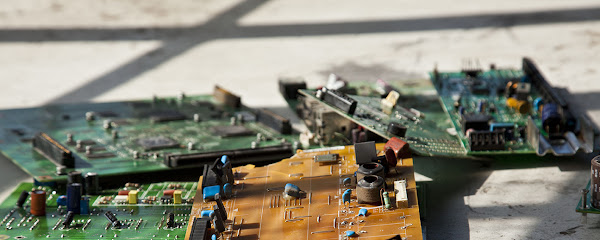
E-waste and IT Asset Disposal Services in Johannesburg, Gauteng
In Johannesburg and the wider Gauteng region, e-waste recycling, electronics disposal and IT asset disposal (ITAD) providers offer end‑to‑end solutions designed to handle sensitive devices with safety and environmental responsibility. Stakeholders range from private households to large enterprises, schools, hospitals and government offices. Services commonly encompass data destruction, secure collection, refurbishment and reuse, battery recycling, printer and cartridge recycling, and environmentally responsible disposal practices.
Typical offerings focus on safeguarding information, protecting the environment, and ensuring regulatory compliance. Customers can expect a transparent process that covers the secure chain of custody, documentation, and reporting. Reputable operators usually provide compliant data destruction that complies with local and international standards, alongside certificates of destruction or disposal for audit trails and records management. Turnaround times vary by project scope, volume and whether on‑site or off‑site processing is pursued, and may be influenced by scanning inventories, certification needs and logistics within Johannesburg and surrounding townships.
Accepted items commonly include office IT equipment such as desktops, laptops, servers, peripherals, network equipment, printers and multifunction devices, mobile devices, batteries, and electronic accessories. Some facilities also take bulk items from commercial estates, schools and municipal sites, with limits on hazardous components and hazardous waste handling. Electronics intended for refurbishment are sorted from those designated for recycling, with refurbishment typically directed at devices that can be safely repaired, upgraded or repurposed for reuse.
Key considerations for households and businesses include the method of collection (curbside drop-off versus secure collection on site), pre‑collection preparation and data sanitisation. Many operators provide secure on‑site collection, while others offer drop-off points at designated depots. Sorting practices are often described as part of the intake process, with hazardous components such as certain batteries and deteriorating capacitors handled under strict compliance procedures and environmental controls. The aim is to minimise risks to people and the environment while maximising recoverable material.
On the refurbishment front, certified refurbishing pathways are typically pursued for devices that can be re‑imaged, tested and redeployed. This supports reuse as a sustainable alternative to outright recycling, reducing waste and extending product lifecycles. For items deemed unrecyclable or beyond economical repair, responsible recycling concentrates on material recovery, export restrictions, and proper dismantling procedures. Printer and cartridge recycling is often supported by programmes that extract plastics, metals and consumables for safe disposal or reuse, subject to local regulations.
Compliance is a central pillar. Reputable operators provide documentation such as chain‑of‑custody records, impact reporting, and periodic audits. Confidentiality assurances are commonly offered through secure destruction methods and signed certificates, aligning with data protection obligations and industrial compliance requirements. Turnaround times are informed by intake volumes, the complexity of data destruction needs, and logistical factors within Gauteng’s urban and rural corridors.
Practical guidance for households includes backing up important data, signing out of cloud accounts, performing factory resets, and removing SIM and SD cards where applicable before handing devices over for disposal. For business customers, inventorying devices, mapping asset tags, scheduling pickups outside peak operational periods, and coordinating with IT departments to verify data sanitisation requirements are prudent steps. It is advisable to obtain a written agreement detailing accepted items, fees, collection arrangements, certification, and reporting deliverables, with clear expectations regarding timelines and any post‑collection recycling or refurbishment outcomes.
Overall, Johannesburg‑area providers emphasise responsible disposal practices that protect information, safeguard the environment and support circular economy goals. By combining secure collection, compliant data destruction, certification, refurbishing where viable, and efficient recycling streams, these services offer practical, compliant solutions for households and businesses seeking to manage electronic waste in an orderly, accountable and environmentally conscious manner.
- Secure collection and on‑site or off‑site data destruction
- Refurbishment and redistribution of viable devices
- Battery, printer and cartridge recycling
- Hazardous waste handling and regulatory compliance
- Chain of custody documentation, certificates and reporting
- Turnaround times informed by scope and logistics within Gauteng
Sorry, no records were found. Please adjust your search criteria and try again.
Sorry, unable to load the Maps API.