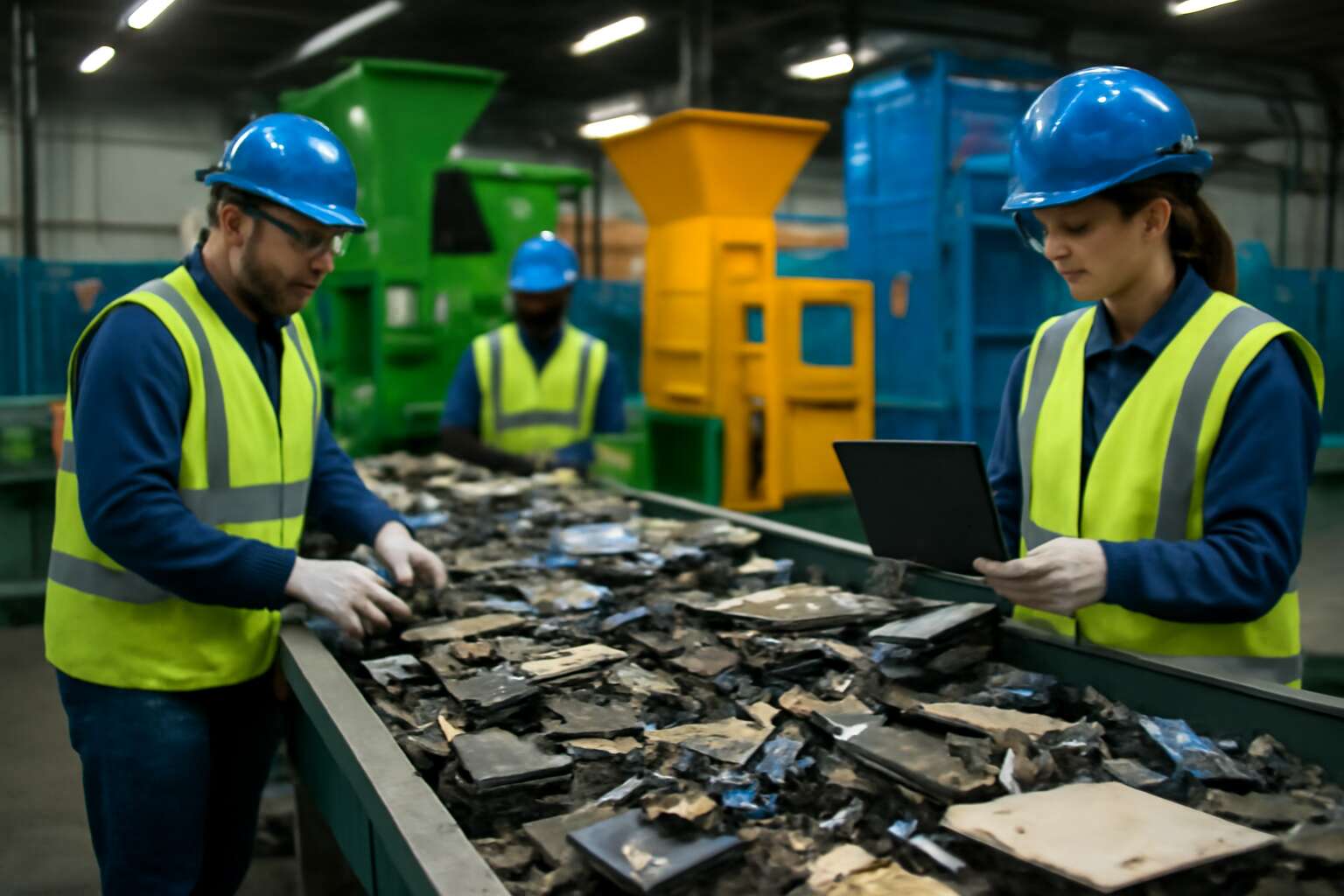
E-waste management background overview
Historical context and evolution of e-waste management
From the dawn of devices to the flood of data centers, I watch a vault of forgotten sparks grow. Only about 20% of e-waste worldwide is recycled, a statistic that jolts the curious mind and invites deeper storytelling about what happens to our gadgets after they die.
Historically, discarded electronics were treated as waste to be forgotten; over decades, awareness grew of toxics and metals hiding in plain sight. The e waste management background is shaped by global agreements and evolving South African policy, where take-back schemes and responsible refurbishing begin to illuminate a path toward a circular economy.
Key milestones trace the arc of progress:
- Hazardous materials awareness and initial regulations
- Early consumer take-back programs
- Adoption of Extended Producer Responsibility (EPR) schemes
- Formal e-waste recycling infrastructure in major South African cities
These threads weave a future where devices die with dignity and cities breathe easier.
Global policy and governance landscape
Across continents, policy makers stitch a tapestry called e waste management background, where rules meet the daily pulse of devices. Only about 20% of e-waste worldwide is recycled, a sobering number that underscores policy urgency. The global stage leans on frameworks that curb risky trade and protect people and ecosystems, with the Basel Convention guiding cross-border flows of hazardous e-waste. In South Africa, national strategies begin aligning local return programs with a broader circular economy.
- Basel Convention and cross-border movement of hazardous e-waste.
- WEEE Directive and RoHS influence on electronics design and recycling in major markets.
- Extended Producer Responsibility (EPR) frameworks guiding manufacturers’ responsibilities.
Governance now marches through data protection, design for recycling, and transparent reporting. In South Africa, evolving policy under the Waste Act and pilot EPR initiatives mirrors international rhythm, inviting investment in compliant, traceable e-waste flows.
Environmental and health implications of e-waste
Across South Africa, discarded devices tell a story of risk and resilience. The e waste management background reveals that every broken screen or obsolete laptop is a potentially toxic thread woven into soil and water when mishandled. The human cost sits closest to home—informal collectors and their families face exposure while cities chase cleaner, safer channels for disposal!
- Heavy metals such as lead, cadmium, and mercury seeping into soil and groundwater
- Flame retardants and persistent organic pollutants in air, dust, and waterways
- Respiratory and skin conditions among workers and nearby residents
As the nation ages its infrastructure and consumer habits shift toward repair and reuse, the background becomes a map for improving health, ecosystems, and the economy.
Technologies and practices in e-waste management
South Africa generates millions of tonnes of e-waste each year, yet only a sliver makes it into formal recycling channels. The e waste management background shows a landscape where risk and opportunity collide: broken screens and aging laptops can power a cleaner pipeline when properly managed, while informal collectors push for safer, traceable flows!
Technology and practice in e-waste management today hinge on precise sorting, secure data-handling, and responsible material recovery. In SA, operators combine mechanical separation, controlled dismantling, and certified recycling to keep plastics, glass, and metals in the loop. The following elements illustrate the flow:
- Automated sorting and magnetic/eddy-current separation to reclaim metals
- Safe containment of hazardous components and responsible disposal of plastics
- Data erasure, refurbishing, and certified recycling to close the loop
This blend is a pragmatic route toward a resilient economy and healthier communities.
Economic and social aspects of e-waste
South Africa churns out millions of tonnes of e-waste annually, yet formal recycling remains a slender sliver. This e waste management background reveals a clash of risk and opportunity: broken screens can power cleaner flows when managed, while informal collectors push for traceable, safer channels!
Economically, e-waste is alchemy, not refuse: recovered metals and refurbished devices fuel local businesses. Key levers include:
- Formal recycling jobs and legitimate supply chains
- Recovery of copper, gold, and plastics for local manufacture
- Entrepreneurship in refurbishing and parts trading
Socially, the story blends livelihoods with risk. Informal workers rely on street-level collection, while traceability and data handling safeguard communities. In SA, safer practices can lift health and education prospects as e-waste flows become a resource rather than a nuisance.
Future directions and opportunities in e-waste management
South Africa’s e waste management background reveals a bold paradox: millions of tonnes of e-waste are generated each year, yet formal recycling remains a slender sliver. The challenge asks us to see waste as resource and risk as invitation to innovate!
Future directions hinge on weaving formal and informal streams into safe, traceable value chains and on unlocking urban mining potential. A few levers stand out:
- Policy coherence and extended producer responsibility
- Investment in advanced sorting, recycling, and refurbishment
- Stronger data security and worker protections
These shifts could kindle local manufacturing, create steady jobs, and detoxify city systems, turning a public nuisance into a regional strength.


0 Comments