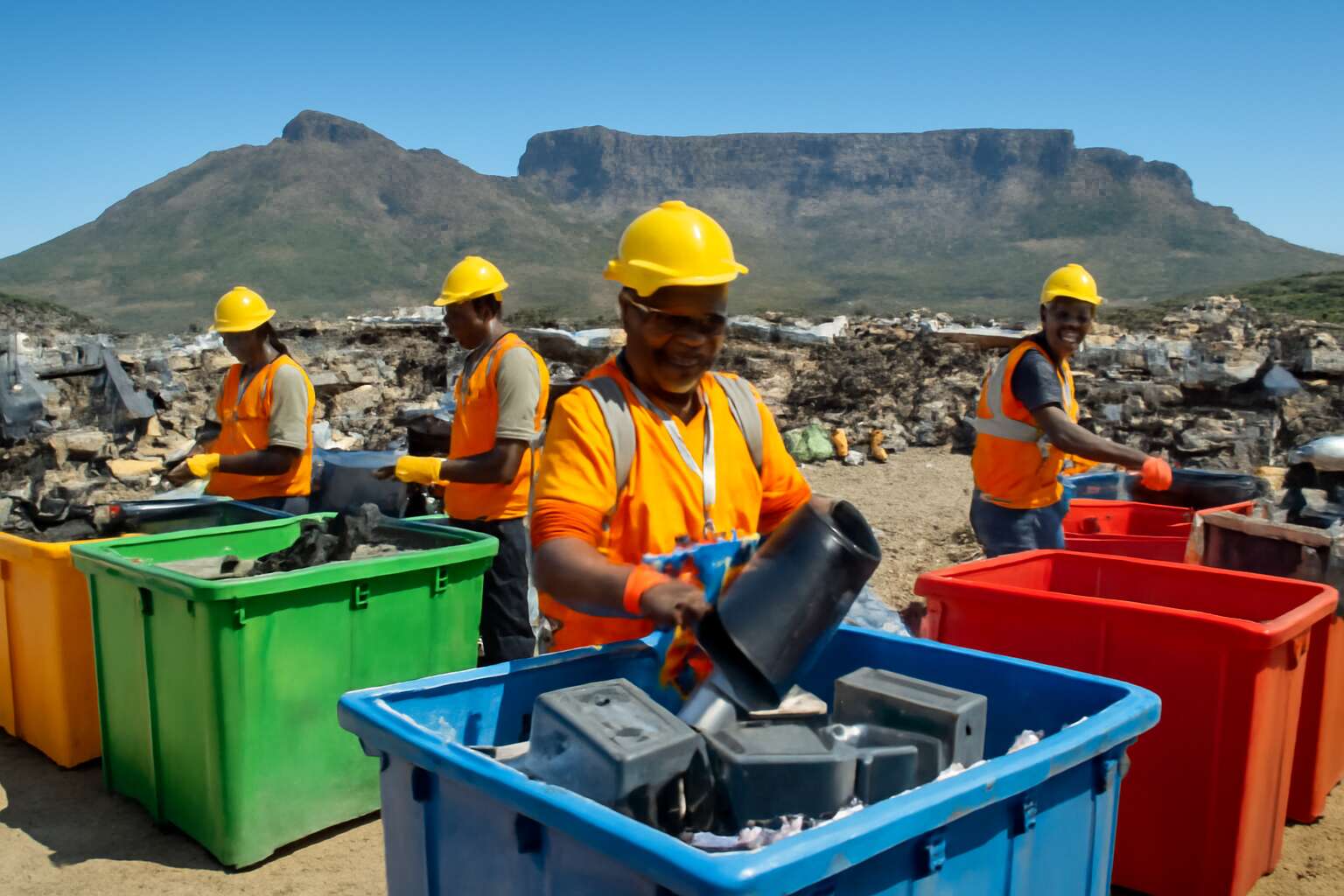
Overview of electronic waste landscape in Cape Town
What counts as e-waste in Cape Town
Across Cape Town, devices outpace patience—and trash bins. “Waste is not trash; it’s a resource waiting to be unlocked,” a local craftsman told at the market. The e-waste cape town conversation is no longer a policy footnote; it touches homes, schools, and small businesses, shaping views on reuse, repair, and responsibility.
- Old smartphones
- Laptops
- Televisions
- Kitchen appliances
- Printers and copiers
- Batteries and chargers
Understanding what counts helps communities reframe discarded tech as a resource rather than refuse. The landscape blends household habits with municipal rules, charity programs, and private initiatives that seek to honour the materials inside every obsolete gadget.
Key statistics on e-waste generation in the Western Cape
Across the Western Cape, the e-waste landscape hums with momentum. In Cape Town, devices exit homes faster than clutter can be managed, and the push to channel them into responsible streams is becoming a civic rhythm. The term “e-waste cape town” crops up in policy, signaling potential.
Key statistics on e-waste generation in the Western Cape:
- Estimated annual e-waste generation in the Western Cape: 25,000–60,000 tonnes.
- Formal recycling capture: roughly 15–25% of total e-waste.
- Annual growth: about 4–6% yearly.
Beyond numbers, the recovery map shows informal collectors, municipal programs, and private recyclers weaving safer futures. The e-waste cape town conversation threads through markets, classrooms, and boardrooms alike, turning discarded devices into stories of materials and second chances.
Impacts of improper disposal on communities in Cape Town
In Cape Town, the curblight becomes a corridor of whispers, where screens fade and devices surrender their last memories. The e-waste cape town landscape is a tangle of formal programs and informal collectors, a nocturne of barter threading through markets, schools, and households.
- Soil and groundwater absorb heavy metals and flame retardants as disposal leaks into the soil
- Airborne pollutants rise from open burning and informal processing, affecting nearby neighborhoods
- Health risks touch waste workers and residents living near disposal sites
When control frays, communities bear the cost, living with contamination unseen yet felt in breath, soil, and sorrow. The city’s e-waste story lingers long after the devices have gone!
The role of the informal sector in e-waste management in Cape Town
Cape Town sits at a crossroads where discarded screens and silent chargers tell a story of urban modernity and responsibility. Some estimates suggest the city diverts about a quarter of its e-waste from landfills, a sign that systems are learning to repurpose, refurbish, and recover. The e-waste cape town landscape is a mosaic of formal programs and informal networks, where municipal policy rubs shoulders with street-level recycling and repair hubs.
The informal sector threads the supply chain through curbside pickups, markets, and schools, turning a chaotic stream into livelihoods and local knowledge.
- local collectors and recyclers
- refurbishers who breathe new life into devices
- repair stalls and e-waste depots that extend device lifespans
These networks influence environmental outcomes and community resilience as the city navigates a growing challenge.
Trends shaping Cape Town’s e-waste market
Cape Town’s e-waste landscape pulses with a strange, luminous energy; discarded screens and silent chargers weave a future, not just debris. Across neighborhoods, more devices are finding second lives through refurbishing, repair, and reuse, nudging city systems toward smarter recovery. It’s a chorus of shops, schools, and curbside pickups turning chaos into opportunity.
In this evolving panorama, trends shape the market with surprising grace. The term e-waste cape town has become a signal, signaling collaborations across formal programs and informal networks. Expect multi-stakeholder hubs, repair cafés, and circular supply chains gaining momentum as communities invest in repair over replacement.
- Formal policy aligns with street-level ingenuity
- Community repair hubs extend device lifespans
- Markets and curbside pickups elevate livelihoods
As these currents converge, Cape Town’s e-waste story reads as both test and testament — I see a city learning to redraw its urban map with every salvaged motherboard and refurbished screen.
Recycling and proper disposal options in Cape Town
Authorized e-waste recyclers in Cape Town
In Cape Town, every old device carries a memory—a grandmother’s photo, a child’s game, a neighbor’s small business. Globally, e-waste is the fastest-growing waste stream, and our city’s choices determine whether metals and plastics find new life or linger in landfills. This is the backbone of responsible action in e-waste cape town—turning discarded tech into opportunity rather than waste.
Authorized e-waste recyclers in Cape Town ensure data destruction, environmental compliance, and traceable material recovery.
- Licensed by local authorities and the Department of Environmental Affairs
- Certified data destruction and collection of destruction certificates
- Transparent reporting on recovered materials and compliant disposal
By choosing these partners, businesses and households contribute to a cleaner, more resilient Cape Town.
Take-back programs and municipal services in Cape Town
Thousands of devices exit service each year in Cape Town, and how they are handled now shapes the city’s future. Recycling and proper disposal options exist beyond the curb—office drop-offs, certified recyclers, and municipal programs that turn end-of-life tech into safe, usable material. The path taken matters to communities, the environment, and the local economy.
Take-back programs and municipal services coordinate accessible channels for residents and businesses. Below are common touchpoints for e-waste cape town:
- Municipal e-waste drop-off points at civic centers and depots
- Manufacturer take-back schemes with verified partners
- Licensed recycling centers that provide data destruction certificates
What to do with old laptops, phones and appliances in Cape Town
Thousands of devices exit service each year in Cape Town, and what happens next shapes the city’s future. For e-waste cape town, the answer lies beyond the curb: trusted drop-offs, licensed recyclers, and municipal programs that recover usable material while protecting people and the environment. These paths turn end-of-life tech into raw resources and local jobs.
When you upgrade laptops, phones, or appliances, start with data protection: back up, wipe, and remove SIM cards. Then choose a reputable facility that provides data destruction certification and responsible recycling. Batteries are handled carefully to prevent fires.
By steering proper channels toward responsible waste management, communities gain safer streets and a resilient economy. The right partner keeps materials in circulation and the Cape Town tech story moving forward.
How to verify a recycler’s legitimacy in Cape Town
Cape Town sends thousands of devices into end-of-life every year, and the real reckoning comes after they leave the curb. In this city, the right recycler turns waste into resources and protects people while preserving ecosystems. The question of legitimacy isn’t cosmetic—it shapes safety, data protection, and the velocity of recycling in e-waste cape town.
To verify a recycler’s legitimacy in Cape Town, start with transparency and credentials—let honesty lead the way! A reputable facility will show regulatory registrations, data-wipe certification, and traceable material flow.
- EWASA registration or equivalent national body
- Data destruction certificate
- Licensed to handle e-waste under local environmental acts
- Evidence of a transparent take-back or material-recovery report
Ask about their recycling footprint, and how they document every batch. The aim is to keep materials in circulation with accountability, not just pleasing marketing speak.
Cost and logistics of e-waste recycling in Cape Town
In Cape Town, thousands of devices reach end-of-life each year, and every discarded gadget whispers a question: where will it live next? e-waste cape town can become a lifeline when it travels through the right hands—recyclers who turn circuitry into new resources while protecting people and ecosystems. The stakes feel tangible: data remains safeguarded, metals and glass find new purpose, and the city preserves a cleaner, more resilient pulse.
Costs and logistics echo a single pattern: collection, secure transport, processing, and certification. The numbers vary with volume and distance, but the aim is uniform—keep materials in circulation with accountability.
- Collection and handling
- Transport and storage safeguards
- Data destruction verification
- Material recovery and final disposition
Choosing transparent partners makes the e-waste cape town narrative feel like a collaborative future rather than a boxed problem.
Regulations, policies, and responsible e-waste governance in South Africa
South African e-waste legislation overview
Regulation isn’t glamorous, but it’s the firewall keeping e-waste cape town from morphing into a toxic souvenir. South Africa’s National Environmental Management: Waste Act provides the framework, with producers, importers and retailers bearing responsibility through take-back schemes and proper e-waste handling. For e-waste cape town, these rules mean clear accountability, data-safety obligations, and pathways that steer electronics away from landfill dead ends.
Policy levers include:
- Extended Producer Responsibility schemes for electronics, covering collection, recycling and safe disposal.
- Mandatory take-back programs and accredited e-waste facilities with audit and licensing.
- Clear labeling standards and data destruction protocols to secure consumer data.
Local governance in Cape Town continues to refine licensing, auditing and reporting, ensuring traceability from the moment a device leaves the desk to its reconstitution as raw material. This evolving landscape rewards responsible recyclers and deters fly-by-night outfits, keeping e-waste cape town a case study in accountable stewardship.
Cape Town city by-laws on e-waste disposal
Globally, only about 20% of e-waste is recycled, a statistic that keeps many policies on their toes. South Africa’s National Environmental Management: Waste Act provides the framework, but Cape Town’s city by-laws on e-waste disposal translate that framework into local duty—licensing, audits, and clear responsibility for collectors, retailers, and recyclers. The aim is simple: keep devices out of landfills and ensure data is handled with care. This is how I’ve seen e-waste cape town stay resilient and responsible.
Within this governance landscape, Cape Town emphasizes local control and traceability.
- Cape Town’s licensing regime for e-waste handlers with annual compliance checks by city inspectors.
- Mandatory reporting and routine audits to trace the journey from pickup to material re-entry into the economy.
- Data-security protocols and clear labeling at collection points to protect consumer information.
These rules aren’t abstract; they anchor real-world stewardship in our city, keeping e-waste cape town safe and sustainable.
Extended Producer Responsibility in SA
Global e-waste disposal is more than a statistic; it’s a governance issue. Globally, only about 20% of e-waste is recycled, a figure that keeps lawmakers and ministers on their toes. In South Africa, Extended Producer Responsibility translates that challenge into policy and practice.
South Africa’s National Environmental Management: Waste Act and the EPR Regulations place the obligation on producers and importers to fund, organize, and report end-of-life handling. In the local frame, e-waste cape town reflects this alignment through clear responsibilities, consistent reporting, and traceable flows from device to recycled material.
- Mandatory producer registration and annual reporting to a national authority
- Funding of collection, transport, and recycling infrastructure
- Provisions for safe data destruction and consumer labeling
- Independent audits and verification of the journey from product to material re-entry
This regulatory lattice anchors governance, ensuring accountability from factory floor to the recycling yard for e-waste cape town and beyond.
Compliance tips for businesses in Cape Town
Governance travels faster than a copper wire through the maze of Cape Town’s streets. In South Africa, the National Environmental Management: Waste Act and the EPR Regulations bind producers and importers to fund, organize, and report end-of-life handling. In Cape Town, this regulatory lattice translates into auditable flows, clear roles, and a lived commitment to turning discarded devices into usable material. This is e-waste cape town in action.
For businesses, compliance isn’t a trap but a compass:
- Partner with approved e-waste recyclers and verify credentials.
- Institute a data-destruction protocol that certifies wipe-and-decode steps.
- Maintain transparent annual reporting to the national authority with auditable records.
- Label devices with disposal guidance and preserve a clear chain-of-custody.
When these elements align, governance becomes a shield for reputation and resource efficiency.
Public awareness and education programs in Cape Town
South Africa’s National Environmental Management: Waste Act and the Extended Producer Responsibility Regulations bind industry to fund, organize, and report end-of-life handling. In Cape Town, these rules shape auditable flows, clear roles, and a lived commitment to turning discarded devices into usable material—an emblem of responsible governance and e-waste cape town.
Public awareness and education programs are the heartbeat of this framework.
- Community outreach in markets and business districts explaining take-back options
- School and university partnerships embedding e-waste literacy in curricula
- Public portals, helplines, and local workshops demystifying recycling processes
Well-informed communities trust the system, and that trust is the cornerstone of a circular economy. In Cape Town, public education campaigns demystify data security, safe dismantling, and recycling pathways, reinforcing the narrative with dignity and urgency.
How individuals and businesses can contribute to a sustainable e-waste lifecycle
Steps to reduce e-waste generation at home and office
Across South Africa, e-waste cape town is not merely discarded devices—it’s a living narrative of choices and consequences! “What lasts isn’t the gadget but how we treat its second life,” a local advocate reminds us.
Individuals and businesses can shape this lifecycle by embracing longevity, mindful purchasing, and repair over replacement. The following pillars guide daily decisions, turning clutter into coherence:
- Maintenance and upgrades to extend device life
- Purchasing models built for durability and modularity
- Repair, refurbishment, and responsible reuse channels
- Planned, ethical disposal through trusted partners
These moves ripple through homes and offices, supporting cleaner streets and healthier communities while keeping technology’s promise alive.
Data security considerations before disposal in Cape Town
In Cape Town, every discarded gadget writes a darker verse into the city’s ledger of consumption. What lasts isn’t the gadget but how we treat its second life, a local advocate reminds us—and the hush of that truth travels through e-waste cape town corridors, where choices chart destinies.
Before disposal, data security stands as a sentinel at the gate. Devices keep memories even after screens dim, and careless disposal can haunt families and firms alike. In this shadowed city, consider the following data guardianship:
- Data encryption and secure, verifiable wipes
- Certificates of destruction from qualified partners
Individuals and businesses contribute by aligning with partners who offer transparent records and by delaying replacements when a device has a flicker of life. The sustainable e-waste lifecycle is not a checklist but a rhythm—one that breathes with careful data handling, responsible reuse, and a respect for the city that hosts screens and circuits.
Choosing sustainable tech purchases and repair-first mindset
In the shadow of Cape Town’s skyline, every purchase writes a verdict. For individuals and businesses, a sustainable e-waste lifecycle begins with choosing tech built to last and to be repaired. Seek devices with repairability, modular components, and longer software support windows. The ripple of these choices travels through e-waste cape town, steering the city toward responsibility rather than abandon.
- Repair-first mindset that lengthens device life
- Durable, energy-efficient gear with accessible spare parts
- Engagement with take-back programs and certified refurbishers
For organizations, procurement audits and standardization help keep gear in circulation. When a device still holds promise, refurbishment beats disposal; partnerships with trusted labs ensure memories stay locked away and lifecycles stay circular.
Community programs: repairs, refurbishing and donations in Cape Town
In e-waste cape town, communities come together to breathe life into old devices and keep families connected. Repair cafés and donation drives turn disposal into opportunity, while refurbishing hubs extend the life of gadgets.
- Repair cafés that teach practical fixes and keep skilled trades alive
- Refurbishing hubs that breathe new life into aging tech for schools and nonprofits
- Donation channels linked to local libraries and community centers
Every repair, refurbish, and donation story stitches a more resilient city, where tech serves people rather than piles up behind lock-and-lid.
Measuring impact of e-waste initiatives in Cape Town
Every device spared from landfills is a quiet act of resilience! In Cape Town, a tangible shift toward circular thinking is measured not just in salvaged components but in stories of saved laptops and phones that keep classrooms humming and small businesses running.
In this ecosystem, e-waste cape town metrics come alive through clear indicators: devices repaired, refurbished for nonprofit use, and volumes diverted from landfill. Data on energy saved, CO2 avoided, and cost-per-gadget shows the true lifecycle value.
- Individuals: bring devices to repair cafés, opt for refurbished tech, and securely wipe data before gifting or disposal.
- Businesses: establish take-back programs, source refurbished gear when possible, and publish simple metrics on impact.
- Communities: partner with libraries and schools to host repair drives and track devices kept out of landfills.


0 Comments