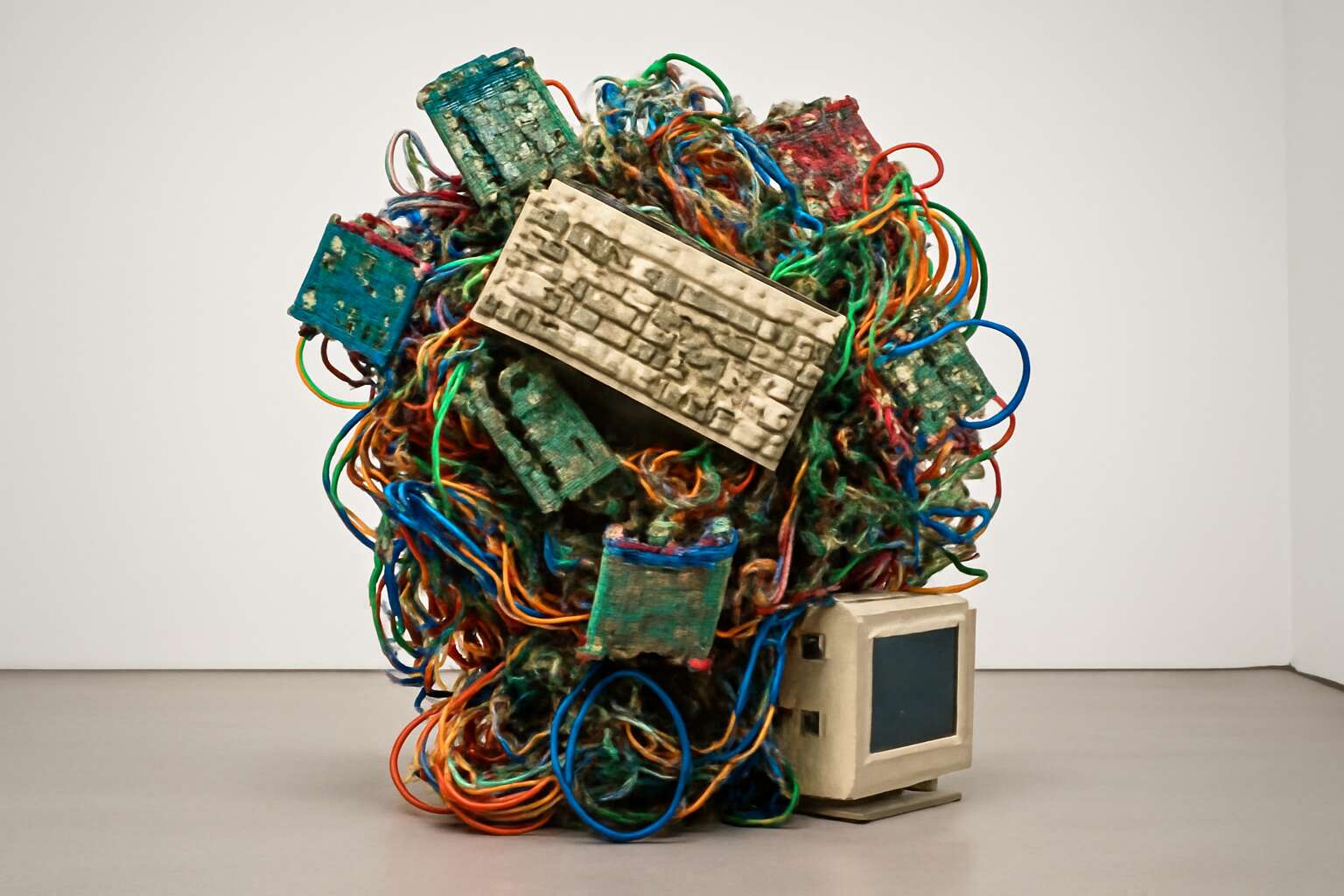
Understanding E-Waste Art: Concepts and Context
What is electronic waste art
Across the globe, more than 50 million tonnes of electronic waste are generated each year—a tidal crest of discarded screens, cables, and clattering old machines. In South Africa, that wave surfaces in busy studios and quiet townships alike, where artists breathe new life into broken circuits. This is e waste art, a practice where memory, function, and waste fuse into visuals that speak louder than the factory tag!
Conceptually, it is not merely sculpture; it’s a ceremony of renewal. I have seen materials carry history from living rooms and offices, yet they are remade into works that invite critique, dialogue, and wonder.
- Transforming circuit boards into vibrant mosaics
- Recasting obsolete hardware as portable narratives
From Cape Town’s docks to Johannesburg’s workshops, these pieces map the social ecology of recovery—informal collectors, repairers, designers, and communities co-creating meaning. The language is tactile, roguish, and hopeful.
Origins of art from discarded tech
A staggering 50 million tonnes of discarded electronics circle the globe each year, and in South Africa’s studios and townships that waste becomes memory and material. Understanding e waste art begins here, where memory, function, and refuse fuse into visuals that speak louder than the factory tag.
- Origins lie in repurposing—materials travel from living rooms and offices into curious studios
- Tech as texture—circuit boards, cables, and screens become vibrant surfaces and forms
- Contextual dialogue—artists map informal repair networks and local histories through the work
From Cape Town’s shores to Johannesburg’s workshops, these practices reveal an ecology of recovery—labor, critique, and wonder stitched into a single object that carries more than its charge.
Key movements in recycled-materials art
Shadows gather where metal mutters and screens hum, revealing how e waste art bends catastrophe into form. In South Africa’s urban ateliers, memory migrates from devices to sculpture, and the dark gloss of circuit boards becomes a map of informal repair networks. This language translates obsolete function into new meaning, a litany of resilience whispered through the texture of copper and plastic, where decay wears a crown of possibility.
- Assemblage and sculpture from found electronics
- Memory mapping and urban histories through recovered tech
- Eco-critique expressed as tactile surface and form
Across galleries and street corners, these forms invite a patient gaze; labor, critique, and wonder stitch themselves into a single object.
Impact of technology on contemporary art
Global e-waste is projected to reach 74 million metric tons by 2030, a mountain of discarded screens and semiconductors that haunts studios as much as landfills. In this climate, e waste art becomes a quiet liturgy, bending catastrophe into form. In South Africa’s urban ateliers, memory migrates from devices to sculpture, where copper glints like relics and circuits whisper of informal repair networks—a nocturnal cartography stitched into dark gloss and tactile presence.
These works hinge on several concepts that shape their impact:
- Memory as material and as ethic of place
- Repair cultures mapped through texture and network traces
- Eco-critique made tangible in surface, form, and space
They alter how contemporary art speaks to technology—a patient, intimate dialogue that sometimes roars!
Materials and Techniques in E-Waste Art
Found objects and repurposed hardware
Global e-waste streams exceed 50 million metric tons each year, a tidal remnant of our digital hunger that artists are reinterpreting as luminous memory. In this realm, e waste art becomes a diary of objects, where bygone technology meets South African studio light and the longing for renewal.
Materials are humble and charged: found objects and repurposed hardware—circuit boards, cables, plastic housings, and salvaged metal—are curated into tactile histories. Techniques blend patient assemblage with contemporary craft: soldered textures, patinas that coax color from corrosion, and resin or varnish that preserves fragile fragments while catching firelight. This choreography elevates discarded tech into something elegant, almost ceremonial, echoing the artful tension between consumption and stewardship, a living thread in e waste art.
- Found-object sculpture using motherboard fragments and cable textures
- Layered patinas and resin embeds to stabilize delicate components
- Modular assemblage that invites variable configurations
Metal processing and soldering in sculpture
Plastic and PCB art techniques
More than 50 million tons of e-waste are generated worldwide each year, and in my studio that statistic flickers like a warning light—until it becomes art. e waste art turns discarded plastics and PCB fragments into living sculpture, with textures that shimmer under lights. The plastic yields to precise heat and cutting, while PCB traces weave a copper map across the form, glowing with memory. In South Africa, repair culture meets bold design, giving new breath to devices that once hummed in our lives.
- Plastic shaping: heat-forming, beveling edges, and mosaic assembly to create tactile surfaces
- PCB techniques: copper patina, etch-inspired linework, and resin encapsulation to preserve fragile bits
- Finish and protection: UV-resin coats, colorants, and patination to unify disparate components
These methods turn scarcity into storytelling, inviting touch and imagination. This is e waste art alive.
Digital screens repurposing and LED art
Every year, millions of screens are discarded—enough to wallpaper a stadium—yet their glow isn’t destined for waste. In e waste art, those fragments are reframed as intimate light and form, turning obsolescence into dialogue.
Digital screens are deconstructed and reimagined as sculptural panels; LED art uses salvaged diodes to create configurable constellations. Salvaged plastics and glass are laminated or fused with resin to stabilize fragile elements while preserving translucency.
Key materials and methods include:
- Digital screens repurposed into mosaic panels
- LED strips arranged as evolving light scenes
- Epoxy or UV-resin encapsulation to preserve tiny components
In South Africa, repair culture meets bold design, giving new breath to devices that once hummed in daily life—this is e waste art alive across urban spaces and studios.
Creative Practices and Case Studies in Trash-Inspired Art
Iconic artists working with discarded electronics
Global e-waste hits about 50 million tonnes each year, a figure that jolts even the quietest galleries. Creative practices in e waste art fuse salvaged electronics with sculpture, sound, and light, turning junk into charged narratives. Iconic artists work with discarded tech to repurpose memory and myth, letting relics of consumer culture hum with new intention.
Three defining case-study approaches:
- LED constellations crafted from salvaged diodes and screens, creating night-sky textures.
- Sculptures built from motherboards, cables, and speakers that map urban memory.
- Sound installations using recycled microcontrollers and field recordings of idle devices.
In South Africa, galleries and public spaces embrace these strategies, inviting audiences to rethink waste as material with memory.
Public installations using e-waste
Public spaces tremble with memory when salvaged devices glow into night. “Waste is memory in transit,” a South African designer reminds us, and e waste art becomes a language audiences carry home. From Cape Town to Joburg, discarded tech is braided into sculpture, sound, and light, turning junk into charged narratives.
Three defining case-study approaches illuminate how public installations translate trash into memory:
- Light-field constellations crafted from salvaged diodes and displays that trace a nocturnal sky.
- Sculptures assembling boards and cables to chart the city’s memory.
- Ambient sound works drawn from recycled microcontrollers and recordings of idle machines.
In South Africa, galleries and public spaces embrace these strategies, inviting audiences to rethink waste as material with memory.
Storytelling and social messaging through junk art
In South Africa, an estimated 23,000 tons of e-waste are produced each year, yet artists turn that figure into a narrative of memory. “Waste is memory in transit,” a South African designer says, and e waste art becomes the language audiences carry home as they pass salvaged screens.
Creative practices foreground storytelling that reframes junk as social capital. Community-led installations invite locals to imprint memories, while sculptures weave histories into circuitry. Sound works from recycled components form a sonic map of neighborhoods, inviting dialogue about waste, value, and responsibility.
- Participatory memory tagging by residents
- Narrative sculptures fusing histories with hardware remnants
- Digital overlays linking archives to salvaged interfaces
Galleries and public spaces across South Africa increasingly embrace these approaches, challenging perception and sparking community dialogue about resource cycles.
Educational programs and youth involvement
Shadows lengthen in the glow of workshop lamps as discarded screens flicker with a second life. In South Africa, 23,000 tons of e-waste are produced each year, yet classrooms turn that gravity into curiosity, and e waste art becomes a living curriculum that speaks in solder and memory.
Across townships and cities, educational programs pair youth with artists to dismantle, design, and exhibit their findings.
- Hands-on dismantling workshops teaching safe techniques and design thinking
- Youth-led exhibitions that translate local histories into salvaged installations
- Maker-space collaborations linking scrap collections with community storytelling
These initiatives sow critical collaboration and stewardship, letting young minds transform waste into cultural capital.
Ethical sourcing and responsible disposal
South Africa moves 23,000 tons of e-waste annually, yet artisans turn that gravity into luminous e waste art that whispers of memory, reuse, and resilient creativity.
Creative practices hinge on ethical sourcing and responsible disposal, weaving partnerships with licensed recyclers, traceable material streams, and safe dismantling into the art-making rhythm.
- Ethical sourcing: licensed recyclers and traceable material streams
- Safe disposal: clear decommissioning protocols and eco-friendly separation
- Community case studies: youth-led installations that translate local histories into salvaged works
These practices illuminate sustainable practice as storytelling, with maker spaces and galleries collaborating to keep the lifecycle of materials in warm, public view.
Sustainability, Ethics, and Community Impact of Recycled Tech Art
Lifecycle thinking and upcycling ethics
Global e-waste is ballooning to about 50 million tons annually, a quiet crisis that births beauty in the hands of artists. South Africa, waste and wonder become a living classroom where discarded devices awaken new stories. Lifecycle thinking threads through each sculpture, guiding energy use, longevity, and end-of-life futures. e waste art feels like a map—dark in places, luminous elsewhere.
Sustainability here is a design philosophy that honours lifecycles, worker safety, and mindful energy use. Ethically, it demands transparency about provenance and a commitment to responsible disposal. In SA communities, upcycled studios become forums for dialogue and skill-sharing.
- Design for disassembly and repair
- Safe, non-toxic materials and processes
- Community stewardship and open knowledge
These choices ripple outward: local artists mentor students, galleries host conversations, and public spaces become classrooms for resilience. When broken devices are valued again, the city shifts—from clutter to chorus, from waste to wonder.
Community art projects and empowerment
Fifty million tons of e-waste swirl into our cities each year, a statistic that can overwhelm or ignite reinvention. In South Africa, e waste art becomes a design creed: lifecycles honored, energy harnessed efficiently, longevity baked into every sculpture. Discarded devices awaken new stories, turning copper and glass into luminous forms that invite dialogue.
Ethics here are practical and poetic: provenance is transparent, disposal accountable, and workers kept safe. Materials favor non-toxicity; processes minimize footprint; communities stay informed, building trust that outlives trends.
These projects empower people to rewrite value!
- Local artists mentoring students
- Community workshops in schools and libraries
- Public installations turning sidewalks into classrooms
Sustainability metrics and audience awareness
Fifty million tons of e-waste swirl into South Africa’s cities each year, and sustainability is the passport you actually use. In e waste art, materials are tracked from cradle to sculpture, with lifecycle assessments and energy accounting turning trash into tangible progress. Copper and glass become luminous forms that whisper responsibility.
Ethics here are practical and poetic: origins are verifiable, disposal is accountable, and makers stay safe—safety first, sass second. Non-toxic materials, low-footprint processes, and ongoing community briefings build trust that outlives trends.
Public impact comes through audience awareness—schools, libraries, and public spaces of all sizes—where recycled-tech stands invite dialogue and curiosity.
- School partnerships and maker days
- Public workshops and artist talks
- Interactive installations turning streets into classrooms
Collaborations with repair and makerspaces
Fifty million tons of e-waste swirl into South Africa’s cities each year, yet in e waste art, that detritus becomes a passport to possibility. Sustainability threads through design: cradle-to-sculpture tracking, lifecycle accounting, and materials that glow with responsibility.
Ethics here are practical and poetic: verified origins, accountable disposal, and safety-first makers. Non-toxic materials and low-footprint workflows, shared through community briefings, build trust that outlives trends.
Community impact unfolds in repair and makerspaces collaborations that turn alleys into studios.
- Collaborative repair sessions in local community hubs
- Artist talks at libraries, schools and museums
- Street-scale installations that turn sidewalks into learning corridors
In this way, repair and art converge—where community pride grows as quietly radiant as copper patina.


0 Comments