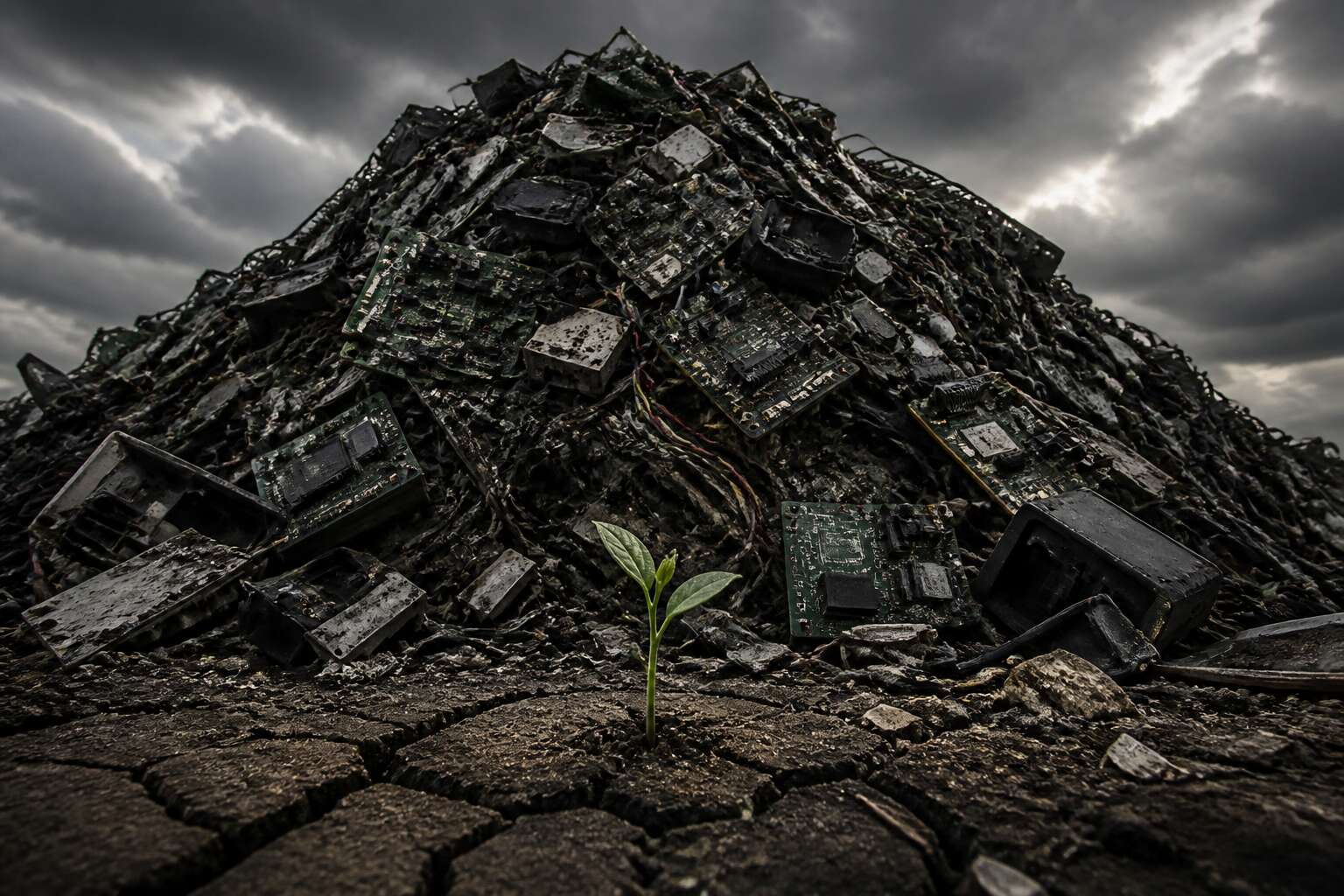
Environmental Consequences of Discarded Electronics
Soil Contamination
South Africa generates over 400,000 tonnes of e-waste annually. When circuit boards and cathode ray tubes break down in landfills, heavy metals including lead, cadmium and mercury seep into the earth. Rain pulls these toxins deeper into the soil profile.
When we toss an old phone into the bin, we rarely think about the soil beneath the landfill! Vegetables absorb these metals through their roots, and residues bioaccumulate in livestock and contaminate drinking water. The e-waste effects on soil persist for decades.
Consider what leaches from a single discarded device:
- Lead from solder and glass
- Cadmium from rechargeable batteries
- Mercury from old switches and relays
Each element behaves differently in the ground. Lead binds tightly to organic matter, while cadmium moves freely through South African sandy soils. This mobility spreads the danger laterally, beyond the dumping point. The contamination remains invisible until crops fail or families fall ill.
Water Pollution
South Africa’s water is not exempt from the e-waste effects. A single dumped motherboard can poison a swimming pool’s worth of aquifer. Rain flushes through landfills, creating a toxic broth called leachate. This liquid carries heavy metals like lithium and arsenic straight into the Vaal or any nearby water table.
Fish absorb these toxins, and then we eat the fish. The cycle is grim but predictable. The pollution travels far beyond the landfill, turning streams into chemical highways. We are not merely talking about murky water; we are talking about tap water with a metallic aftertaste.
– Lead from solder disrupts aquatic ecosystems.
– Cadmium accumulates in fish organs.
– Mercury taints the food chain.
No amount of filtering removes these compounds once they dissolve. The e-waste effects on water are permanent, silent, and entirely self-inflicted.
Airborne Toxins
When e-waste is burned to recover copper and aluminium, the smoke carries more than ash. Dioxins and furans form in the low heat of open fires. These compounds drift across Johannesburg and Durban. They settle in gardens, on school playgrounds, and deep inside human lungs.
- Dioxins suppress immune response over time
- Furans affect liver function
- Polycyclic aromatic hydrocarbons bind to dust particles
The e-waste effects on air quality are not confined to the moment of burning. Toxic particles cling to clothing and car seats. People carry them indoors. The invisible residue becomes a daily companion, inhaled with every breath.
Damage to Ecosystems
One forgotten charger in a field affects more than the ground beneath it. The e-waste effects ripple through entire ecosystems. Fragmented plastics and heavy metals enter the bodies of grazing animals. Insects ingest microscopic particles while pollinating. Frogs absorb contaminants through permeable skin. Every organism becomes a carrier.
Consider what happens to predators:
- Reproductive hormones are disrupted
- Eggshells thin and crack prematurely
- Offspring die before reaching maturity
These e-waste effects persist for generations. Even migratory birds spread toxins across provincial borders. Native flora loses resilience when root systems absorb cadmium and lead. The web of life weakens at every knot. By the time wildlife populations decline, the contamination is already entrenched.
Carbon Footprint
Manufacturing a single computer releases up to 500 kilograms of greenhouse gases before the first keystroke. Much of that energy goes into extracting metals and running clean room fabrication plants. When the device is discarded, the e-waste effects include the loss of that embedded carbon.
Disposal adds more emissions. Landfills trap electronics under layers of waste, creating anaerobic conditions that produce methane. Informal recyclers in South Africa burn components to access copper and aluminium, releasing carbon monoxide into residential areas.
The carbon footprint has three stages:
- Extracting virgin ores to build replacements
- Shipping components across continents
- Running energy intensive factories
Every discarded gadget restarts this chain.
Human Health Risks from Improper Recycling
Exposure to Heavy Metals
On the fringes of Johannesburg’s townships, informal recyclers dismantle cathode ray tubes with a hammer. The reward is copper, but the price shows up in blood lead levels. When e-waste is processed without safeguards, heavy metals enter the body through inhalation and hand to mouth contact. Each metal targets a different system:
- Lead impairs the developing brain.
- Mercury disrupts nerve signalling.
- Cadmium damages kidney function.
These e-waste effects do not announce themselves immediately. They surface years later as chronic illness. Children absorb toxins more readily than adults, and families near recycling yards carry lead dust home on shoes, skin, and hair. The e-waste effects stretch across generations, as pregnant women pass accumulated metals to unborn children. A single circuit board can contaminate an entire household’s living space. The informal sector provides livelihoods, yet the health burden falls hardest on those with no safer work.
Respiratory Ailments
Across informal e-waste yards in Gauteng, burning plastic creates a persistent and toxic haze. Workers strip copper from wiring over open flames, releasing fine particulates and volatile compounds directly into their breathing space. The e-waste effects of this practice show up in the respiratory system first.
Airways absorb these chemical irritants with little resistance. Chronic bronchitis, persistent coughing, and scarring of lung tissue become recurring complaints among recyclers and their neighbours. Children, whose lungs are still developing and whose breathing rates are faster, face the most severe consequences. We see the result in emergency clinics, permanent damage that no amount of treatment can fully reverse.
Neurological Damage
The mind bears an invisible burden from informal e-waste processing, one that moves beyond the visible scars on our lungs and skin. Neurological damage from improper recycling represents a quieter but equally devastating e-waste effect, one that unfolds across years of exposure inside Gauteng’s recovery yards.
Lead, mercury, and cadmium leach from crushed circuit boards into the soil and dust that workers inhale daily. These metals cross the blood-brain barrier with alarming efficiency, where they accumulate inside neural tissue. The brain, a delicate electrochemical organ, reacts poorly to this intrusion. Memory lapses, tremors, and reduced cognitive function emerge slowly, often dismissed as fatigue or stress before their true origins become undeniable.
Children in these communities absorb the heaviest toll. Their developing neurological systems process these toxins with less protection than adult brains.
– Attention deficits that undermine school performance
– Delayed motor skill development
– Reduced IQ scores compared to regional baselines
– Behavioral disorders that persist into adolescence
I have spoken with fathers who struggle to recall their children’s names and young mothers who cannot focus long enough to hold a conversation. The tragedy compounds because these individuals often become the primary breadwinners, their deteriorating minds undermining their ability to escape the cycle. We reduce e-waste effects to environmental terms, but the true cost sits inside the skull, eroding human potential one synapse at a time. Permanent, cumulative, and resistant to treatment, this neurological damage becomes the legacy of discarded technology in our communities.
Impact on Children
The children of Gauteng’s recovery yards carry a heavier biological burden than their parents realise. Informal recycling sites expose them to plastic additives and metallic dust that adults tolerate, but young bodies process differently. Their thin, permeable skin absorbs brominated flame retardants from the surfaces they touch daily. These compounds interfere with the endocrine system, disrupting hormonal signals that govern growth and immunity.
For those who have not yet reached school age, the effects appear as symptoms that clinicians rarely connect to a single cause:
- Delayed sexual maturation
- Stunted growth relative to regional norms
- Unexplained autoimmune markers at three times the expected rate
The true scale of these e-waste effects remains unquantified because no health register tracks children from informal recycling households. Too often, the e-waste effects on child development are dismissed as poverty or poor nutrition. I have watched these children in the recovery yards. They are not bystanders. They are the primary receptors of an industry’s unmanaged waste.
Reproductive Health Issues
Improper recycling carries e-waste effects into adult reproductive health. At informal recovery yards in Gauteng, women dismantling circuit boards absorb lead and cadmium through dust. These toxins accumulate in bone tissue, where they mimic oestrogen and distort the menstrual cycle. Men face a separate burden. Phthalates from plastic casings suppress testosterone and damage sperm motility. Consequences include:
- Repeated miscarriages in female recyclers
- Reduced ovarian reserve in women under 35
- Low sperm counts in men working same yards
These e-waste effects are not abstract. A Durban clinic study linked informal e-waste work to a 40% higher rate of pregnancy loss. Toxins pass through the placenta, then through breast milk. The body stores these chemicals for years, releasing them during critical fetal development. No register tracks these cases, and without one, the damage remains untraced.
Economic Burden of Unmanaged Electronic Waste
Loss of Valuable Materials
Every year, South Africa discards thousands of tonnes of circuit boards that contain gold, silver, and palladium. These metals vanish into landfills, representing a silent economic drain. I have watched informal recyclers burn cables for copper, unaware that the real value lies in the chips they discard. The e-waste effects on our economy are staggering when you consider that recovering materials from one tonne of circuit boards yields more gold than mining 17 tonnes of ore. Consider what we lose:
– Gold and silver from contacts and pins
– Palladium from capacitors
– Copper from wiring and motors
Instead of feeding this wealth into the ground, we could recover it. But without proper management, every gram lost deepens the financial wound.
High Cleanup Costs
Municipalities are drowning in discarded electronics. Every month, more obsolete computers and televisions pile up at drop off points, and the cost of handling this torrent falls squarely on local governments. Landfill space is a finite and increasingly expensive commodity. Each bulky CRT monitor or broken printer that gets illegally dumped requires manual removal, extra truck capacity, and precious landfill airspace. The bills for diesel, labour, and maintenance climb steadily as the waste stream grows.
The problem is worsened by the dangerous components hidden inside these devices. Batteries swell and rupture, leaching corrosive fluids that damage liners and contaminate other waste. This turns a standard landfill cell into a hazardous site, requiring specialised capping and monitoring for decades. Local authorities must then hire environmental consultants and contractors to manage contaminated runoff, a significant expense that appears on no initial budget forecast. Ratepayers carry the weight of this neglect.
The financial strain manifests in several distinct ways:
– Increased operational costs for waste collection fleets that must handle heavier, awkward loads
– Higher training and equipment expenses for waste workers exposed to damaged electronics
– Legal and remediation fees when illegal dumping sites are discovered and investigated
The e-waste effects on municipal finances are severe, and the burden grows with every passing year. As the volume of discarded devices rises, the pressure on already strained city budgets intensifies. Sanitation departments must choose between funding e-waste cleanups or maintaining other essential services. This is a quiet crisis that drains public accounts, and the consequences are visible in the widening gap between waste management budgets and actual requirements.
Health Care Expenses
Each discarded circuit board carries hidden invoices. When e-waste is dumped or burned informally, toxic residue seeps into dust and water. The resulting illnesses do not remain private burdens. They arrive at public clinics with mounting bills. In South Africa, under-resourced healthcare facilities absorb these costs directly. The e-waste effects extend beyond the environment into municipal health budgets. Families miss work, employers lose productivity, and the state pays for repeated treatments. One study suggests chronic exposure to e-waste toxins adds billions in annual medical expenditure. Consider the financial ripple effects:
- Emergency room visits for acute poisoning
- Long term medication for organ damage
- Community health screening programmes
I have watched these costs climb for years. Every untreated case becomes a more expensive case later. The true price of unmanaged electronics is measured in human suffering, but also in rand and cent on hospital ledgers.
Lost Labor Productivity
Every day that a worker stays home with a toxin induced illness, the factory floor grows quieter. This is one of the e-waste effects that never appears on a balance sheet. In South Africa, informal e-waste sites sit near residential areas, and the resulting sicknesses remove breadwinners from their jobs for weeks at a time.
The economic burden extends beyond medical bills. Lost labor productivity hits smaller communities hardest. A single technician unable to work means delayed projects, missed deadlines, and reduced output. Over time, employers hire replacements, and skilled workers lose their foothold.
- Absenteeism from chronic exposure
- Reduced focus and physical capacity
- Long term disability payments
These e-waste effects ripple through every payroll ledger. The price is paid in wages never earned and futures quietly cancelled.
Informal Sector Challenges
Informal e-waste collectors in South Africa recover gold and copper using acid baths and open flames. The immediate profit is real, but the economic burden of unmanaged electronic waste is staggering. When informal sector challenges are ignored, the e-waste effects multiply. Workers earn per kilo, not per hour, so their income swings with global scrap prices. A drop in copper means a week without bread. Meanwhile, municipalities pay twice: once for lost materials, again for environmental damage left behind. Since informal recyclers absorb no safety costs, every burnt circuit board shifts future expenses onto public health systems and clean-up budgets.
These pressures create a cycle of poverty. Without formal integration, informal recyclers cannot access credit, insurance, or training. They remain invisible in ledgers, yet their labour subsidises the entire recycling chain. Consider the daily realities:
– No formal contracts or stable income
– No access to protective equipment or health care
– No recognition for the valuable materials they recover
The e-waste effects on national economies stay undercounted while informal work remains in the shadows.
Global and Social Inequities
Export of Waste to Developing Countries
Wealthy nations export their obsolete electronics to developing countries, shifting the burden of disposal. This practice creates a geographic inequality where consequences land on those least able to manage them. The e-waste effects appear in distant communities stripped of agency. Ports in West Africa and South Asia receive containers filled with broken monitors and circuit boards, often mislabelled as donations.
I have walked through neighbourhoods where people sort plastics and wires without protective gear. They earn small sums while bearing risks that originated in richer homes! The trade persists because it is profitable for exporters and because importing countries need the scrap value.
- Shipping costs remain low.
- Environmental regulations are lax.
- Enforcement mechanisms are nearly absent.
These conditions distribute the e-waste effects according to wealth. Each exported device carries the origin of consumption and the result of suffering. Global policy has failed to address this discrepancy.
Environmental Justice
When a township community discovers a shipment of broken monitors dumped on their land, that arrival was orchestrated in a boardroom far away. The e-waste effects land on people who never switched on the machine. This is environmental justice, plain and unadorned. I have witnessed that discovery!
The geography of waste in South Africa mirrors the geography of poverty. Poorer municipalities cannot refuse containers of broken screens. Wealthier districts ship their obsolete devices to places with the weakest oversight.
- The seller’s ledger shows profit.
- The sorter’s ledger shows chronic pain.
That imbalance is structural. Convenience for one side, contamination for the other.
Community Health Disparities
Millions of workers in the informal waste sector across Africa handle discarded electronics without protective equipment, often in countries with the weakest health systems. That is the global reality of the e-waste effects: the machines are built in one economy, used in another, and dismantled in a third that cannot treat the consequences.
In South Africa, the pattern repeats at a smaller scale. A Sandton household discards a monitor after a single upgrade cycle. A township in Diepsloot receives that same monitor, and a resident sorts it without gloves or clean water. The difference in outcomes comes down to access. Wealthy suburbs have private hospitals and early diagnosis. Poorer municipalities have crowded clinics and delayed referral.
Consider how inequality shapes exposure:
- Who has protective equipment?
- Who has water to wash after handling broken screens?
- Who has a laboratory that can test for toxic exposure?
The e-waste effects deepen the divide between those who profit and those who inhale the residue.
Worker Exploitation
Every ton of discarded circuit boards hides a human cost. The e-waste effects ripple across borders, but the burden lands hardest on workers who never see the profit. In Ghana and Pakistan, laborers melt wiring and chip boards in open yards, trading their lungs for a few dollars a day. They are not accidental victims; they are the invisible foundation of a system that prizes convenience over people.
I have watched this pattern repeat in informal settlements near Johannesburg. The same monitor that powered a Sandton office now sits in a yard where a child sorts capacitors by hand. No contract. No safety gear. No recourse when the rash appears.
- A company sells a phone for R20,000.
- A recycler receives R50 for the board.
- A worker breathes lead dust for that R50.
That arithmetic is not an accident. It is the architecture of global inequity, and the e-waste effects will outlast every worker who touches them.
Resource Depletion and Sustainability Concerns
Overconsumption of Precious Metals
Each year, the world discards millions of tonnes of circuit boards containing gold, silver, and palladium. South Africa generates significant e-waste, yet we mine fresh ores while our discarded devices hold more value per tonne than many natural deposits. This paradox defines the overconsumption of precious metals.
The e-waste effects on resource security are clear. As we extract dilute ores, we consume more energy and water. Meanwhile, recovery from e-waste remains underutilised. Consider the concentration of metals in a typical smartphone:
- Gold at roughly 300 parts per million, far richer than most primary mines.
- Silver and palladium in similar abundance.
- Copper that rivals the yield of commercial ore bodies.
Ignoring this resource accelerates depletion. Sustainability demands we treat e-waste as a viable source, not a landfill problem. Without that shift, the e-waste effects will extend to future generations who inherit stripped landscapes and exhausted reserves.
Energy Intensity of Mining
South Africa’s gold mines now dig beyond four kilometres, where each metre of rock demands staggering energy. Yet the e-waste effects on resource security remain invisible to most. A single discarded phone contains more gold per tonne than the ore we haul from those depths.
Consider the energy difference:
- Recycling e-waste uses a fraction of the electricity required for virgin extraction.
- Recovered metals skip the crushing, grinding, and smelting that consume our water and power.
- Urban mining leaves the earth intact, avoiding new tailings dams and acid drainage.
The e-waste effects are not abstract. They determine whether we keep depleting our reserves or learn to mine what we already throw away.
Shortened Product Lifecycles
Resource depletion accelerates when devices are engineered for early obsolescence. A smartphone designed to last two years instead of ten doubles the demand for lithium, cobalt, and rare earths. These e-waste effects reach deep into global supply chains, yet the remedy sits forgotten in our drawers and landfills.
One circuit board holds gold, palladium, copper, and tantalum. Each metal is mined, refined, and shipped before the next assembly begins. Shortened product lifecycles guarantee that extraction cycle repeats without end.
- Repairability has declined across two decades.
- Batteries are now sealed and screens glued.
- Software updates stop after a few years.
Sustainability demands we close that loop, and it begins by counting the cost of every discarded device.
Circular Economy Opportunities
In 2023, the world generated 62 million tonnes of electronic waste, yet only a fifth was recycled. The true e-waste effects are measured in more than lost profit. Each discarded board demands new extraction, driving resource depletion and deepening sustainability concerns. We rarely see the mines that feed our devices, but their footprint grows with every upgrade.
Recycling alone cannot solve this; designing for a circular economy can. Options include:
– Modular device design
– Repair mandates
– Take back schemes
These circular economy opportunities reduce pressure on virgin resources. However, they depend on our choices. We can close the loop. We simply need to value what we already have.


0 Comments