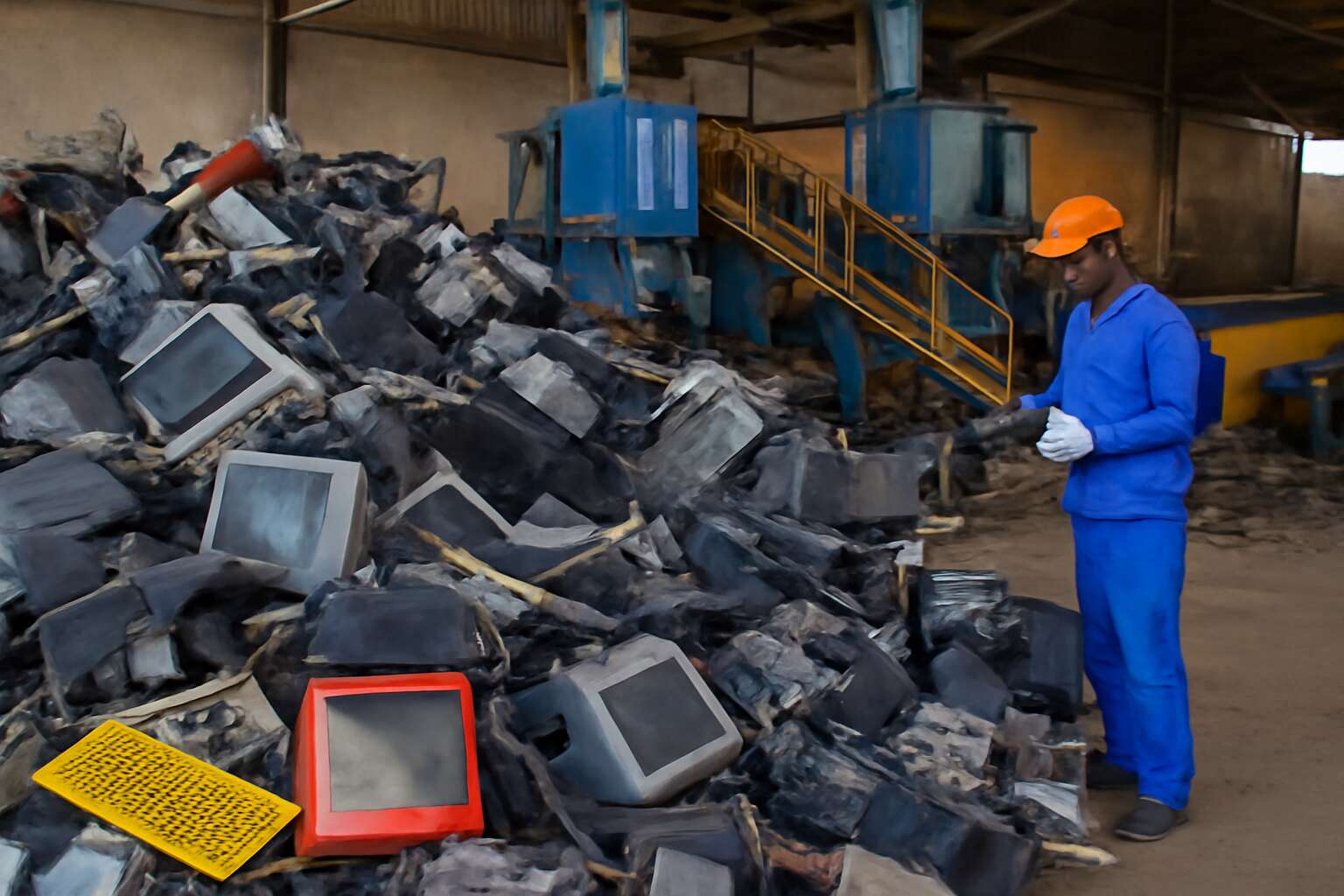
Overview of E-waste in South Africa
What is e-waste and why it matters in South Africa
Every discarded device traces the arc of modern life—rapid upgrades, shrinking lifespans, and a mounting question about what happens after the screen goes dark. In South Africa, this e waste in south africa pdf feeds policy debates and practice, reflecting how cities grow and communities adapt to the nation’s digital life.
E-waste is more than old gadgets; it encompasses computers, phones, TVs, batteries, and household appliances that end up in landfill or informal handoffs. The hazards—lead, mercury, and flame retardants—pose risks to communities, groundwater, and air when not managed responsibly.
Key components of the e-waste mix include the following:
- Computers, laptops, and peripherals
- Mobile phones and chargers
- Televisions, monitors, and imaging equipment
- Household appliances and batteries
Current scale and trends of e-waste in South Africa
South Africa’s e-waste landscape is not a rumor whispered in back-alleys of garages; it’s a measurable tide. Across major cities, volumes crest into the hundred-thousand-tonne range each year, driven by rapid device turnover and a culture of upgrading. The trend isn’t linear, but a mosaic: urban fortresses of consumption meet sprawling informal networks that collect and repurpose what others discard. A recent e waste in south africa pdf traces these currents in policy debates and street-level practice, showing how households, schools, and offices contribute to a growing, but uneven, river of discarded electronics.
Three currents shape how we read these numbers today.
- Urban centers drive most collection, turning households into hubs
- Informal networks recycle a large share, often with hazardous practices
- Rising demand for refurbished devices shifts downstream value chains
Policy landscape and regulatory context in South Africa
Policy shifts are quietly reorienting e-waste flows in South Africa, turning a volatile stream into a trackable chain of responsibility. The conversation now threads regulatory courage with practical harm-reduction, imagining a system where devices are reclaimed, repaired, and reborn into the economy.
At the core sits the National Environmental Management: Waste Act, reinforced by DEFF guidelines and local enforcement. The policy landscape nudges producers toward extended producer responsibility (EPR), tighter import controls, and clear standards for refurbishers, data destruction, and hazardous substance handling. A key reference is the e waste in south africa pdf that traces policy debates and street-level practice.
Beyond rules, the regime seeks to bend markets toward transparency, safeguard communities from hazardous exposure, and reward virtuous stewardship across urban and rural networks. Enforcement, funding, and cross-minister collaboration remain the quiet hinges on which this ambitious project turns.
Key challenges facing e-waste management in South Africa
In South Africa, the e-waste tide mirrors a global flood—over 50 million metric tons surge worldwide each year, and a growing share lands in cities where formal networks struggle. The e waste in south africa pdf offers a distilled map of policy and practice, showing how producer responsibility and stricter data-handling norms are turning damage into duty. The challenge is to convert discarded devices into resources while guarding communities from hazardous shadows.
Yet the path to stewardship is jagged. Key challenges facing e waste management in South Africa include:
- Informal collection and unsafe handling in townships and rural edges
- Lack of standardized refurbishers and dependable data-destruction services
- Gaps in formal collection, transport, and reverse-logistics networks
These frictions shape a narrative where opportunity glimmers through the fog—an economy reimagining waste as value, and citizens reclaiming their digital futures.
Opportunities for growth in the South African e-waste sector
Across the globe, more than 50 million metric tons of e-waste are generated each year—a tide South Africa must ride, not drown beneath. The e waste in south africa pdf offers a distilled map of policy and practice, hinting that opportunity lies where waste becomes value and data is safeguarded. In this view, the challenge isn’t merely disposal but design—keeping devices out of drains and turning them into usable resources!
- Formal refurbishment hubs with certified data-destruction
- Expanded reverse-logistics networks across urban and rural corridors
- Public-private funding to seed collection points and processing capacity
Growth rests on networks that move materials cleanly from doorstep to processing, enabling refurbishers, data-safe destruction services, and formal reverse-logistics to anchor communities. Opportunities include: Beyond this, the sector could stitch local jobs to global recyclers, elevate collaboration with SMEs, and spur modular design that outlasts rapid obsolescence.
Regulatory Framework and Compliance
National e-waste legislation and standards in South Africa
The regulatory framework in South Africa anchors e-waste management in the National Environmental Management: Waste Act of 2008. A sobering fact hides in the numbers: hundreds of thousands of tonnes of e-waste are generated each year, yet formal recycling struggles to keep pace and accountability remains uneven.
At the core, compliance means embracing Extended Producer Responsibility (EPR), registering schemes, and reporting transparently on take-back activities. Producers, recyclers, and retailers navigate a tapestry of licences, audits, and safety standards.
- Extended Producer Responsibility (EPR) registration and reporting
- Proper handling, storage, and transport of e-waste
- Licensing, audits, and compliance verification for recyclers
Standards and enforcement evolve through aligning with national guidelines and cross-border waste controls. For a concise overview, see e waste in south africa pdf.
Extended Producer Responsibility programs in South Africa
Regulatory gravity here is not a cage but a compass: compliance now hinges on Extended Producer Responsibility, registered schemes, and transparent take-back reporting. In a landscape where accountability has wandered, the EPR framework tightens the loop from producer to recycler, demanding auditable trails and measurable outcomes.
Key components include:
- Extended Producer Responsibility (EPR) registration and reporting
- Proper handling, storage, and transport of e-waste
- Licensing, audits, and compliance verification for recyclers
Standards and enforcement rise as South Africa aligns with evolving guidelines and cross-border waste controls. For a concise overview, the e waste in south africa pdf offers context that complements on-the-ground practice.
Hazardous waste management and disposal requirements
Regulatory frameworks in South Africa are not cages but compasses, guiding every step from collection to final disposal. Hazardous waste management and disposal requirements demand licensed handlers, secure storage, and rigorous waste classification. Compliance is more than paperwork; it is the backbone of safe communities and credible brands, anchored in NEMWA and the expanding terrain of Extended Producer Responsibility.
Auditable trails bind the chain, tracing each component from producer to recycler and ensuring verifiable outcomes. The e waste in south africa pdf offers a concise map for auditors and operators alike—yet the real work happens on the ground, with licenses renewed, audits conducted, and cross-border controls enforced.
- Licensing, audits, and compliance verification for recyclers
- Proper handling, storage, and transport of e-waste
- Hazardous waste classification and disposal reporting
Compliance challenges for businesses and recyclers in South Africa
Compliance isn’t a checkbox; it’s a compass, and the e waste in south africa pdf is the map you want tucked into your glove compartment. In the real world, permits, secure storage, and traceable records aren’t optional extras—they’re the backbone of credible e-waste programs and safe communities. The document serves as a concise blueprint for auditors and operators alike, reminding everyone that every component—from producer to recycler—must be traceable and verifiable.
- Obtaining and renewing licenses, audits, and verification for recyclers
- Safe handling, storage, and transport protocols for e-waste
- Classification of hazardous waste and disposal reporting
For businesses and recyclers, the real challenge isn’t rhetoric but the slow gears of paperwork, renewal cycles, and cross-border controls that turn compliance into a year-round sport—like a coffee-fueled auditor with a red pen. The rules demand rigor, not bravado, and they reward transparency with reduced risk and cleaner brand reputations.
Role of government agencies in e-waste governance
Regulatory oversight in South Africa rests with a network of government agencies that translate policy into practice. The regulatory framework is not a backdrop but a living system—issuing licenses, shaping audits, and enforcing safe transport of e-waste. The National Environmental Management: Waste Act and related standards steer how producers, recyclers, and handlers operate, and empower authorities to intervene when risk emerges.
- Issuing and renewing licenses for recyclers and handlers
- Conducting inspections, audits, and verification
- Coordinating cross-border controls and reporting obligations
These roles culminate in transparent records and verifiable pathways, underpinning documents like e waste in south africa pdf, a compass for governance and accountability.
Environmental and Health Impacts of E-waste
Toxic components and environmental risks in e-waste
In South Africa, a single discarded gadget can poison a community long after it’s tossed. E-waste streams deposit heavy metals and toxins into soil and groundwater, turning everyday devices into hidden hazards. As outlined in the e waste in south africa pdf, the stakes are human and local—families and informal workers bear the brunt.
Toxic components and their environmental footprints include:
- Lead: neurodevelopmental damage and organ stress.
- Mercury: water contamination and neurological harm.
- Cadmium: kidney damage and bone loss.
- Brominated flame retardants: persistent pollutants that bioaccumulate.
These substances migrate through soil, water, and air, often amplified by informal recycling practices like open burning and acid baths. The result is chronic exposure and long-lasting ecological harm for nearby communities.
Impact on soil, water, and air quality in South African communities
In South African communities, e-waste’s shadow lingers as heavy metals and toxins seep from discarded devices into soil and groundwater. I’ve seen gardens turn sour and wells grow cloudy after rains, a reminder that the land remembers! The result is contaminated gardens, polluted drinking wells, and a creeping burden on children’s developing bodies. The pattern is echoed in the e waste in south africa pdf, which shows how informal recycling magnifies exposure, turning everyday gadgets into hidden hazards that migrate through soil, water, and even air.
These effects unfurl in three domains:
- Soil contamination alters microbial life and crop safety.
- Water contamination seeps into groundwater and rivers, affecting drinking supplies.
- Air particulates from burning and fumes travel beyond the site, posing respiratory risks.
The toll is local and lasting.
Public health implications for workers and communities
In every dusty heap of discarded devices, the footprint of e-waste grows heavier. The e waste in south africa pdf reveals how informal dismantling threads toxins through air, soil, and water, turning everyday tech into a long shadow over communities. A single rain can wash metals from piles into wells and gardens, stitching illness into childhood and quiet worry into daily life.
Three forces shape these outcomes:
- Exposure routes: inhalation of fumes from burning plastics and batteries
- Contaminants: lead, cadmium, mercury, and persistent pollutants
- Health impact: respiratory irritation, cognitive effects in children, and skin disorders
For workers and nearby residents, chronic exposure translates into respiratory irritation, anemia, and developmental risks for children who live near open piles.
The land remembers the toll, and the future asks for a balance between progress and care.
Case studies of pollution incidents linked to e-waste in South Africa
A single rain can turn discarded devices into a wandering threat, and the e waste in south africa pdf records how toxins drift through soil, air, and water, bending daily life into a long shadow. In South Africa, case studies reveal how toxic legacies ride every breeze.
- Gauteng: informal dismantling yards leave soil with elevated lead and cadmium, threatening gardens and children.
- KwaZulu-Natal: runoff from open dumps deposits heavy metals in river sediments, altering aquatic life and local water use.
- Western Cape: burning sites release dioxins and persistent pollutants into surrounding air.
The land remembers the toll, and these episodes cast a mythic warning over the intersection of progress and care.
Recycling, Reuse, and the Circular Economy in South Africa
Collection, sorting, and transport infrastructure for e-waste in South Africa
Every discarded device carries a second chance—if we sew the circle tight. Recycling, reuse, and the circular economy in South Africa are not distant ideals; they’re a living current turning old devices into new possibilities.
This is the kind of infrastructure that lets value re-enter the economy instead of leaking into the earth. It supports humane jobs, safer handling, and cleaner neighborhoods as devices travel from households into certified streams where materials like copper, plastics, and glass find new lives. This segment echoes the insights from the e waste in south africa pdf, mapping how discarded electronics can circulate again.
- Collection points that are accessible and well-promoted in local communities
- Sorting lines that separate hazardous components from bulk recyclables
- Transport networks designed to minimize distance, time, and exposure
Recycling technologies and capacity in South Africa
Recycling technologies and capacity in South Africa are turning discarded devices into a thriving resource, channeling copper, plastics, and glass back into the economy. The e waste in south africa pdf frames a blueprint for smarter reuse, from urban hubs to rural collection points. A growing network of certified streams means safer handling, cleaner neighborhoods, and humane jobs along the value chain.
- Material recovery facilities with advanced sorting and shredding
- Refurbishment and repair centers that extend device life
- Modular disassembly lines that isolate hazardous components safely
These pathways strengthen the circular economy in South Africa, weaving local demand, skills, and investment into durable, community-friendly outcomes. Together they prevent leaks to the land and keep value circulating.
Reuse, refurbishment, and resale markets for electronic devices
South Africa’s discarded devices aren’t mere refuse; they’re a stubborn resource waiting for the right touch. In busy cities and quiet townships alike, reuse is shifting from rumor to routine, and, as a veteran recycler quips, “Waste is just resource in the wrong hands.” I’ve seen communities quietly anchor themselves by keeping value in circulation!
Reuse, refurbishment, and resale channels stitch a cleaner, more humane narrative into the economy. Local repair shops extend life, refurbishers retune performance with warranties, and resale platforms connect buyers with dependable devices at fair prices.
Here are the frontline players that move the needle:
- Community repair hubs that test and certify devices before resale
- Certified refurbishers who guarantee performance and safety
- Local marketplaces supporting circular consumption without heavy logistics
This framework is captured in the e waste in south africa pdf, a blueprint that marries ambition with daylight accountability.
Circular economy initiatives and case studies in South Africa
South Africa’s discarded devices aren’t trash; they’re a living ledger of opportunity. In urban pockets, more than 60% of e-waste is diverted into reuse or repair streams—a quiet revolution that keeps gadgets from landfill ghosts. Local repair hubs test and certify; refurbishers tune performance, and community resale keeps value circulating. Waste becomes resource, and old screens find new owners.
Frontline players stitch the circle tighter:
- Community repair hubs that test and certify devices before resale
- Certified refurbishers who guarantee performance and safety
- Local marketplaces supporting circular consumption without heavy logistics
The e waste in south africa pdf blueprint connects ambition with daylight accountability, documenting circular economy initiatives and case studies across the country. Cape Town’s co-ops show how repair and resale reduce import reliance; Joburg’s refurbishers showcase warranty-backed returns; Durban’s marketplaces prove access at fair prices without long-haul shipping. The narrative is practical, energized, and magical—a proof that trash can be a trusted resource when guided by standards and community consent.
Job creation and skills development in the South African e-waste sector
I’ve watched workshop lights glow like dawn as discarded devices become a skilled workforce. South Africa’s recycling, reuse, and circular economy triad is not mere rhetoric; it creates real livelihoods across towns and townships. Catalysts like community repair hubs and refurbishers temper waste with craft, while training programs turn curiosity into certified capability, as seen in the e waste in south africa pdf blueprint.
The path from trash to treasure includes hands-on learning, blended with formal recognition. We find roles expanding beyond sorting. Workers gain formal certifications, safety training, and entrepreneurial confidence to launch resale ventures or small repair shops. This is how job creation ripples through communities, turning environmental responsibility into economic vitality.
- Repair technicians testing and certifying devices
- Refurbishers tuning performance and guaranteeing safety
- Logistics and market facilitators linking reuse to consumers
In this luminous economy, skills flourish where the wheel of reuse turns, and every fixed screen becomes a doorway to opportunity!
Challenges and opportunities in scaling recycling infrastructure
In the dim corridor of progress, the circular economy hums like a distant engine—a promise of salvage from the unsalvageable. Across South Africa, a sobering note persists: a small share of e-waste enters formal recycling, a fact echoed in the e waste in south africa pdf chronicles. Yet those pages glow with opportunity, where discarded devices become material for a new craft!
Scaling recycling infrastructure demands more than sacks; it requires networks, standards, and brave capital. The challenges are many: fragmented governance, uneven urban-rural access, and hazardous components that threaten soil and water when mishandled. Yet pockets of progress bloom—repair hubs, certified refurbishers, and end-to-end traceability.
- Coherent collection networks for remote communities
- Standards-aligned refurbishers with safety certification
- Transparent reverse logistics and market channels
Where others see rubble, South Africa’s e waste in south africa pdf narrative sees a blueprint—an invitation to reimagine value at every turn.
Practical Guidance for Businesses and Individuals
Best practices for business e-waste management and procurement
Practical guidance for businesses and individuals: In South Africa’s evolving e-waste landscape, procurement and disposal decisions echo far beyond the balance sheet. A concise e waste in south africa pdf can serve as a compass for policy, supplier choice, and risk management, helping teams speak a common language. When devices are kept in play longer—preferably with take-back programs and transparent recycling—organizations protect data, shield communities, and support local jobs. Individuals can influence outcomes by choosing durable devices and returning gear through approved channels.
- Establish procurement criteria favoring certified recyclers.
- Engage partners with validated data security and custody.
- Prefer refurbished devices with warranties.
- Standardize take-back programs and compliant disposal.
These approaches align with broader South African e-waste objectives, turning procurement into a lever for a safer, cleaner, and more resilient circular economy.
Household e-waste disposal guidelines for South Africans
From boardroom briefings to kitchen countertop purges, decisions about end-of-life devices reverberate through communities and supply chains. The compact e waste in south africa pdf on your screen acts as a compass, translating policy into choices that protect data, conserve resources, and sustain local jobs.
Practical guidance, when viewed through a shared lens, foreground four core considerations.
- Durability and repairability advocate longer device life
- Data security and custody during recycling
- Preference for refurbished devices with warranties
- Standardized take-back and compliant disposal channels
In South Africa’s evolving e-waste landscape, local conversations—between users, schools, businesses, and recyclers—are weaving a sturdier circular economy. Small, mindful choices accumulate into broad protection for people and ecosystems!
How to choose responsible e-waste recyclers and collectors in South Africa
E-waste isn’t just trash—it’s a responsibility. The right recycler turns risk into ripple effects: data protection, resource conservation, and a thriving local refurbishment ecosystem!
- Verify licensing and certifications from SA bodies
- Demand clear data-destruction reports
- Prefer refurbishers with warranties and repair options
- Choose transparent take-back and chain-of-custody
For a concise, South Africa–oriented overview, our e waste in south africa pdf guide compiles the essentials and connects policy, practice, and people.
Digital education and awareness campaigns to promote responsible e-waste practices in South Africa
Across South Africa, digital education isn’t a luxury—it’s a lifeline for responsible consumption!
Campaigns that blend storytelling with practical steps turn curiosity into action, helping people see that a discarded device can become energy, opportunity, or repair. For broader context, consult the e waste in south africa pdf.
- Short, shareable explainer videos that demystify data destruction
- SMS and WhatsApp campaigns with tips on safe disposal
- School and workplace challenges with mini-pledges and incentives
By weaving education into everyday choices, businesses and individuals become stewards of a cleaner, wiser digital economy.
Compliance checklists and resources for South African organizations
Practical guidance for navigating e waste in South Africa isn’t a luxury; it’s a responsibility that brands and individuals carry in their daily decisions. A compliance-ready mindset helps turn audits from dread into dialogue. Access the e waste in south africa pdf for a structured overview that pairs regulatory clarity with pragmatic expectations, framing responsible disposal as a business asset rather than a burden.
- Official compliance checklists and regulatory references
- Credible repositories: government portals, industry bodies
- Local resources: accredited recyclers, training programs
For South African organizations, a culture of accountability starts with governance that links procurement, data destruction, and waste traceability to broader sustainability aims. These resources invite introspection rather than rules, inviting leadership to model responsible reuse and disposal within the circular economy.


0 Comments