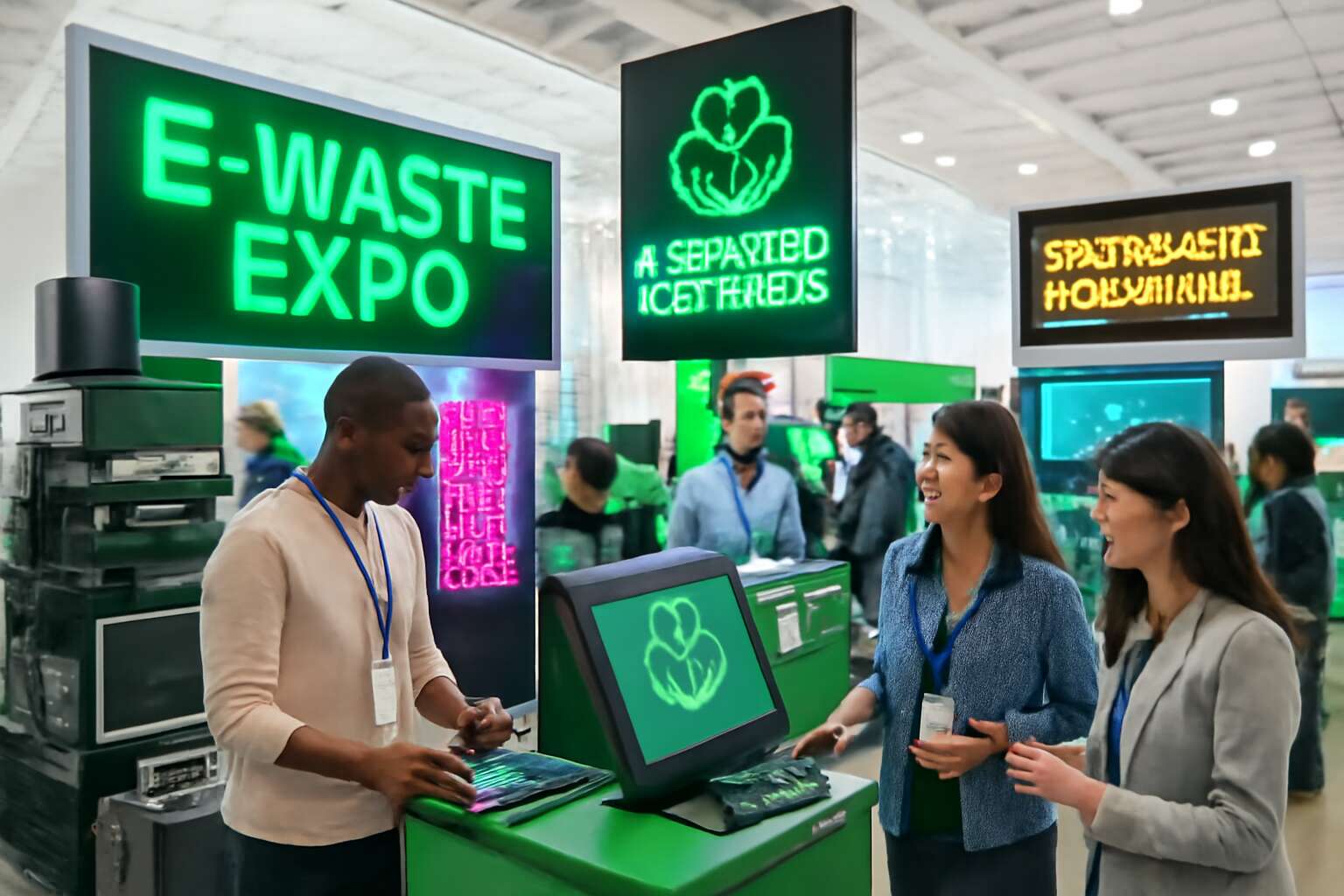
Understanding the Electronic Waste Industry Event Landscape
Purpose and goals of the event and its impact
Across the globe more than 50 million tonnes of e-waste are produced each year, and South Africa feels the pull as devices pile up in homes and offices. The e-waste expo arrives as a bright beacon, turning chatter into action and linking local grit with international know-how! It shows how responsible disposal and data-safe reuse can coexist with growth.
The expo unites manufacturers, recyclers, policymakers, startups, and communities to share methods and shape standards. Its goals include showcasing end-to-end take-back systems, accelerating recycling investment, and boosting transparency in supply chains.
- Manufacturers and recyclers collaborating on circular solutions
- Policymakers crafting practical incentives
- Researchers piloting data-secure reuse models
In South Africa, impact goes beyond waste metrics—creating jobs, cleaner streets, and stronger trust through education and accessible programs. When diverse players meet, bold goals become tangible outcomes.
Key attendee groups and industry roles
Under a Johannesburg dusk, the e-waste expo rises as a sentinel between obsolescence and renewal. The landscape gathers players from factory floor to policy bench, each with a weathered map of tangled supply chains and the quiet urgency of reuse. Shadows lengthen where data stewardship and resource recovery converge, and the crowd moves with a shared, almost pilgrim purpose.
Key attendee groups and industry roles include:
- Manufacturers designing take-back and repair pathways
- Recyclers turning discarded devices into raw materials
- Policymakers drafting incentives and reporting standards
- Startups innovating with data-safe reuse and circular services
- Researchers testing secure data erasure and remanufacture
- Educators and community leaders building trust and participation
Together, these voices sketch a map where accountability and opportunity coexist—shaping policies, driving investment, and inviting communities to participate in cleaner streets and smarter systems.
Exhibitors, speakers, and program formats
In the glow of Johannesburg, the e-waste expo unfurls like a map to hidden riches. A veteran recycler once said, “The waste stream is a resource stream in disguise,” and the truth hums through the hallways as exhibitors and speakers gather to reveal it.
Manufacturers sketch take-back paths, recyclers narrate circular flows, policymakers frame incentives, startups demo data-safe reuse, researchers test secure erasure, educators build trust—all woven into a living atlas of the industry landscape.
- Keynote addresses
- Panel discussions on policy and practice
- Live demonstrations of secure data erasure and remanufacture
- Hands-on workshops for practical reuse pathways
- Startup showcases and investor rounds
For South Africa’s evolving ecosystem, this compass guides partnerships, standards, and fresh investment across cities and towns alike.
Global trends shaping industry events
Global e-waste is forecast to top 74 million tonnes by 2030, turning discarded devices into mountains of overlooked value. The e-waste expo stands at the crossroads of opportunity, where a veteran recycler whispers: “The waste stream is a resource stream in disguise.” The halls shimmer as ideas for reuse and repair ripple through the air.
Global trends shaping these industry events unfold across regions and sectors:
- Cross-border standards and incentives
- Secure data handling and reuse pathways
- Investors leaning toward circular tech
For South Africa, these patterns become a compass guiding partnerships, standards, and fresh investment across cities and towns alike, linking local action to a global drive that makes tangible the promise of sustainable tech.
Planning and Promotion for an Electronic Waste Industry Event
Choosing location, schedule, and venue accessibility
The e-waste expo stands at the crossroads of policy, enterprise, and civic duty—turning planning and promotion into momentum that strengthens South Africa’s circular economy.
Choosing location, schedule, and accessible design matters as much as content. A venue near major transport hubs, multilingual wayfinding, and barrier-free facilities ensures broad participation across Durban, Cape Town, and Johannesburg, while calendars respect local rhythms and peak business periods.
Promotion blends narrative, credibility, and partnerships, with industry media, universities, and government allies shaping the conversation and extending reach beyond the expo floor.
- Location criteria emphasizing transport connectivity and sustainability
- Scheduling aligned with industry calendars and regional events
- Venue features that accommodate demonstrations and inclusive access
SEO and content strategies for event pages
Global e-waste is rising 8% a year, and in South Africa the fastest-growing waste stream finally has a stage—the e-waste expo. It’s where policy, enterprise, and civic duty collide, turning market chatter into momentum for a smarter, cleaner supply chain.
Planning and promotion for the event pages hinge on clarity and credibility. A single, well-structured hub—a practical agenda, speaker roster, and partner roll—keeps analysts and vendors scrolling for hours. The content strategy should weave in SEO-friendly elements without turning a page into a keyword maze.
Beyond the page, partnerships with industry media, universities, and government bodies broaden reach across South Africa’s major cities, creating a network where conversations outlast the expo itself.
Social media, PR, and influencer outreach
Global e-waste is rising 8% a year, and in South Africa the e-waste expo becomes the stage where policy, enterprise, and civic duty collide. Planning and promotion should feel intimate, credible, and urgent—messages that travel beyond the site into real conversations shaping a cleaner future for Johannesburg, Cape Town, and beyond.
Messaging should be rooted in human storytelling, anchored in local realities—repairability, upcycling, and safe disposal—while staying grounded in responsibility and hope. Social media, PR, and influencer outreach carry this momentum, weaving a network that lingers after the spectacle ends.
- Social media and content partnerships
- Public relations and press engagement
- Influencer and expert outreach
- Academic and government collaboration
The e-waste expo thus becomes a durable dialogue across South Africa’s major cities, not a one-off event.
Sponsorships, partnerships, and vendor alignment
With e-waste expo fuses commerce with conscience, possibility blooms. This isn’t a one-off showcase; it’s a cross-city conversation where policy, industry, and citizens meet with urgency and care. Sponsors who align with repair, reuse, and responsible disposal gain more than visibility — they earn trust in Johannesburg, Cape Town, and beyond, weaving voices into durable dialogues that outlive the final panel.
- Tailored sponsorship tiers aligned to measurable outcomes
- Creative activation opportunities that extend beyond the event
- Vendor alignment with sustainability goals and local logistics
This e-waste expo becomes a durable dialogue across South Africa’s major cities, not a one-off event.
Educational Content and Learning Paths for Attendees
Keynote topics on circular economy and recycling technologies
Global e-waste is expected to reach 74 million metric tons by 2030, and South Africa wants a bigger slice of the solution. At the e-waste expo, educational content is not a boring whiteboard—it’s a sprint through the lifecycle of electronics, from design to reuse, with a wink and a workshop bench. I’ve watched audiences lean forward as a single demo turns a skeptic into a believer!
Attendees will navigate learning paths that blend theory with hands-on practice. Think: circular economy fundamentals, case studies from local refurbishers, and design-for-disassembly playbooks. For keynotes, the focus is on scalable recycling technologies South Africa can deploy today, with practical frameworks and tangible impact.
- Foundations in circular economy for electronics
- Hands-on recycling technology demos
- Disassembly and material recovery workshops
- Policy and governance for extended producer responsibility
Expect a cross-pollination of engineers, policymakers, and repair enthusiasts—turning knowledge into action and profits into planet-friendly outcomes during this gathering!
Workshops, demonstrations, and hands on sessions
A single hands-on session at the e-waste expo can flip a roomful of skeptics into champions of reuse. In South Africa, education isn’t a dull lecture—it’s a sprint through electronics’ lifecycle, from concept to salvage, with practical flair at a workshop bench. Attendees follow learning paths that blend theory with practice, guided by mentors who cut jargon and share what actually works. Demos uncover the real leverage in disassembly and material recovery, turning curiosity into confidence.
Tracks unfold with brisk, collaborative energy, anchored in real-world impact. Expect formats that thread design thinking with tangible outcomes. Key formats include:
- Core circular economy concepts applied to electronics
- Live demonstrations of recycling technology and processing streams
- Disassembly practice labs and material recovery exercises
- Governance frameworks for extended producer responsibility
Case studies and real world deployments
Across Africa, more than 50 million metric tons of e-waste are generated annually—a mountain that could power a small city if reclaimed. The e-waste expo in South Africa offers a different map: a path where learning happens at the bench, not in a lecture hall, and numbers turn into narratives about reuse.
Educational content is built as learning paths that blend theory with practice and guided by mentors who speak plainly. Case studies and real-world deployments anchor sessions, showing how concepts take shape in actual operations rather than in slides.
- Municipal e-waste sorting pilot that demonstrates end-to-end material recovery in practice
- Township refurbishment and device reuse programs that reconnect communities with technology
- School-level labs integrating lifecycle thinking into STEM curricula
Attendees leave with grounded insights and a contagious optimism about turning curiosity into concrete change through the e-waste expo.
Certification programs and continuing education credits
Across Africa, more than 50 million metric tons of e-waste are generated annually—a mountain that could power a small city if reclaimed. The e-waste expo in South Africa shapes a map where learning happens at the bench, not in a lecture hall, and numbers become narratives about reuse.
Educational content unfolds as learning paths that blend theory with practice, guided by mentors who speak plainly. Case studies and real-world deployments anchor sessions, showing concepts taking shape in actual operations rather than slides.
Certification programs and continuing education credits form the backbone of professional growth, allowing attendees to validate skills and accumulate credits through structured modules.
- Core modules aligned to international standards
- Hands-on labs and field projects
- Capstone certifications and ongoing assessment milestones
This approach ensures knowledge translates into career-ready capability and fuels a contagious optimism for turning curiosity into concrete change.
Sustainability, Compliance, and Impact Metrics for Industry Events
Measuring environmental, social, and governance outcomes
An e-waste expo isn’t just a showcase; it’s a ledger of our collective responsibility. Global e-waste is projected to reach 74 million metric tons by 2030, and the numbers demand action. Here, sustainability isn’t a sidebar; it flows through every booth, every demo, every panel. It becomes a living metric of progress—measurable, tangible, and urgent—and it asks: what will your footprint look like when the curtain falls?
- Material recovery rate and recycling efficiency
- On-site energy use and waste diversion
- Supplier transparency and lifecycle impact data
Compliance is a compass, not a checklist. Expect clear reporting on take-back schemes, data sanitization, and regulatory alignment with South Africa’s evolving e-waste frameworks; credibility should reside in every credential.
Impact metrics translate governance into action. From community engagement to local skills development, this expo should quantify outcomes that extend beyond the venue and into lasting environmental justice across communities.
Regulatory compliance, data security, and privacy considerations
Picture 74 million metric tons of e-waste looming—this e-waste expo is where that shadow becomes a map for action. Sustainability isn’t a backdrop; it threads through every demo, booth, and panel. It’s a living ledger of progress—measured by material recovery rate, recycling efficiency, and on-site energy use.
- Take-back schemes and responsible recycling streams
- Data sanitization and device-level privacy controls
- Regulatory alignment with local e-waste frameworks
Compliance is a compass, not a checklist. The e-waste expo aligns with South Africa’s evolving e-waste frameworks and POPIA-driven privacy standards, ensuring trust at every turn. Expect clear reporting on take-back schemes, data sanitization, and credentialed practices that safeguard exhibitors, visitors, and communities alike.
Impact metrics translate governance into action. The e-waste expo will quantify community engagement and local skills development, translating governance into on-the-ground benefits—from training programs to small-business opportunities—sparking environmental justice beyond the venue walls and into every South African community.
Post event material recovery and recycling initiatives
That looming 74 million metric tons of e-waste? The e-waste expo isn’t just talk—it’s action in motion. Post-event, every demo panel becomes a resource, every booth footprint a chance at recycled metals and reclaimed plastics, and every bag finds a second life through reuse programs.
Compliance isn’t a dull formality; it’s a living dashboard. After the lights go down, independent verifications confirm responsible dismantling, and transparent reports track who handled what and where it goes. Credentialed practices keep exhibitors, visitors, and communities confident governance travels beyond the venue.
Impact metrics translate governance into action. We quantify community engagement, local skills development, and new opportunities for small businesses born from refurbishing and responsible recycling. The result is environmental justice in motion—measurable, ongoing progress that echoes from the venue into every South African community.
ROI and stakeholder value reporting for organizers and attendees
Across the globe, 74 million metric tons of e-waste flood landfills and informal networks. The e-waste expo puts that concern into motion—turning risk into procurement, policy, and partnerships. In South Africa, responsibility becomes opportunity, from city hubs to rural repair labs.
Sustainability at the expo is measured in tangible outcomes: material loops kept whole, energy footprints trimmed, and suppliers aligned to circular principles. Compliance becomes a living dashboard, not a paper exercise, with auditable records and clear chain-of-custody from booth to end destination.
- Demonstrated diversion rate and material reuse
- On-site audit trails and transparency
- End destinations and community reporting
Impact metrics translate governance into value for organizers and attendees: it proves ROI, strengthens local skills, and expands refurbish-and-resell markets. The e-waste expo becomes a catalyst for environmental justice and measurable progress across South Africa’s ecosystems!
Future planning lessons and continuous improvement
Across South Africa, the e-waste expo reframes risk as opportunity, turning discarded circuits into tangible value. Sustainability here is measured by material loops kept intact, leaner energy footprints, and suppliers bending toward circular principles. From Cape Town’s city hubs to rural repair labs, responsibility becomes opportunity, threading local ecosystems into a resilient national supply chain.
Compliance becomes a living dashboard rather than a dusty briefing. Auditable records, a clear chain of custody, and transparent disclosures from booth to end destination create trust with regulators, vendors, and communities alike. Data security and privacy are woven in, not bolted on.
Impact metrics translate governance into value for organizers and attendees: ROI, strengthened local skills, and expanded refurbish-and-resell markets. Future planning lessons hinge on continuous improvement—capture what works, refine what doesn’t, and keep community outcomes central.
- On-site audit trails and transparency
- End destinations and community reporting
- Material reuse and diversion rate monitoring



0 Comments