Understanding e-waste and its implications
Definition of electronic waste and related terms
Across South Africa, discarded devices clutter homes and workshops, turning once-useful tools into a quiet flood of e-waste. Understanding e-waste and its implications begins with a clear call to responsibility and a recognition that every charger has a story beyond its last charge!
Electronic waste, or e-waste, refers to end-of-life electronics such as phones, laptops, televisions, and batteries. Related terms include refurbishment, recycling, hazardous substances, and proper disposal—concepts that shape how communities manage scraps rather than let them linger in cupboards and riverbanks.
Key terms to know in this journey:
- Hazardous substances found in old devices
- Refurbishment and remanufacturing as respectful options
- Recycling streams that recover metals and plastics
Seeing it through the lens of the e waste management full form reveals a lifecycle: collect, sort, recover, and reuse—accommodating rural towns and urban centres with dignity and care at every step.
Why e-waste management matters
Across South Africa, discarded devices clutter homes and workshops, turning tools into a quiet flood of e-waste. The fastest-growing waste stream is the electronics households forget to recycle, carrying toxins and untapped resources that demand responsibility from every charger and phone owner!
Understanding e-waste and its implications means tracing a lifecycle—how we collect, sort, and recover materials. It isn’t mere disposal; it redefines gadgets as resources, shifting communities from convenience to accountability.
The e waste management full form guides this shift, framing a practical path that works from townships to urban centres:
- Collect with clear labeling and safe handling
- Sort by material, hazard, and reuse potential
- Recover metals, plastics, and other recoverable components
- Reuse and refurbishment where feasible to extend lifecycles
In South Africa, this approach translates into cleaner streets and safer homes as devices travel through a lifecycle from cradle to reuse.
Global environmental and health impacts
Across the globe, discarded devices rise like quiet peaks, and by 2030 global e-waste is projected to reach around 74 million tonnes—a burden of toxins and untapped potential. The term e waste management full form invites a shift: from disposal to a lifecycle where gadgets become resources and accountability replaces convenience!
Understanding e-waste and its implications means tracing its lifecycle—from collection to sorting to material recovery. It isn’t mere trash; it is a signal of our evolving relationship with metals, plastics, and glass, waiting to be reimagined. We feel that shift in communities, in the air we breathe and the resources we reclaim.
- Environmental contamination from heavy metals and chemicals
- Health risks for workers and communities, especially in informal recycling
- Loss of finite resources and energy wasted in extraction
In South Africa, this cradle-to-reuse approach translates into communities rethinking consumption while preserving air and soil health, turning clutter into a quiet promise of stewardship.
Key stakeholders and roles in e-waste management
Across bustling townships and gleaming city wards, the term e waste management full form signals a shift from disposal to a lifecycle where gadgets become resources. I’ve watched neighbours rethink the fate of old screens and chargers, imagining them returning as materials rather than relics. When devices are treated as precious components awaiting reinvention, the air feels lighter and communities awaken to stewardship!
- Government and regulators shaping policy, funding, and accountability.
- Manufacturers and brands, responsible for design, take-back, and transparency.
- Municipalities coordinating collection, sorting, and safe transport.
- Informal recyclers who convert waste into livelihoods, needing safety and protection.
- NGOs and researchers tracking impact and guiding improvements.
- Investors and banks funding refurbishment and secure data destruction.
In South Africa, cradle-to-reuse thinking threads through classrooms, councils, and street corners, turning clutter into a quiet promise of stewardship and keeping precious metals from slipping away.
E-waste management process and best practices
Collection and segregation methods
The phrase e waste management full form acts like a map for a country with growing digital footprints—and South Africa is no exception. In practice, the process links collection networks, efficient segregation, and downstream recycling into a responsible loop that protects people and the planet. When communities and businesses share the same language, the journey from used devices to refurbished parts becomes smoother and more transparent!
Best practices for collection and segregation emphasize clarity and safety. Consider these methods:
- Community drop-off points in townships and towns
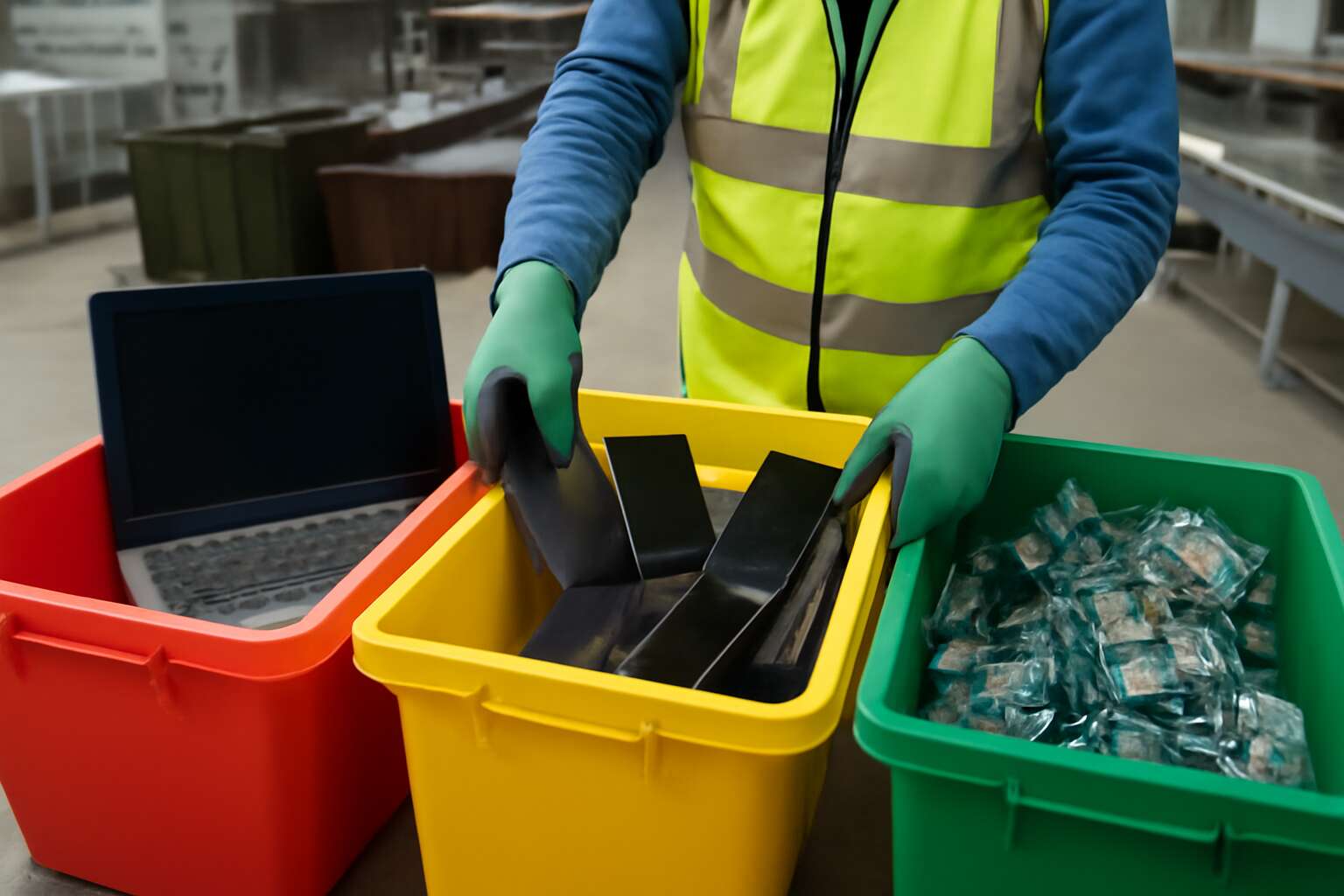
- Color-coded bins and clear labeling to separate categories
- Formal take-back programs aligned with manufacturers and recyclers
- Secure data sanitization and compliant packaging before transport
These elements foster trust, reduce illegal dumping, and weave e-waste into a circular economy that benefits local economies and public health!
Recycling and material recovery techniques
In the sprawling digital landscape of South Africa, the realm of e waste management full form acts as a compass: a disciplined voyage from forgotten gadgets to material resources. The process links collection networks with careful segregation and downstream recycling, forming a responsible loop that shields communities and the land. When households and businesses speak the same language, the journey from used devices to refurbished parts becomes smoother, more transparent, and fiercely hopeful.
Best practices for recycling and material recovery techniques emerge from a practical ethos:
- Mechanical processing that preserves valuable fractions while reducing contamination
- Hydrometallurgical and pyrometallurgical methods to recover precious metals
- Quality assurance and traceability to ensure safe reuse and responsible downstream flows
These steps weave a circular economy, creating local jobs and cleaner environments across South Africa!
Safe handling of hazardous components
The phrase e waste management full form is more than an acronym—it’s a compass guiding South Africa’s journey from throwaway gadgets to material lifelines. The process stitches collection, careful segregation, and downstream recycling into a transparent loop that protects communities and the land. The challenge is real, yet the opportunity is tangible in every refurbished part waiting to return to use.
Best practices for the e-waste management process hinge on safeguarding people and the planet. Safe handling of hazardous components must be non-negotiable:
- PPE, training, and site-specific safety protocols
- Strict segregation of batteries, capacitors, and printed circuit boards
- Leak-proof, ventilated storage with clear labeling
- Tracked transport and documented chain of custody
- Robust data-destruction and secure erasure of devices
This disciplined care turns waste streams into local jobs and cleaner environments across South Africa.
Supply chain transparency and traceability
South Africa’s e-waste landscape is shifting from discard to duty. The e waste management full form is more than a label—it’s a living pact that binds devices to responsible hands from pickup to reuse or recovery. When supply chains stay transparent, communities win and materials find second lives. A tightly tracked chain of custody reduces leakage, protects workers, and unlocks value hidden in circuit boards and plastics.
Key best practices for supply chain transparency and traceability include:
- End-to-end tracking from device origin to final recycler with auditable records
- Certified data destruction and secure erasure to protect consumer information
- Public-facing reporting that verifies compliance and material recovery rates
In this quiet revolution, clarity is the fuel that turns e-waste into an environmental return on investment, while the South African landscape stays free of hidden hazards.
Regulations, standards, and compliance
International frameworks and standards
Regulations are the nightwatchmen of the electronic era. In South Africa, the National Environmental Management: Waste Act sets the stage, while international expectations push for safer disposal. The rules are guardrails—embodying the e waste management full form, a discipline that marries duty with design.
International frameworks and standards act as a spectral compass for organisations navigating the morass of waste. Basel Convention governs cross-border movements; WEEE directs end-of-life handling; RoHS restricts hazardous substances; ISO 14001 codifies environmental management. In practice, these standards shape procurement, contracting, and auditing with quiet gravity.
- Basel Convention on the Control of Transboundary Movements of Hazardous Wastes
- WEEE Directive for Electrical and Electronic Equipment Waste
- RoHS Directive restricting hazardous substances in electronics
- ISO 14001 Environmental Management Systems
For South Africa, aligning with these international threads, tempered by local realities, makes the e waste management full form a living conversation—compliance a rhythm of traceability and continual improvement.
National and local regulations
In the electronic era, the footprint we leave behind is measured in regulations, not just gadgets. South Africa’s regulatory framework anchors e waste management full form in law, yet keeps the dialogue alive.
The National Environmental Management: Waste Act sets the stage, with local municipalities issuing licenses for waste facilities, mandating safe handling, storage, and reporting.
- Licensing for waste management facilities and handling of e-waste streams
- Mandatory reporting, data transparency, and performance audits
- Alignment with national policies and public-private partnerships to drive compliance
This is a living conversation that rewards traceability and responsible design. In practice, regulation and stewardship intersect, nudging procurement, product life cycle decisions, and governance toward steadier outcomes.
Extended Producer Responsibility models
In South Africa, the e waste management full form signals more than an acronym—it’s a governance test. Regulations anchor practice in licensing, reporting, and audits, nudging buyers and builders toward accountability.
Standards and compliance frameworks translate policy into practice. Extended Producer Responsibility models shift responsibility along the supply chain, encouraging design-for-recycle and transparent take-back schemes that keep hazardous components from the wrong hands.
- Licensing for waste management facilities and handling of e-waste streams
- Mandatory reporting, data transparency, and performance audits
- Alignment with national policies and public-private partnerships to drive compliance
Together, regulatory stewardship nudges procurement decisions and product lifecycles toward steadier outcomes.
Compliance reporting and audits
In South Africa, the e waste management full form signals governance, not just jargon. A sharper daybreak for accountability—where regulations bite, results follow. That framework anchors licensing, reporting, and audits, nudging buyers and builders toward responsible choices.
Standards and compliance frameworks translate policy into practice.
- Licensing for waste management facilities and handling of e-waste streams
- Mandatory reporting, data transparency, and performance audits
- Alignment with national policies and public-private partnerships to drive compliance
Together, regulatory stewardship nudges procurement decisions and product lifecycles toward steadier outcomes. Compliance reporting and audits for transparency reinforce trust across public and private partners.
Technologies and innovation in e-waste management
Automated sorting and AI-driven waste streams
Global e-waste tops 50 million metric tons annually, a river of discarded devices that challenges cities and ecosystems. The e waste management full form anchors a disciplined, sustainable path for governments and businesses alike, guiding policy, practice, and purpose with quiet clarity.
Technologies and innovation are turning chaos into order. Automated sorting and AI-driven waste streams usher in precision at scale, creating pathways for materials to re-enter the circular economy rather than end in landfills.
- Automated sorting systems powered by AI to classify plastics, metals, and PCBs
- Robotics and sensor fusion for safe dismantling
- Near-infrared and X-ray spectroscopy for material identification
- Real-time data analytics for supply chain traceability
This frontier blends science with storytelling, letting cities like Cape Town, Johannesburg, and Durban imagine a cleaner skyline where every device finds a second life.
Advanced recycling technologies for critical materials
Cities breathe on a statistic that stuns: global e-waste exceeds 50 million metric tons each year, a river of discarded devices that demands both care and courage! The e waste management full form anchors a disciplined path for governments and industry, turning ambition into action with quiet clarity. In South Africa, this moment invites innovation that is practical, not performative, and hopeful rather than afraid.
Advanced recycling technologies for critical materials are reshaping how we reclaim value.
- Chemical recycling to reclaim plastics as virgin-grade feedstock
- Hydrometallurgical and electrochemical routes for metals
- Modular pilot lines enabling rapid demonstration and scale
- AI-guided process control and real-time material tracing
These threads weave a future where every device finds a second life, and the e waste management full form guides the ascent.
Refurbishment, remanufacturing, and circular economy
Global e-waste now tops 50 million metric tons annually, and the clock is ticking on valuable materials hiding in discarded devices. Refurbishment and remanufacturing offer practical routes to reclaim value before landfills claim them.
Within the e waste management full form, refurbishment and remanufacturing act as bridges to a circular economy: they extend device life, cut demand for virgin resources, and keep skilled work local.
- Extends product life and reduces landfill pressure
- Creates local repair jobs and skills
- Conserves resources and reduces energy use
In South Africa, this practical innovation is unfolding through repair ecosystems, partnerships with manufacturers, and policy support that favors reuse over extraction.
Data security, device sanitization, and privacy controls
Every discarded gadget still carries data. A single drive can hold tens of thousands of documents, photos, and logs. In the e waste management full form, tech firms pursue more than recycling — they pursue trust, with data security at the core of refurbishment and disposal.
Technologies and innovation in this space hinge on three capabilities:
- Verifiable data erasure with attestations
- Tamper-evident chain of custody during transport
- Privacy controls aligned with POPIA and best practice
Device sanitization blends software erasure with validated pass criteria. When needed, physical methods seal risk for storage media. Labs in South Africa align with NIST SP 800-88, ISO standards, and POPIA safeguards, ensuring devices move through reuse channels with zero residual risk.
Emerging trends and future outlook
Globally, only about 20% of e-waste gets recycled—a warning bell for the digital age. In e waste management full form, the aim is more than recycling; it’s a data-safe, supply-chain-resilience mission that turns waste into usable value and trust. Tech leaders in South Africa are pursuing future-ready solutions that blend governance with guardianship, ensuring devices pass through reuse channels with zero residual risk.
Emerging trends point to smarter lifecycle analytics, modular hardware design, and governance that binds stakeholders with transparent provenance. A whisper of destiny guides smarter governance. The future holds blockchain-based tracking and privacy-preserving data exchanges that reduce risk and unlock new value.
- Blockchain-enabled provenance and verifiable attestation
- Modular, serviceable devices that extend lifecycles
- AI-powered lifecycle optimization and privacy-preserving analytics
South Africa’s infrastructure is primed to turn ambition into phase-shifted practice.


0 Comments