Global e-waste landscape and 2025 outlook
Global trends in e-waste generation
Across the globe, e-waste has become a shimmering mountain—devices, cables, and screens piling higher with every upgrade. More than 60 million metric tons are discarded each year, and the opportunity to reclaim its value glows brighter.
Global trends in e-waste generation point to rising volumes as urbanization grows. In South Africa, informal recycling threads a paradox of risk and resilience today.
- Surging volumes from rapid device replacement
- More producer responsibility and formal recycling
- Growing refurbishing markets and safe recovery
Looking toward 2025, momentum shifts toward formal collection, standardized reuse, and transparent reporting. The phrase e waste 2025 rises as a beacon—turning discarded devices into durable resources, and inviting communities, from Johannesburg to Cape Town, to imagine a cleaner, kinder tech future.
Regional disparities and hotspots
Across the globe, e waste 2025 whistles on the horizon, a bell tolling for consequence and latent opportunity. More than sixty million metric tons tumble into landfills each year, yet every discarded gadget hints at a second life, if captured and redirected with care.
Regional disparities stamp the map: mature markets lean into formal collection and traceable reuse, while cities in parts of Africa and Asia juggle informal networks with hazardous processing. South Africa’s urban centers show a fierce mix—policy ambition tempered by street-level systems that still recycle hope from broken circuits.
This e waste 2025 landscape reveals how cities choreograph collection with industry and civil society. Regional hotspots for recovery map a shifting balance of risk and opportunity.
- Johannesburg and Cape Town, South Africa
- Lagos and Nairobi, Africa
- Delhi and Mumbai, India
Impacts on health and environment
The clock ticks toward 2025, and the world tethers its fate to e waste 2025—the ledger where more than 60 million metric tons collide with opportunities, and every discarded gadget hints at a second life if redirected with care.
Health and habitat bear the brunt when formal channels lag, with spectral shadows of disposal drifting across borders. Toxic metals, persistent pollutants, and microplastics infiltrate water, soil, and air, stoking respiratory and cognitive risks for communities near dumps.
- Leachate and aerosolized chemicals infiltrate soil and air, threatening communities and wildlife.
- Informal recycling burns and open smelting release dioxins, mercury, and cadmium into the atmosphere.
- Worker exposure from improvised facilities drives long-term health costs and societal inequality.
Policy momentum and the promise of a circular economy push safer, traceable flows into e waste 2025, including in South Africa where formal systems seek scale and credibility as dawn breaks on a cleaner frontier.
Economic opportunities in circular electronics
Global momentum around e waste 2025 is building, with projections that more than 60 million metric tons of discarded electronics will cross the globe this year. The upside is real! Circular electronics unlock value through repair, refurbishment, and safer recycling. Growth hinges on formal channels, trustworthy data, and cross-border cooperation to keep streams clean and machines moving.
- Repair and refurbishment markets that extend device life and create skilled jobs
- Take-back schemes and value recovery programs for manufacturers
- Regional hubs for modular design and compliant recycling that cut waste and emissions
For South Africa, the 2025 outlook hinges on scaling formal systems, certifying refurbish labs, and linking schools and public institutions to affordable, sustainable electronics. The global landscape favors a leap into circular electronics, where policy momentum and private investment turn waste into new opportunity.
Data quality and reporting challenges
More than 60 million metric tons of discarded electronics drift across the globe in 2025, a spectacle that makes data nerds grin and landfills sigh. This is e waste 2025 in action: turning chaotic streams into policy-ready numbers, repair benches, and cleaner recycling routes that keep machines humming.
Data quality and reporting challenges threaten to drown noble ambitions in a sea of misread graphs.
- Fragmented data sources across formal and informal channels
- Inconsistent definitions of e-waste and its life stages
- Reporting lags and limited cross-border traceability
- Nonstandard units and opaque tonnage calculations
For South Africa, the outlook hinges on formal systems and verifiable data pipelines that connect schools and public bodies with affordable, sustainable electronics. If the numbers align, this trend won’t just be a headline—it’ll be a backbone for policy and industry alike.
Regulatory and policy shifts shaping electronic waste management in 2025
Extended producer responsibility and take-back schemes
South Africa stands at a crossroads as policy pivots toward responsibility and reuse. e waste 2025 arrives with a blunt truth: hundreds of thousands of tonnes of e-waste pour into our communities each year, and recycling remains disappointingly low. These shifts could turn discarded devices into local resources, stitching green jobs into everyday life.
- Extended Producer Responsibility (EPR) programs that fund collection and recycling
- Take-back schemes aligning retailers, municipalities, and repair networks
- Transparent reporting with independent verification
- Rural and urban collection hubs that tie communities to the circular economy
From markets where neighbors trade salvaged parts to farms where fixes happen on weekends, policy that respects local rhythms can heal both landscapes and livelihoods. When access to processing is fair and costs are clear, e-waste becomes a community resource, not a burden.
International trade and shipments of used electronics
“Regulation is the scaffold on which a circular economy stands,” a policy analyst notes, as e waste 2025 reshapes how used electronics cross borders. In South Africa, policy shifts arrive with blunt clarity: responsibility is priced in, turning discarded devices into local value rather than burdens.
International trade rules tighten the export of used electronics to curb improper recycling. South Africa aligns with Basel-style safeguards, routing shipments to compliant facilities and transparent custody chains. Independent verification becomes standard, turning consumer devices into auditable streams of reform and renewal.
- Stricter cross-border controls on e-waste to protect communities
- National reporting with third-party verification of shipments
- Incentives for local repair networks and refurbishers
This shift reframes waste into resource for South Africa’s circular future.
Standards for responsible recycling and material recovery
Policy tides are turning, and accountability is rising. By 2025, nearly half of e-waste streams are projected to fall under formal regulation and independent audits. In South Africa, policy shifts arrive with blunt clarity: responsibility is priced in, turning discarded devices into local value. e waste 2025 signals reform.
Standards for responsible recycling and material recovery rise from the shadows into governance. They promise chain-of-custody that can be traced, verified facilities, and design-for-reuse imperatives that keep metals, plastics, and rare earths circulating. Consider these pillars:
- Transparent chain-of-custody with third-party audits
- Certified facilities for safe sorting, dismantling, and recovery
- Design-for-repair and modular replacements as regulatory expectations
The result is a more humane economy where streets are cleaner, jobs bloom in refurbishing, and communities see value where waste once stood. The optics of policy become poetry when every shipment, every crate, meets the light of verifiable reform!
Compliance challenges for small businesses and startups
Regulatory winds sweep across South Africa, bending the arc of e-waste management toward accountability and clarity. In the shadowed markets of urban fade and rural reach, policy makers frame obligations that illuminate every shipment. By 2025, nearly half of e-waste streams are projected to fall under formal regulation, a figure that marks a turning point for responsible practice. In the dawning era of e waste 2025, the compliance frontier feels mythic and real at once!
- Registration with environmental authorities and timely reporting of volumes (a trap for cash-strapped startups)
- Maintaining a verifiable chain-of-custody for all returns and transfers
- Budgeting for certified treatment, repair, and reuse design obligations
The journey may be complex, but the rewards are cleaner streets, resilient jobs, and a trusted brand story.
Incentives for repairability and durability
In the dawn of e waste 2025, policy shifts in South Africa move faster than the next device on the shelf. Regulators rewrite the script with rules that demand accountability: verifiable take-back records, clearer volume reporting, and incentives nudging manufacturers toward repairability and durability. It’s not mere compliance; it’s a cultural realignment where product longevity becomes brand trust, and every shipment carries a traceable story. The frontier feels mythic and real at once!
- Repairability ratings tied to warranties and end-of-life pathways
- Subsidies or tax credits for authorised repair networks and refurbishers
- Mandates for modular design and easy disassembly
These regulatory currents are not paperwork; they reshape the market’s incentives and define what responsible electronics look like in e waste 2025.
Technology and recycling innovations driving e-waste management
Advances in mechanical, chemical, and hydrometallurgical recycling
The clock is ticking, and the devices we retire today become the raw materials of tomorrow. As we chart e waste 2025, South Africa leans into smarter design and smarter recovery. Global e-waste is projected to reach 75 million tonnes by 2030, a number that demands urgency and imagination.
Advances in mechanical, chemical, and hydrometallurgical recycling are rewriting the map. From field labs to factory floors, innovations are turning discarded devices into feedstock rather than landfill fodder.
- AI-guided mechanical shredding and precise sorting
- Greener chemical separations minimize hazardous waste
- Hydrometallurgy recovers copper, gold, and rare earths
In South Africa, pilots show that recovered materials can power local manufacturing and job creation, bridging the care of communities with hard-nosed efficiency. This is the essence of e waste 2025 in action, where modern tech meets local stewardship, and every capacitor becomes a resource rather than rubble.
AI-powered sorting and robotics in reclamation facilities
Global e-waste is projected to reach 75 million tonnes by 2030, a tidal surge demanding smarter reclaiming now. In South Africa, each retired device tests our resolve—are we guardians of value or buryers of waste?
Technology and recycling innovations are moving from field labs to factory floors. AI-guided sorting and robotic reclaimers turn chaos into ordered streams of copper, glass, and rare earths. Machine vision reads hundreds of parts per second, and adaptive shredders separate plastics from metals with gentler energy use.
- AI-powered sorting with real-time material tracing
- Robotics-enabled dismantling that preserves valuable components
- Condition monitoring that prevents spills and injuries
In South Africa, pilots show recovered materials powering local manufacturing and job creation—proof that e waste 2025 can be a circle of opportunity rather than a chain of waste.
Design for circularity: modularity and repairability
Technology and recycling innovations are moving from field labs to factory floors. Design for circularity is no longer a niche ideal; it is becoming a practical mandate. Modularity lets devices shed old life stages through swappable modules, while repairability keeps value in circulation longer. In South Africa, this mindset means components can be swapped, scaled, and reassembled, turning what could be waste into local input for manufacturing and jobs—an answer to e waste 2025.
Consider these design principles:
- Modularity that enables swappable cores and upgradeable subsystems
- Repairability with easy access, standardized interfaces, and common tools
Secure data destruction and privacy in recycling
South Africa’s e-waste challenge is moving fast. Millions of tonnes are generated annually, and responsible handling is shifting from lab benches to factory floors. Technology and recycling innovations are turning waste into local value, with modular, repairable devices staying in use longer. For e waste 2025, secure data destruction is non-negotiable as devices exit service!
Disassembly lines now combine standardized interfaces with auditable data erasure. Privacy sits at the heart of recycling, not as an afterthought. The result is cleaner material streams and trust for brands that rely on responsible recovery.
- On-site data sanitization and degaussing to recognized standards
- Chain-of-custody records and certified destruction partners
- Tamper-evident reporting and material provenance
Remanufacturing and refurbishing as business models
South Africa is rewriting the e waste 2025 playbook, turning discarded gadgets into durable, revenue-generating assets. Smart sensors, modular architectures, and repair-friendly designs let devices outlast hype cycles and cut replacement sprawl, giving the circular economy a confident swagger.
Remanufacturing and refurbishing are not charity gigs; they’re scalable business models that strengthen local tech ecosystems.
- Lifecycle extension through certified remanufactures
- Localized repair hubs cutting downtime and transport costs
- Warranty-backed refurbished units winning trust with schools and SMEs
Diagnostics, rigorous quality checks, and modular, field-replaceable components ensure refurbished units meet enterprise standards without pretending they’re brand-new.
With the right incentives, remanufacturing becomes a robust engine for jobs and a cleaner horizon for e waste 2025.
Consumer behavior and corporate responsibility in e-waste reduction
Raising consumer awareness and convenient disposal channels
“The future is circular,” industry observers say. In South Africa, consumer behavior is shifting. People want clear, trustworthy channels to hand in old devices, and they expect brands to stand behind safe data destruction. We see this at community hubs and mall drop-offs where staff answer questions in plain language. When disposal feels simple, participation climbs.
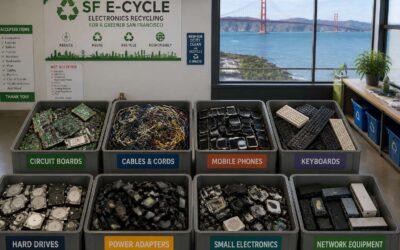
- Visible drop-off points in communities
- Plain-language instructions on data wiping
- Partnerships with local recyclers and schools
Brands that invest in clear signage, simple language, and convenient disposal options earn trust. They connect with customers where they shop and make recycling the easiest choice.
This momentum aligns with e waste 2025 goals. By showing tangible results—clear data, accessible channels, and consistent behavior from brands—South Africa moves from awareness to action.
Sustainability reporting and e-waste metrics for brands
The chorus is louder than ever: brands get judged by what happens to devices after the sale, not just price. ‘The true cost of disposal appears on the balance sheet,’ says a South African sustainability director, and that notion is moving from buzzword to boardroom reality. This is the heartbeat of e waste 2025.
Consumers expect honesty: visible take-back points, verifiable data destruction, and dashboards in plain language. Corporate responsibility isn’t optional—it’s a market differentiator that strengthens communities while looping devices back into use.
- Transparent sustainability reporting with verifiable data destruction
- Clear metrics on collection and recycling efficiency
In South Africa, brands must weave sustainability into daily operations: audits, assurances, and consistent messaging. When reporting is accessible and action is visible, e-waste becomes a measurable promise—this is the spirit of e waste 2025 in motion.
Take-back programs: effectiveness and benchmarks
In South Africa, consumer behavior is no longer a silent driver—it is a daily vote for how responsibly a brand handles its legacy devices. People crave honest signals: accessible take-back points, verifiable data destruction, and dashboards that speak plainly. The era of green gloss is fading; accountability now drives loyalty and trust. ‘The true cost of disposal appears on the balance sheet,’ says a South African sustainability director, and that notion is moving from buzzword to boardroom reality. e waste 2025 anchors this shift with a pulse on real-world impact.
In South Africa, corporates respond with transparent take-back programs that are easy to join and hard to ignore. Effectiveness hinges on convenience, clear messaging, and reliable data trails that show what was collected, what was recycled, and what was repurposed. Benchmarks turn aspiration into measurable futures.
- Participation rate per drop-off point
- Average time from device drop to processing
- Cost per kilogram recovered
Public-private partnerships and community programs
South Africa’s households are no longer ambiguous actors in the e-waste story; every old phone becomes a vote for responsibility. The tide is turning toward brands that reveal the journey from device to data-erased truth. “The true cost of disposal appears on the balance sheet,” a sustainability director notes, and e waste 2025 sharpens that gaze. Consumers crave honest signals—accessible drop-off points, verifiable data destruction, dashboards that speak plainly—and brands are listening. This is where accountability becomes a daily ritual, not a marketing whisper.
Public-private partnerships and community programs stitch accountability into the urban fabric. When cities, corporates, and civil society fuse their resources, disposal channels become effortless, and trust grows. Initiatives that blend school outreach, local councils, and repair cafés create familiar touchpoints for households.
- Transparent reporting dashboards
- Accessible drop-off networks
- Data-safe recycling and material tracing
Incentives, pricing, and behavior change strategies
In South Africa, a quiet revolution is shaping every living room: households choosing responsibility over convenience, as if guardians return aging devices to the village circle for a second life. Drawers house silent relics, awaiting a fair repair path and responsible recycling. Brands that speak plainly—about parts, costs, and the journey from device to data—earn trust and invite communities to walk the path together.
As e waste 2025 redefines the consumer journey, smart nudges become the currency of change.
- Neighborhood repair vouchers with schools
- Clear pricing favoring repairs over upgrades
- Visible data erasure and material tracing roadmaps
When brands commit to daily accountability—transparent terms, reliable drop-off networks, and honest reporting—the mood shifts from guilt to partnership. Consumer actions become a chorus that powers circularity, not a single, heroic act.


0 Comments