Collectall – Environmental Solutions is a Recycling center establishment in East London, Eastern Cape, South Africa
Collectall – Environmental Solutions: Services and Customer Experience
Collectall – Environmental Solutions operates as an environmental management partner based in East London, in the Eastern Cape of South Africa. With more than a couple of decades of experience, the firm presents itself as a provider of holistic environmental management and advisory services, focused on helping organisations reduce environmental impact while improving efficiency and, in many cases, business performance. The emphasis across its materials is on practical, policy-aligned solutions that can be integrated into existing operations, ranging from strategic planning to system design and on-site implementation.
The core offering is built around Environmental Management Systems (EMS). Collectall promotes the design and implementation of EMSs that align with ISO 14001 concepts and the broader aims of environmental stewardship. The firm frames an EMS as a continuous, Plan-Do-Check-Act cycle intended to help organisations identify environmental aspects, manage waste streams, separate recyclable and non-recyclable materials, and implement site-specific procedures that support compliant, efficient operations. The approach is presented as beneficial not only for the environment but also for business performance, including potential cost savings and a stronger competitive position.
In addition to systems design, Collectall highlights a broad portfolio of waste-management services. The material outlines a modular, “holistic” suite that can be tailored to a client’s needs, with the company positioning itself as capable of providing full or partial solutions. Specific areas mentioned include waste auditing, waste stream analysis, and reporting-driven management. The emphasis is on understanding current waste profiles, identifying opportunities for recycling or reuse, and producing data-backed recommendations to guide decision making. Across case studies, the firm demonstrates its capacity to support large-scale, regulated environments in achieving ISO 14001 certification or maintaining compliance with environmental standards.
Several case studies cited on the site illustrate the practical deployment of these services with prominent clients. For example, Mercedes-Benz SA (Commercial Vehicles), Johnson Controls, and Lear Corporation are described as beneficiaries of integrated waste-management services that include waste separation at source, on-site management, and reporting systems. The examples emphasise material segregation (for papers, plastics, metals, and hazardous waste), logistics support (such as roll-on/roll-off and skip loader arrangements), and performance reporting to assist ongoing compliance and readiness for audits. The patterns suggest a focus on reliable data capture, structured waste streams, and transparent reporting to sustain ISO 14001-oriented frameworks.
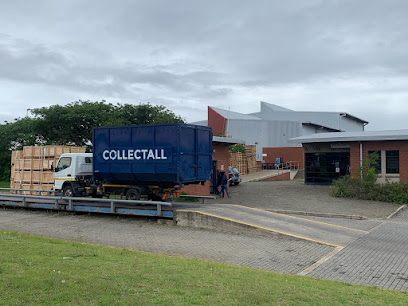
Collection and transfer logistics are represented by the company’s physical presence in East London with a Waste Transfer Station as part of its facilities. The physical location signals a capacity for local drop-offs, processing, and on-site management, coupled with a willingness to engage with industrial clients that require hands-on waste and environmental management expertise. While precise service delivery times or hours are not exhaustively listed, the reference to a transfer station and on-site management implies structured operations designed to support timely and compliant waste handling in collaboration with clients.
The visitor feedback available online provides a blended view of the customer experience. Many reviews highlight convenience, access to practical services, and occasional challenges with specific interactions. The overall sentiment mirrors the firm’s stated ambition: to deliver practical, well-organised environmental solutions with a customer-centric approach. It is clear that responsiveness and service delivery are valued by customers, alongside the tangible outcomes achieved through the company’s waste-management and EMS-related work.
Practical tips for customers drawing on the site’s guidance and industry norms include:
- Typical items and materials: The focus is on waste management, recycling, reuse, and related environmental services. While specific lists of accepted items are not exhaustively published, the emphasis on separating recyclable from non-recyclable waste and on hazardous versus non-hazardous streams suggests that households and organisations should expect to bring or segregate standard office and commercial waste, with particular attention to hazardous materials where required by advisory guidance.
- Packaging and transport: For any organised waste collection or drop-off, preparing items in clearly labelled containers or bags and separating recyclables from general waste can streamline processing and reporting. On-site management examples imply that proper segregation at source supports efficient handling and accurate data capture.
- Information to request: Clients can expect or request documentation tied to environmental performance and compliance, such as waste-collection reports, activity logs, and, where applicable, certification-related evidence that demonstrates adherence to ISO 14001 or related standards. Where destruction or recycling verification is involved, written confirmation of processing and secure handling is advisable.
- Areas served and hours: The business is located in East London, Eastern Cape, with a focus on local and regional engagement via a Waste Transfer Station. Operational details such as specific opening hours are not exhaustively listed in the public content, but the presence of an established facility indicates structured access for local customers.
Overall, Collectall – Environmental Solutions presents a structured, systems-oriented approach to environmental management. It emphasises the value of EMS design, discrete waste-management services, and data-driven reporting, backed by real-world case studies and a dedicated operational base in East London. For organisations seeking to formalise their environmental responsibilities, the firm positions itself as a capable partner able to integrate waste, reuse, and compliance objectives into a coherent, performance-focused programme.
Website: http://collectall.com/
East London
Eastern Cape
South Africa
East London e‑Waste and IT Asset Disposal Services
In East London, Eastern Cape, a range of environmentally responsible services supports households and organisations in managing electronic waste (e‑waste), IT asset disposal (ITAD), data destruction, and related programmes. Providers typically offer secure collection, sorting, refurbishment and reuse where viable, and responsible recycling for items that cannot be salvaged. The aim is to minimise environmental impact while safeguarding information security and regulatory compliance.
Typical offerings cover the lifecycle of electronic equipment from collection through to end‑of‑life processing. Secure collection and chain‑of‑custody practices help ensure data protection from the point of pickup to final disposition. Data destruction services may include on‑site or off‑site media sanitisation, with reports detailing what was destroyed, how it was handled, and any certificates of destruction issued. Refurbishment and reuse options may extend the useful life of devices by repairing and upgrading where feasible, reducing waste and downstream recycling requirements.
Important considerations for households and businesses include the accepted items, the process for drop‑off or collection, and the transparency of the refurbishment versus recycling pathway. Many providers handle a broad spectrum of equipment such as desktops, laptops, tablets, printers and multifunction devices, networking gear, servers, mobile devices, batteries and obsolete chargers. Hazardous components, including certain batteries, should be treated according to best practice and local regulations, with appropriate containment and reporting. Where possible, batteries are recycled separately to avoid safety risks and environmental harm.
Operators emphasise responsible disposal by adhering to regulatory standards and offering documentation to support accountability. Certificates of recycling or destruction, activity reporting, and auditable records form part of the service, enabling organisations to demonstrate compliance with internal policies and statutory requirements. Turnaround times vary by scope, quantity, and the level of on‑site processing required, with some providers offering scheduled collections or drop‑off by appointment to suit business operations or household needs.
Practical guidance for households preparing devices for recycling includes creating backups of important data, signing out of accounts, performing factory resets where appropriate, and removing SIM/SD cards. It is advised to wipe devices in line with current best practice before handing them over, while recognising that data destruction services may still be relied upon to ensure sensitive information is securely disposed of. For businesses, a pre‑collection audit can help identify equipment stock, assess refurbishment potential, and determine the most efficient collection plan. Clear asset tagging and documentation support the maintenance of a coherent asset register and facilitate a smooth handover.
Environmental responsibility extends to the handling of printer and cartridge components. Non‑functional printers or components may be prepared for recycling, while cartridge collection schemes can reduce waste and avoid unnecessary disposal of consumables. Separate streams for battery recycling help manage the specific hazards associated with modern portable power sources, taking into account temperature control, leakage prevention, and compliant transport practices.
In East London, customers can expect services designed to accommodate both small households and larger organisations. Providers typically outline the scope of accepted items, any preparation required, and the available options for on‑site collection or safe drop‑off. With an emphasis on refurbishment where feasible and responsible recycling otherwise, the aim is to maximise resource recovery, minimise environmental impact, and ensure responsible disposal from initial intake through to final processing.
When choosing a service, consider requesting evidence of compliance, such as certificates, invoices, and destruction reports, as well as information on reporting styles and data‑security assurances. Clear communication about limitations, service levels, and pricing helps ensure that e‑waste, ITAD, data destruction, and recycling arrangements align with organisational needs and environmental commitments.
Sorry, no records were found. Please adjust your search criteria and try again.
Sorry, unable to load the Maps API.