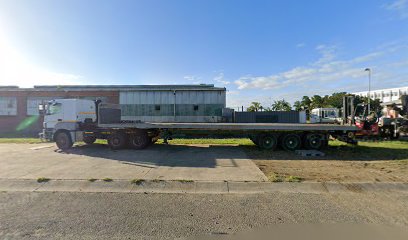
DNF Recycling Collection Point – Cambridge Street is a Recycling center establishment in East London, Eastern Cape, South Africa
DNF Recycling Collection Point – Cambridge Street, East London
DNF Waste, operating from a Cambridge Street location in East London, is positioned as a leading waste and environmental management service provider. The company describes itself as focused on innovative management solutions and the delivery of environmental goals for its clients. Public information highlights a reputation for excellence, with recognised projects and partnerships referenced on the company’s site. The Cambridge Street site is identified as a physical address associated with its waste and environmental service operations in the Eastern Cape region.
Visitors to the site or its public-facing channels often note the facility as a practical place to handle recycling needs. In user-generated feedback, the location is described as a “great place to drop your recycling,” indicating that the site functions as a drop-off or collection point suitable for members of the public who wish to divert materials from general waste streams. The available online footprint also points to a broader portfolio of waste and environmental management activities rather than a singular consumer-facing store, underscoring its role within a larger environmental management framework.
From a service perspective, the organisation publicly positions itself around the design and implementation of Waste and Environmental Management Systems. This suggests a core emphasis on end-to-end solutions that help clients manage waste streams, improve recycling outcomes, and meet environmental obligations. While specific consumer-facing services (such as detailed e-waste handling, ITAD, or data security services) are not explicitly itemised in the readily available content, the company’s broader activities indicate capabilities aligned with recycling management, project-based environmental delivery, and consultation that supports regulatory compliance and sustainability goals.
The Cambridge Street site sits within a network of projects and clients described on the company’s site, including collaboration with agencies and programmes that focus on job creation and environmental compliance. References to awards and public recognitions further reinforce the narrative of experienced delivery in the waste management sector. For organisations seeking tangible documentation of impact, the emphasis on reporting and environmental outcomes is consistent with a practice that values accountability and client-focused results.
In terms of typical engagements, the organisation highlights a portfolio that includes involvement with government and development clients through projects linked to the Department of Environmental Affairs (DEA), EPIP and DBSA initiatives. This alignment with large-scale environmental projects suggests the capacity to handle complex waste management needs, including structured programmes, reporting, and performance measurement—attributes that can be relevant to both corporate and public sector partners.
Practical guidance for customers based on common best practices (not specific to any single instruction from the site) includes preparing materials for drop-off or collection by separating recyclables from general waste, and arranging items in a way that facilities can process safely and efficiently. Prospective users may benefit from seeking confirmation of accepted materials prior to disposal and requesting documentation that demonstrates recycling outcomes or data handling where applicable. Customers are advised to inquire about any required verification, such as proof of recycling or certificates relating to data destruction, where these services align with the site’s environmental management remit.
Typical operational considerations for service requests (in line with industry norms and the provider’s profile) include an initial enquiry to establish the scope of the project, confirmation of accepted items, scheduling or logistics planning for collection or drop-off, processing and recovery of materials, and final reporting or certificates as evidence of compliant handling. While the exact workflow at the Cambridge Street site is not exhaustively detailed online, the emphasis on environmental management and project-based work implies a structured approach to service delivery, with a focus on transparency and outcomes for clients and stakeholders.
Business hours are not specified in the accessible content, and precise hours for visiting the Cambridge Street location are therefore not published here. The site identifies the Cambridge Street address as a key location within East London, Eastern Cape, suggesting service reach in that region and neighbouring areas where clients may engage with the company’s environmental and waste management activities.
East London
Eastern Cape
South Africa
In East London, Eastern Cape, a growing network of responsible e-waste recycling and IT asset disposal providers offers a broad range of services designed to manage electronic waste safely and sustainably. These services cover everything from secure collection and data destruction to refurbishment, resale, and compliant disposal of obsolete devices. The emphasis is on protecting information security, minimising environmental impact, and ensuring regulatory compliance throughout the lifecycle of electronic equipment.
Typical services include e-waste recycling and electronics disposal, IT asset disposal (ITAD), and data destruction. Recyclers assess collected devices to determine whether components should be refurbished for reuse or sent to certified recycling streams. Refurbishment and reuse programmes may recover devices that still have useful life, offering organisations a cost-efficient path to extend asset value while reducing the volume of waste destined for landfills. For other items, secure recycling processes ensure hazardous materials—such as batteries, capacitors, and printed circuit boards—are handled in accordance with best practice and applicable laws.
Data destruction is a core element of responsible disposal. Reputable providers offer documented chain of custody, secure handling, and verifiable data sanitisation or physical destruction, accompanied by certificates of destruction or media disposition. This helps organisations meet regulatory requirements and internal policies for information security. Clear reporting and audit trails are commonly provided, detailing the items processed, destruction methods used, and final disposition the equipment has undergone.
Secure collection solutions are frequently available to suit diverse needs. Business customers may schedule recurring pickups or on-demand collections, while householders can utilise drop-off points or special collection events. Clear instructions regarding preparation help minimise risks: devices should be backed up and account sign-outs completed where feasible; factory resets performed; SIM and SD cards removed; and any data-bearing media kept separate from intact electronics where allowed. Providers typically offer guidance on suitable packaging, labelling, and access requirements to maintain safety and efficiency.
Environmental responsibility extends to refurbishment and reuse programmes, battery recycling, and printer and cartridge recycling. Refurbished devices can be refurbished to the extent that they meet safety and performance standards and can be reintroduced into the market or donated where appropriate. Battery recycling focuses on safe collection and compliant processing of lithium, nickel-metal hydride, and other rechargeable cells, with strict controls to prevent fires and chemical leakage. Printer consumables and cartridge recycling often involve splitting plastics, metals and residual toners for recycling streams, reducing waste and encouraging circular economy practices.
Households and businesses can expect practical guidance on preparation, acceptable items, and service scope. Accepted items typically include outdated desktops, laptops, monitors, peripheral devices, networking gear, tablets, mobile devices, and batteries, subject to assessment. Some facilities can accept non-electrical waste in separate streams to optimise sorting. Turnaround times vary by location, workload, and service type, but many providers offer reasonable scheduling windows, status updates, and post-processing reporting to help organisations demonstrate compliance.
Confidentiality and compliance are emphasised components of the service offer. Chain-of-custody documentation, certificates of disposal, and regulatory compliance with local and national standards are commonly available. By choosing a reputable provider in East London, customers can expect a transparent process from collection to final disposition, with opportunities to review performance metrics and environmental impact data.
Ultimately, the aim is to reduce environmental harm while safeguarding information security and extending the useful life of electronics where feasible. Local authority partnerships, industry associations, and environmental stewardship programmes contribute to a robust framework for environmentally responsible disposal services in the region. For households and organisations alike, these services provide practical, compliant, and efficient options for managing the end-of-life journey of electronic devices.
- Key considerations: accepted items, preparation steps, secure collection options, refurbishment versus recycling, hazardous components, chain of custody, data destruction methods, certificates, and reporting.
- Practical guidance: perform backups when possible, sign out of accounts, execute factory resets, remove SIM/SD cards, and follow provider instructions for packaging and drop-off or collection.
Sorry, no records were found. Please adjust your search criteria and try again.
Sorry, unable to load the Maps API.