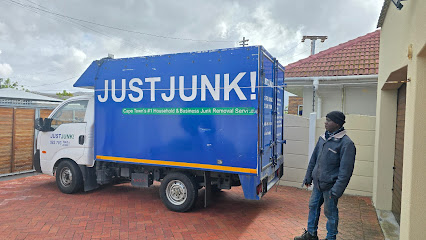
JUSTJUNK! is a Waste management service establishment in Cape Town, Western Cape, South Africa
JUSTJUNK! Cape Town: Comprehensive Junk Removal, Recycling and Asset Clearing Services
JUSTJUNK! operates in Cape Town, Western Cape, offering a broad suite of services aimed at clearing clutter for both households and businesses. The service philosophy emphasises experience, professionalism and a no-nonsense approach, with a stated commitment to friendly, efficient staff and a focus on customer satisfaction. Since its establishment in 2007, the company reports handling thousands of tonnes of junk and recyclables across sectors, with a strong emphasis on recycling, up‑cycling or donation where possible.
The core offering is Junk Removals, described as a service that "takes everything" from locations ranging from homes to offices and commercial premises. The handling model is volume-based for light or bulky items, with bedload rates for rubble. A key feature is a transparent on-site quotation process: customers point to items to be removed, informed by a non‑obligation free quote, and then presented with an upfront price. The removal service covers a wide spectrum of material, including garden waste, furniture, appliances, clutter from garages and storerooms, and event waste. The company pledges to perform the removal and then sweep and clean the site before departure, removing the burden of the physical work from the client.
In addition to standard junk removal, JUSTJUNK! offers High Confidential Document Shredding, conducted with certification. This service is designed for sensitive paperwork and marketing materials, with a Certificate of Destruction provided on completion. The ability to verify destruction supports clients seeking compliance and peace of mind in safeguarding confidential information.
Recycling is another cornerstone, with a focus on reducing waste and encouraging reuse. The website highlights Recycling Contracts for households, offices and commercial properties, delivering ongoing collections and a structured approach to recycling alongside junk removal. The contracts emphasise reliability, timeliness and satisfaction at every stage, with materials routed to recycling centres and, where appropriate, donations to local NGOs and schools. A pay‑back or value‑for‑money component can be inferred from the stated commitments and the contractual framework.
Electronic waste and scrap metal are explicitly addressed under E‑Waste / Scrap Metal, described as a service whereby all electronic waste is recycled responsibly. A pay‑back system for large quantities is mentioned, alongside the option to drop off at a recycling yard or have a collection for a fee, underscoring flexibility for different customer preferences and scales of operation.
Other offerings include Event Clean Ups / Clear Outs, Deceased Estates / Asset Recovery and Disposal, and related asset management assistance. The Deceased Estates service recognises the emotional and logistical complexities involved, offering removal, disposal and recycling of assets and asset recovery where appropriate. These services reflect a broad remit designed to assist both personal and corporate clients during transitions, downscaling or relocation processes.
Typical job types described on the site include household clear-outs, garage clear-outs, office clear-outs, eviction or deceased estate clearances, and event waste management. The online booking interface documents a straightforward workflow: clients make an enquiry or select a service, receive a quotation on arrival or via the enquiry stage, and then the team schedules collection logistics, processes the items, and provides confirmation or reporting post-collection. The company notes that collections are managed in dedicated time slots and that on‑site collections can be completed quickly, with a focus on efficiency and minimal disruption to clients.
Pricing and billing are handled through an upfront quotation, with payment accepted by cash or card at the point of collection, and other methods (including EFT or card) referenced for contracts. A range of contract options is presented, with monthly fees and defined service levels within a 15km radius of the Wynberg head office. Clients outside this radius may incur surcharges, illustrating a practical approach to service delivery across the Cape Town area.
Customer experience feedback from local reviewers reflects a consistently positive impression of JUSTJUNK!’s service reliability and professionalism. Testimonials highlight punctual arrivals, courteous and well‑behaved staff, careful handling of items, clean post‑collection sites, and clear communication throughout the process. Reviewers emphasise the ease of booking, transparent quotations, swift on‑site loading, and flexible payment options, reinforcing the perception of a dependable and customer‑centred operation.
Practical tips for customers include: preparing a representative list of items for removal, and ensuring items are accessible for the crew; separating batteries and any hazardous components where possible; requesting and retaining any proof of recycling or a Certificate of Destruction for confidential materials; and confirming any required documentation during the booking process. When seeking recycling or shredding services, customers may request certificates or reporting to document compliance and environmental outcomes. For those considering ongoing support, contract options offer regular collections and measurable recycling targets, with clear definitions of what constitutes “recycling” and “junk” within the scope of each contract.
JustJUNK! operates from 3 Kemms Road, Wynberg, Cape Town, and serves the surrounding Western Cape area. Their services encompass a broad range of removal, recycling and asset management needs, supported by a customer‑facing online booking system, transparent pricing, and a strong emphasis on responsible disposal and community benefit through donations and recycling initiatives.
Cape Town
Western Cape
South Africa
E-waste Recycling and IT Asset Disposal in Cape Town, Western Cape
In Cape Town and the wider Western Cape, consumers and organisations have access to a range of environmentally responsible services for electronic waste, electronics disposal, IT asset disposal (ITAD), data destruction, and secure collection. Providers typically offer end-to-end solutions designed to manage the lifecycle of devices from collection through to refurbishment or responsible recycling, with an emphasis on protecting people and the planet.
Typical offerings include secure collection and logistics, thorough data destruction, and compliant reporting. Secure collection services may operate on scheduled drop-offs or on-site pickups for bulk IT equipment, while handling delicate data-bearing devices with a clear chain of custody. ITAD solutions often encompass asset discovery, asset tagging, decommissioning documentation, and certifiable data erasure or physical destruction, ensuring confidentiality and regulatory compliance.
Refurbishment and reuse form an important part of the sector, where functional devices can be restored for secondary markets or internal reuse. When refurbishment is not feasible, responsible recycling takes place to recover materials in a way that minimises environmental impact. Battery recycling is commonly coordinated separately due to safety considerations, and printer and cartridge recycling programmes may be available as part of a broader sustainability strategy. Environmental stewardship is reinforced by the use of authorised processing facilities and documentation that supports traceability.
Residents and businesses should expect clear guidance on accepted items, preparation requirements, and turnaround times. Accepted items often include personal computers, laptops, servers, tablets, mobile phones, printers, copiers, networking equipment, old batteries and power supplies, and household electronics. Some providers specify exclusions for certain items containing hazardous components, such as uncontrolled quantities of batteries or devices with unresolved damage, and advise on safe handling prior to collection or drop-off.
Preparing devices for disposal involves practical steps to protect information and personal data. Households and organisations are encouraged to back up critical data, sign out of cloud accounts, perform factory resets as appropriate, and remove SIM or SD cards where possible. While these measures support data security, they do not replace the need for certified data destruction services where required by policy or regulation. Clients should verify the scope of data destruction, whether it uses logical erasure, degaussing, or physical destruction, and obtain documentation or certificates of destruction as proof of compliance.
Compliance and reporting are core considerations. Reputable providers in Cape Town typically adhere to local environmental regulations and industry best practices, offering documentation such as certificates of destruction, chain-of-custody records, and impact reporting. Turnaround times can vary depending on the scope of the project, the volume of equipment, and logistics, but clear timelines are usually provided at the outset, with service level commitments for collection, processing, and reporting.
Facilities often distinguish between refurbishable items and those destined for recycling. Refurbishment aims to extend the useful life of devices, reduce e-waste streams, and support circular economy goals. Recycling focuses on safe disassembly, material recovery, and the compliant handling of hazardous components, including batteries and sensitive circuitry. Safe practises are emphasised in handling hazardous materials, with appropriate containment and transport protocols to mitigate risks.
Practitioners commonly publish guidance for both households and businesses on how to engage services. Prospective customers are advised to compare the available options for secure collection, refurbishment versus recycling, and the transparency of reporting. When selecting a partner, it is prudent to consider accreditation, facility capabilities, and the availability of end-to-end documentation that demonstrates responsible disposal and compliance with local laws in the Western Cape.
- Typical items accepted: computers, laptops, tablets, smartphones, printers, networking equipment, peripherals, old batteries, and related accessories.
- Preparation guidance: back up data, sign out of accounts, perform factory resets where feasible, remove SIM/SD cards, and separate batteries when instructed.
- Key considerations: data destruction method, chain of custody, certificates of destruction, reporting capabilities, and turnaround times.
- Operational choices: refurbishment for reuse, material recycling, and environmentally responsible disposal.
Overall, Cape Town's e-waste and ITAD landscape supports responsible disposal through a combination of secure collection, data protection, refurbishment, and recycling, aligned with environmental objectives and compliant practice for both households and businesses.
Sorry, no records were found. Please adjust your search criteria and try again.
Sorry, unable to load the Maps API.